


Summary
- On September 23, OpenAI published Harvey's GPT-6 Astra customer story alongside a 66-second video.
- Harvey says document formatting and context awareness improved substantially compared with other models, and its memory panel brings lawyers' preferences into drafts.
- Harvey is also an API customer of Astra for Law, announced September 17, a configuration that passed 54.0% of 200 legal research questions.
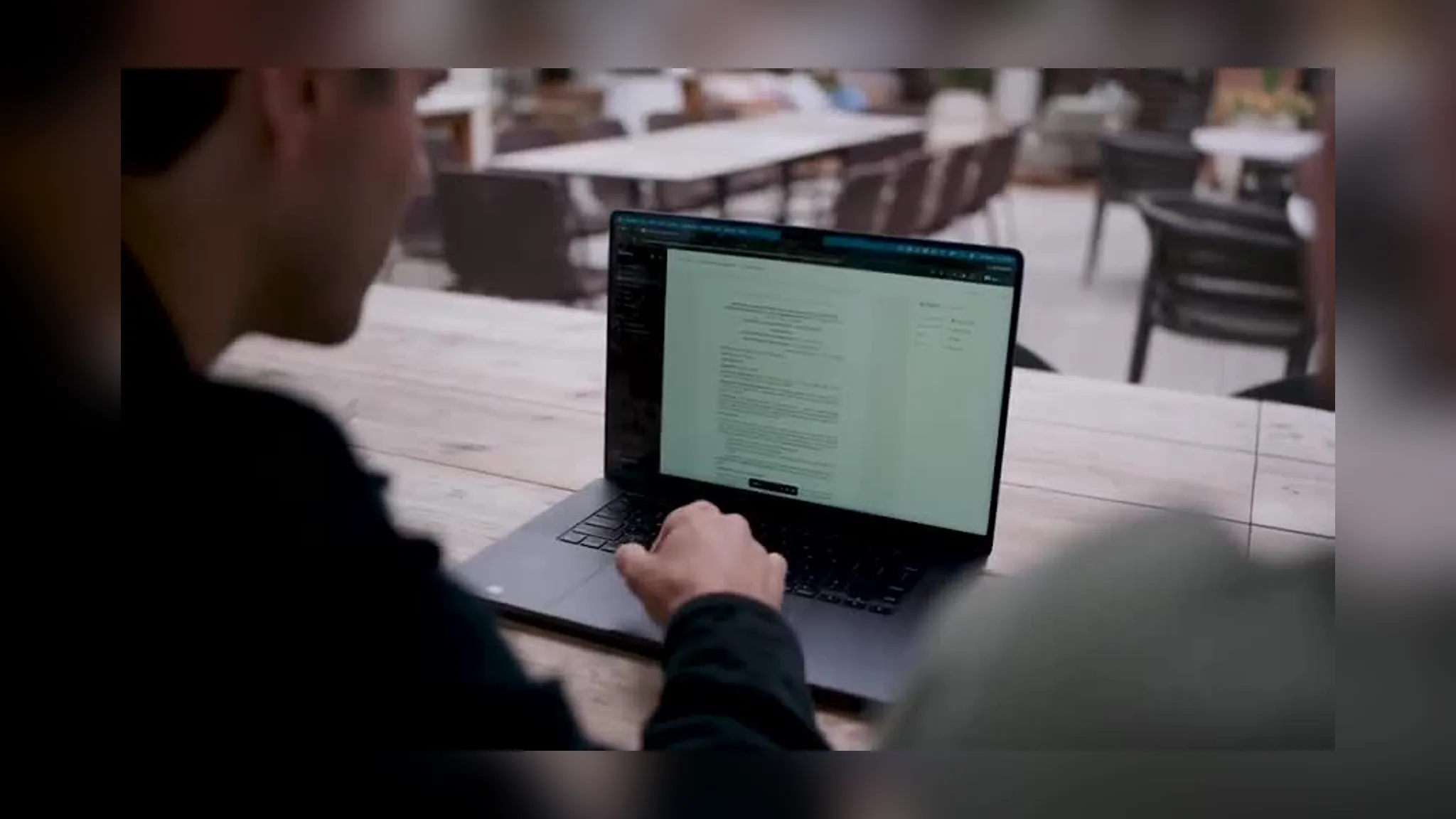
On September 23, OpenAI published a customer story, with a video, on how legal AI company Harvey uses GPT-6 Astra to draft legal documents. Harvey said it feeds the model more context, such as court information, law firm documents and case law research, and gets back better-structured documents. According to OpenAI, Harvey saw substantial improvements in document formatting and context awareness compared with other models. Gabe Pereyra, Harvey's cofounder and president, said, "We can give more context to the model and produce better and better structured outputs."
Harvey helps law firms and in-house legal teams securely deploy AI across complex legal work, from litigation to mergers. Its customers use Harvey to turn vast amounts of information into complex legal documents. OpenAI's case study page classifies Harvey as a North American startup using the API.
In the 66-second video that METAL reviewed, Pereyra frames the problem in terms of scale. "Large law firms can be working on tens of thousands of client problems at once, and they need a secure way to use agents across these client problems," he said. That holds whether the matter is a large merger or a large litigation. He said most legal tasks involve taking in a huge amount of context and drafting a complex document, and that this is exactly the boundary Astra is pushing. As a result, customers can focus more on high-level strategy than on analyzing documents and formatting the output.
The feature that stands out in the case study is Harvey's memory panel. It brings a lawyer's individual preferences directly into the drafting workflow: a lawyer can record instructions such as using numbered lists, prioritizing the securities filing database EDGAR as a source, or color coding issues by priority. These preferences appear alongside the source material and the draft memorandum. OpenAI said that because Astra can process more context, Harvey can produce higher-quality legal documents.
Harvey's researchers point in the same direction. According to reports, Niko Grupen, Harvey's head of applied research, said, "Astra is a significant quality improvement over GPT-5.6 Sol across complex legal tasks." He said that in early testing Astra approached legal work the way a discerning lawyer does, distinguishing documents from established records, surfacing unsupported assumptions and converting gaps into concrete drafting positions.
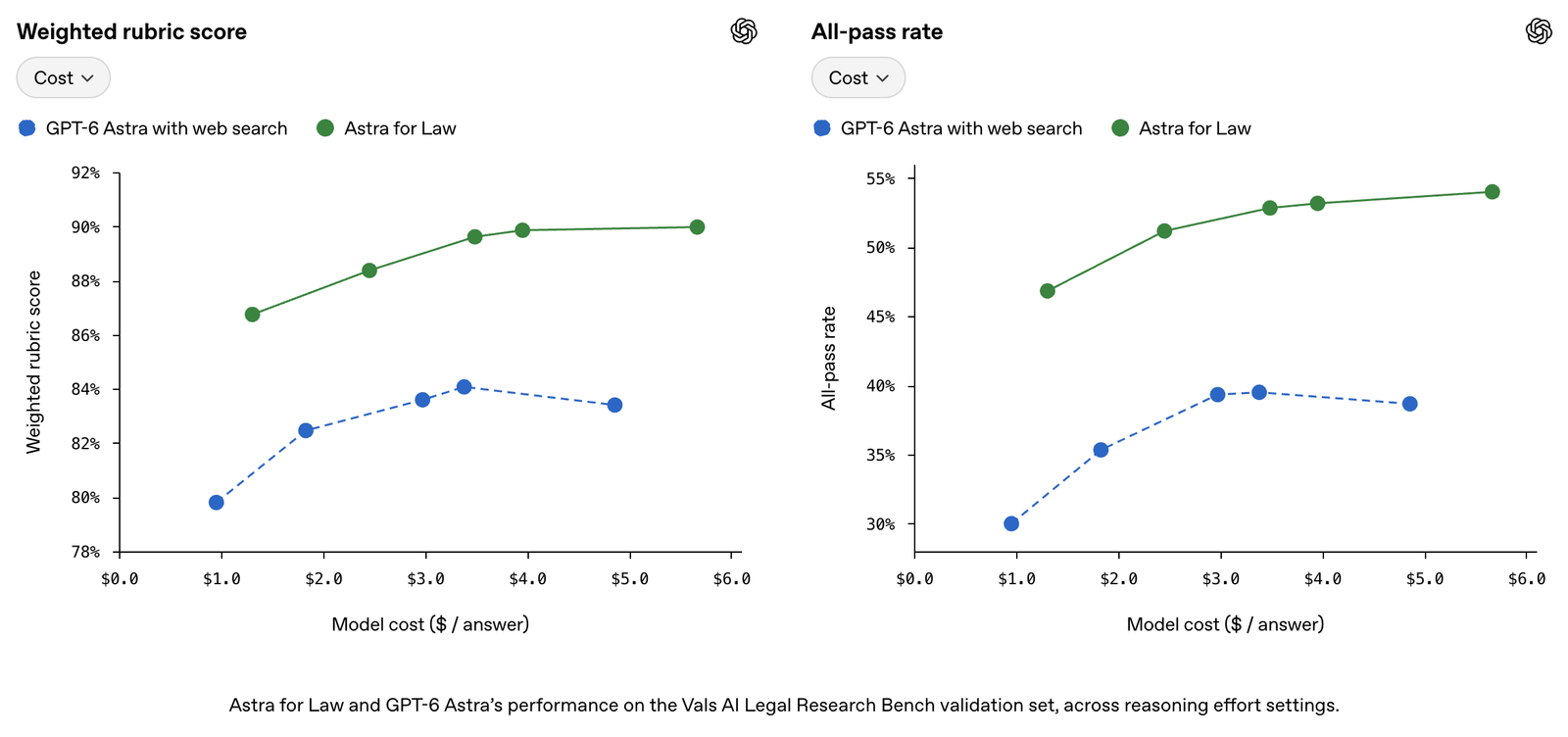
Behind this is a configuration built for law. METAL previously reported that OpenAI announced Astra for Law on September 17, with Harvey and Legora named as API customers that will build products on it. Astra for Law pairs GPT-6 Astra with a legal search index covering more than 230 million URLs and with instructions for legal analysis and writing. According to OpenAI, it passed the overall correctness check on 54.0% of 200 U.S. legal questions in Vals AI's Legal Research Bench, a 40% relative improvement over the 38.7% of GPT-6 Astra using web search alone. In that announcement, Grupen said Astra for Law "showed strength across key aspects of legal research: grounding answers in on-point authorities, citing with precision, and offering practical, advisory guidance."
Results from Legora, which uses the same model, are also available. According to reports, Legora's agent used GPT-6 Astra to complete a financial-statement tie-out across 41 documents in a single run and found all four errors planted in the accounts. One of them was a £500,000 gap hidden in the revenue note. Legora said performance on this workflow improved by nearly 40% over the previous model, while the average improvement across all tasks in its own BAR benchmark was about 3%.
GPT-6 Astra is OpenAI's flagship model, which began a limited rollout on September 3. According to reports, it scored 59.3% on Agents' Last Exam, a benchmark covering 55 professional subdomains, ahead of GPT-5.6 Sol's 53.6%. OpenAI has been releasing Astra customer stories in quick succession, including invideo and Parallel.
Through a tech lawyer's lens, the core of this case study is control rather than performance numbers. The improvements Harvey highlights are formatting and context awareness, and OpenAI did not quantify them. The memory panel is a tool for lawyers to set source priorities and document format in advance, and Legora also stressed that the final judgment stays with the legal professional. Responsibility for a legal document rests with the lawyer who signs it. The more AI raises the quality of a first draft, the more weight shifts to people for deciding which authorities come first and for reviewing the result.



Comments