


Summary
- On September 23, OpenAI published invideo's GPT-6 Astra customer story along with a video.
- The success rate for color-grading and color-correction tasks rose about three times, and a few editors created about 50 custom effects in one day.
- CEO Sanket Shah said Astra plans edits with frame-level accuracy and finishes work in fewer reasoning steps.
On September 23, OpenAI published a customer story showing how video-editing startup invideo upgraded its editing agent with GPT-6 Astra. According to invideo, after adding Astra the success rate for color-grading and color-correction tasks rose about threefold, and a few editors created about 50 custom effects in a single day. OpenAI released the story together with a startup spotlight video.
invideo is an agentic video editor that takes on editing work while the human editor stays in control. Editing a video is a chain of decisions: shaping the story, placing sound effects, building transitions, and adjusting color. The agent has to break the editor's direction into steps, pick the right tools, carry out the work, and verify the result. OpenAI's case study page classifies invideo as a media startup in the Asia-Pacific region that uses the API.
The first thing invideo CEO Sanket Shah points to is planning. "How Astra can plan a particular edit on a frame-level accuracy is quite stunning," he said. According to Shah, Astra laid out editing sequences in fewer reasoning steps than the models the company had previously tested, and used fewer output tokens as a result. invideo said that even as tasks grew longer and more complex, Astra carried out several instructions in a row without losing sight of the editor's original goal.
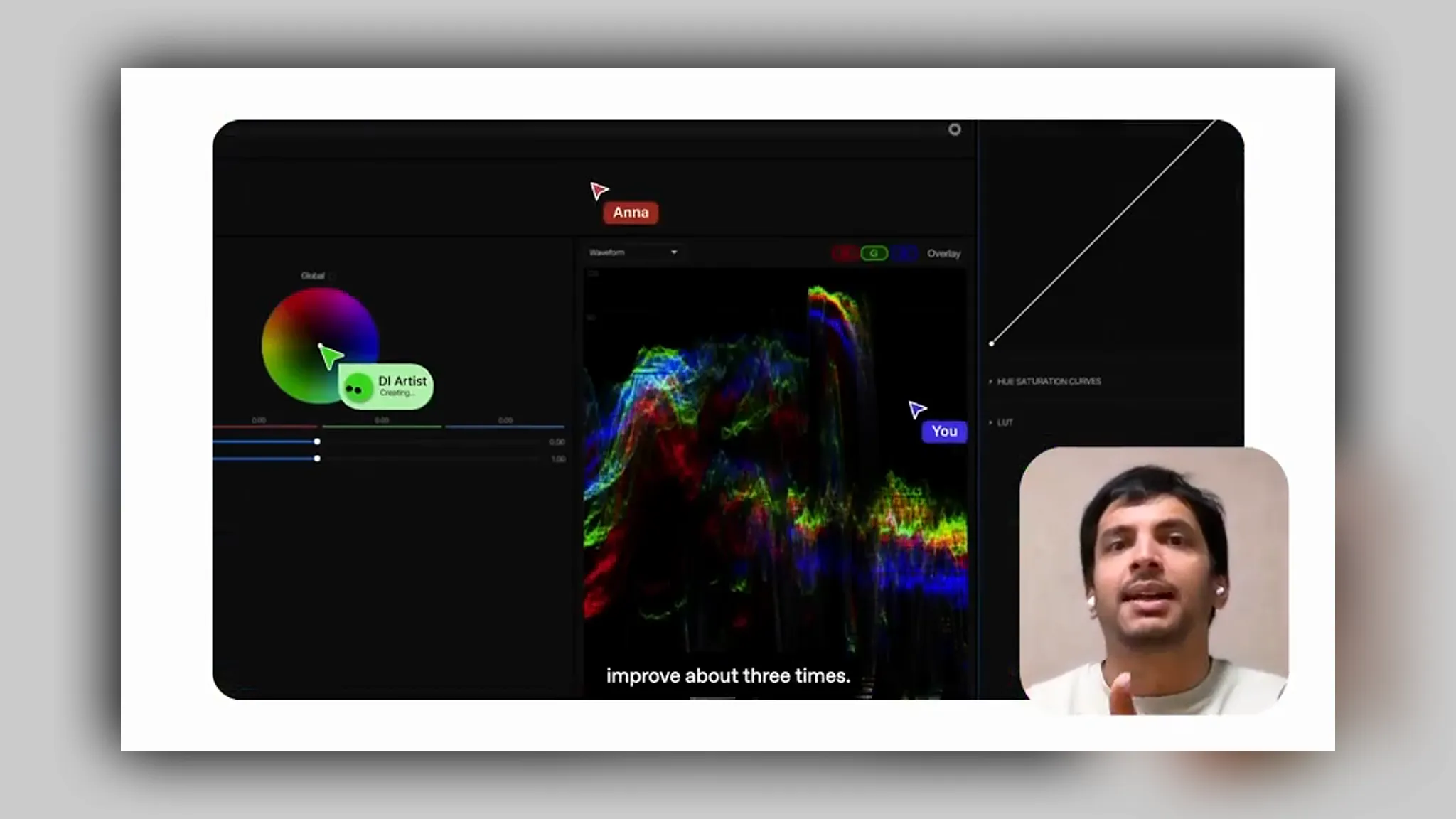
The biggest jump came in color. Color work forces the agent to choose among overlapping approaches such as correction, grading, regeneration, LUTs, and isolating a specific subject, which made it an area where agents often failed. To change a background while keeping a person's skin tone intact, the agent first has to isolate the person and track them across frames before applying color to everything else. "Earlier, we saw very high failure rates for color-grading and color-correction tasks. With Astra, the success rate improved about three times," Shah said.
The second result is custom effects. When an editor describes an effect or provides a visual reference, the agent writes code for an effect tailored to the footage, places it on the timeline, and adds controls the editor can adjust later. A few invideo editors used this approach to create about 50 effects in one day. invideo repeatedly stressed that the output is not a baked-in video but a timeline that stays editable to the end.
The 56-second spotlight video that METAL reviewed shows the actual working screens. After an editor types a request into the agent's input box to add detailed sound effects and sound mixing, a timeline stacked with multiple tracks appears, and after a request to make the colors pop a little, color-wheel and waveform-monitor screens follow. In the video, Shah says that "the video a user wants, especially a serious creative wants, is the video that they have in their mind," and explains that Astra understands which sound effect to pair with which transition and places them frame by frame. He added that this saves editors hundreds of hours and takes away their most boring grunt work.
GPT-6 Astra is the top-tier model OpenAI released in early September. METAL has reported on OpenAI unveiling GPT-6 Astra along with its alignment improvements and risk rating, and also covered a video of a coding-agent company testing Astra. On the same day, OpenAI also posted an Astra case study from legal AI company Harvey. Releasing customer stories one after another after a model launch is a way of persuading with field results rather than feature lists.
From a content marketer's point of view, the audience this story targets is creators more than developers. Both numbers, the threefold success rate and the 50 effects in a day, are invideo's internal measurements, and neither the measurement method nor the names of the comparison models were disclosed. Still, the message is clear. Labor-intensive, repetitive work such as color correction goes to the agent, while the story, the taste, and the final cut stay with people. Competition among video tools is shifting from who can generate the flashiest footage to who can handle an editor's timeline most reliably.

Comments