


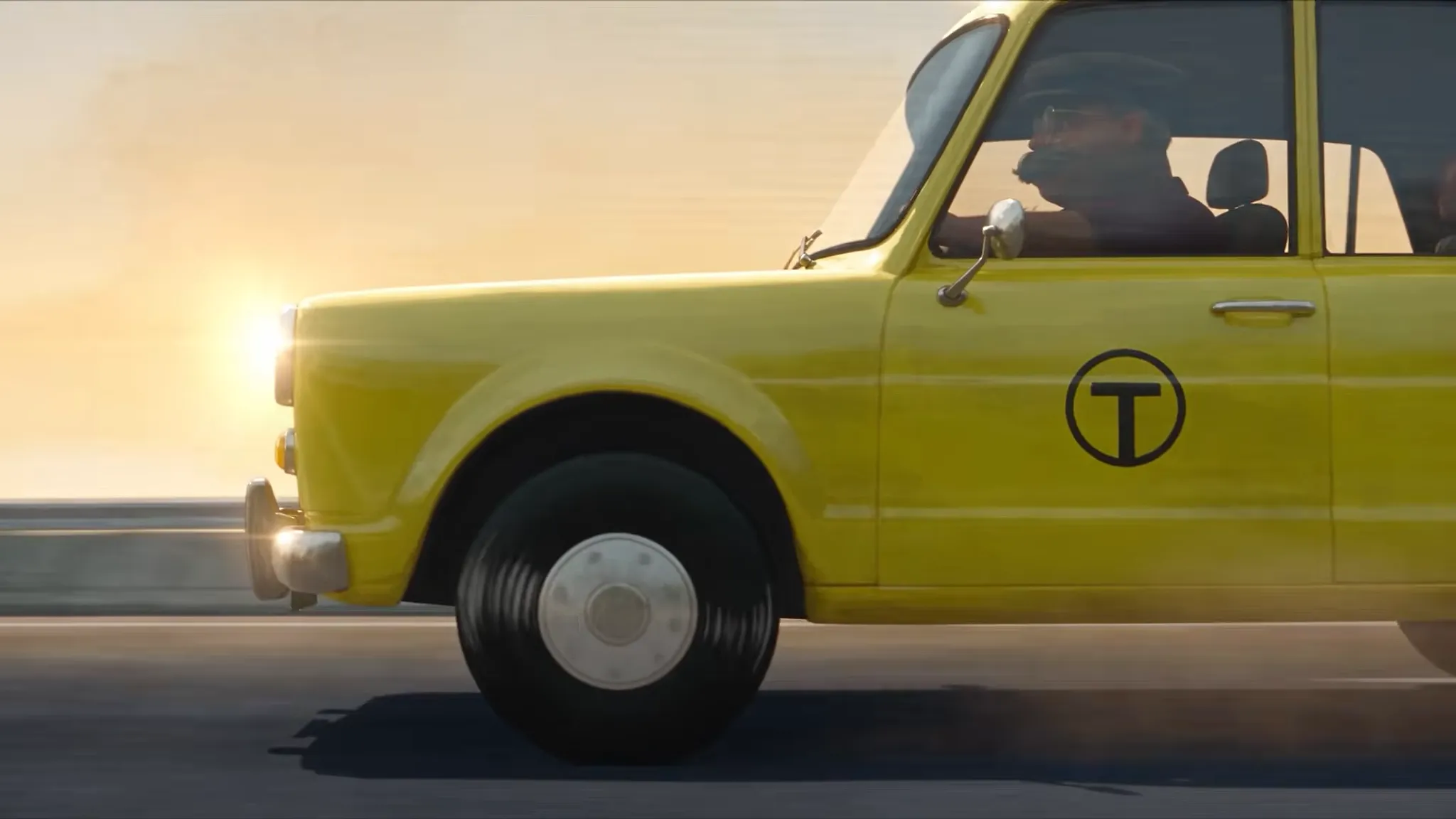
Image: YouTube (video still)
Summary
- On September 23, Higgsfield released a making-of video on the car-chase sequence from its animated short Passport Rush as the first episode of its new Higgsfield Animation channel.
- The team worked on 18 scenes in three days using Soul 2.0 assets, hand work in Photoshop, gray Blender previews, and five-block prompts.
- Shots that needed subtle character acting, such as a ceiling-handle gag, were never solved, a problem the team calls the performance gap.
Higgsfield posted a 28-minute making-of video on YouTube on September 23 showing how it built the car-chase sequence of its animated short Passport Rush. The first episode of its new Higgsfield Animation channel, it features Higgsfield animator Amina walking through the entire process, from storyboards and character design to Blender previs and AI video generation. The team said it worked on the sequence's 18 scenes in three days.
Passport Rush is a five-minute action comedy about a girl who arrives at the airport, realizes she left her passport across town, and has to go back for it. The film is still in production, and this video covers only the stretch where the girl takes a taxi through a jammed highway. Amina explained that the team comes from traditional animation and had never worked with AI before joining Higgsfield.
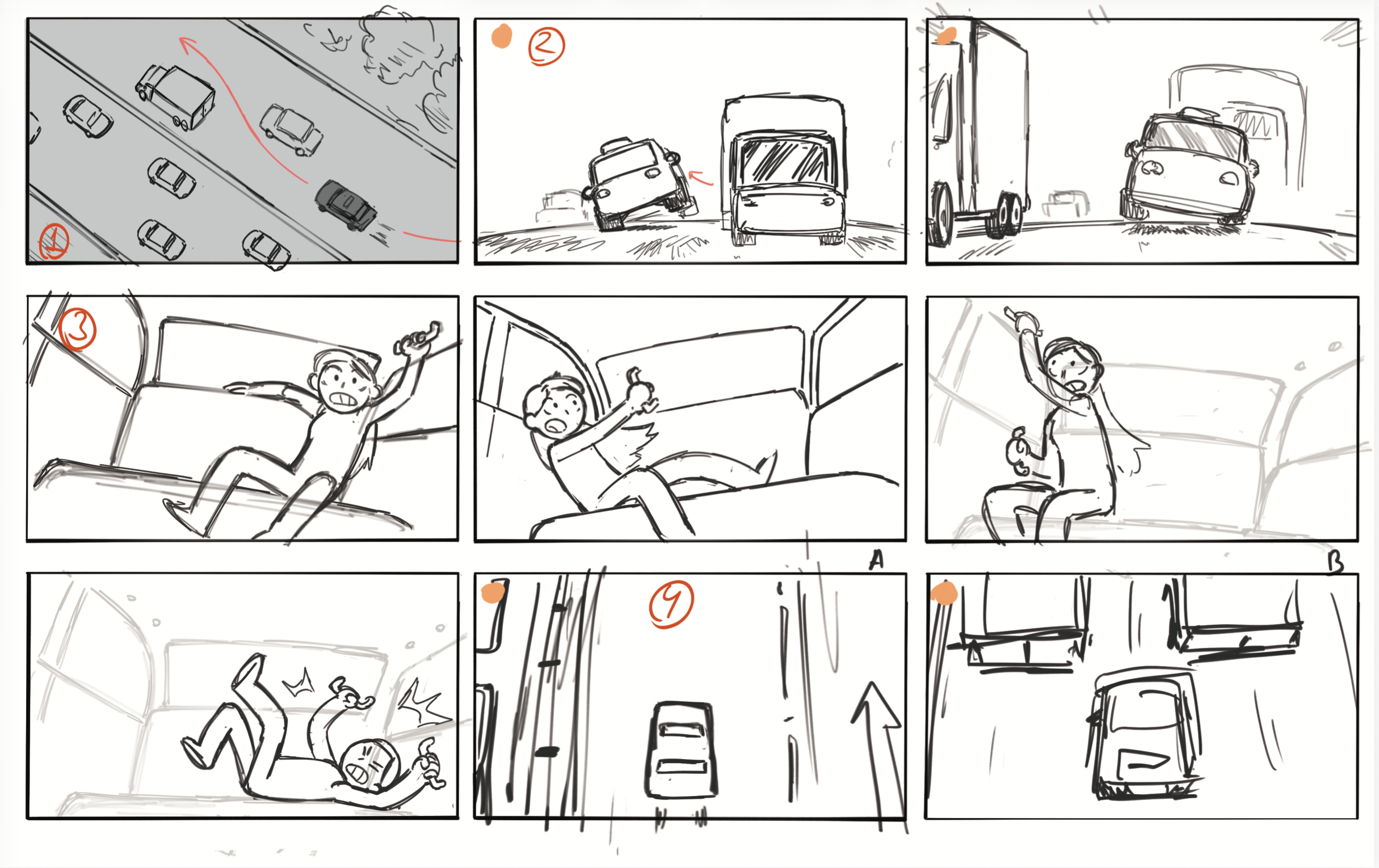
The production structure resembled a traditional pipeline. With a small team, people wore several hats, and there was no dedicated prompt engineer: the artists responsible for characters, environments, and animation wrote the prompts for their own parts. Storyboard panels marked in orange were shots whose motion would be worked out in Blender first, while blank panels went straight to video generation. Amina said shots with specific movement or camera angles, or anything that would take too long to explain to a model in words, went to Blender.
The rule underpinning the whole pipeline is what the team calls an asset-first approach. "The quality of the image inputs dictates the quality of the overall film," Amina said. "If your image inputs are unclear, sloppy, or inconsistent, your overall film is going to be sloppy." The people who prepare character sheets, prop sheets, and backgrounds were given a role called managers, whose job of making every element look like it belongs in the same world is equivalent to that of an art director.
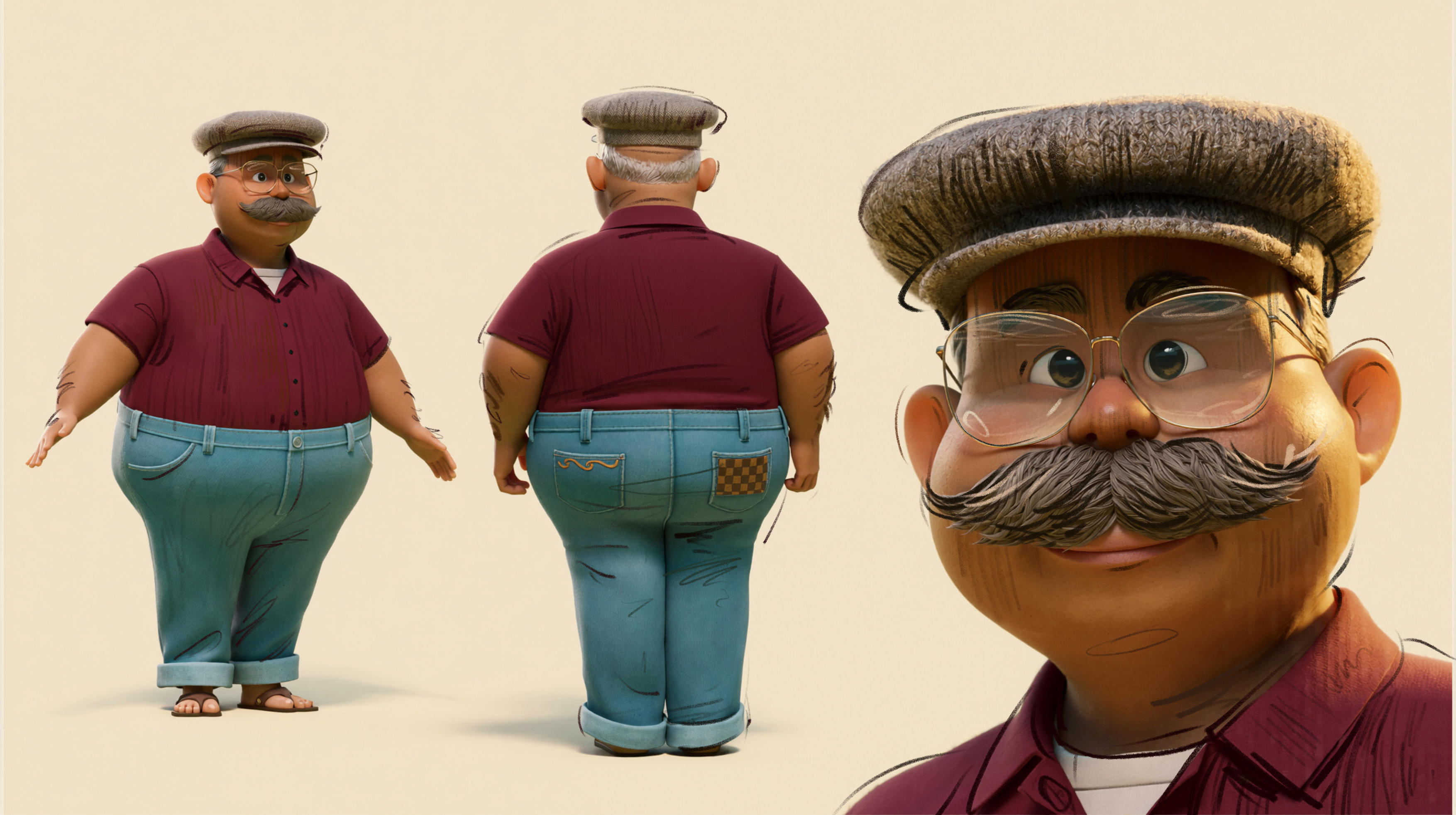
The characters mixed AI generation with hand work. The team wrote character-sheet prompts with Claude, generated batches of four images with Higgsfield's own image model Soul 2.0, and picked one. The heroine went through candidates that were too goofy or too realistic before landing on a design with ginger hair and a blue hoodie; in Photoshop the team raised her saturation and brightness and added paint strokes around her silhouette. The taxi driver went through the same process and was finalized with a cap and a big mustache.
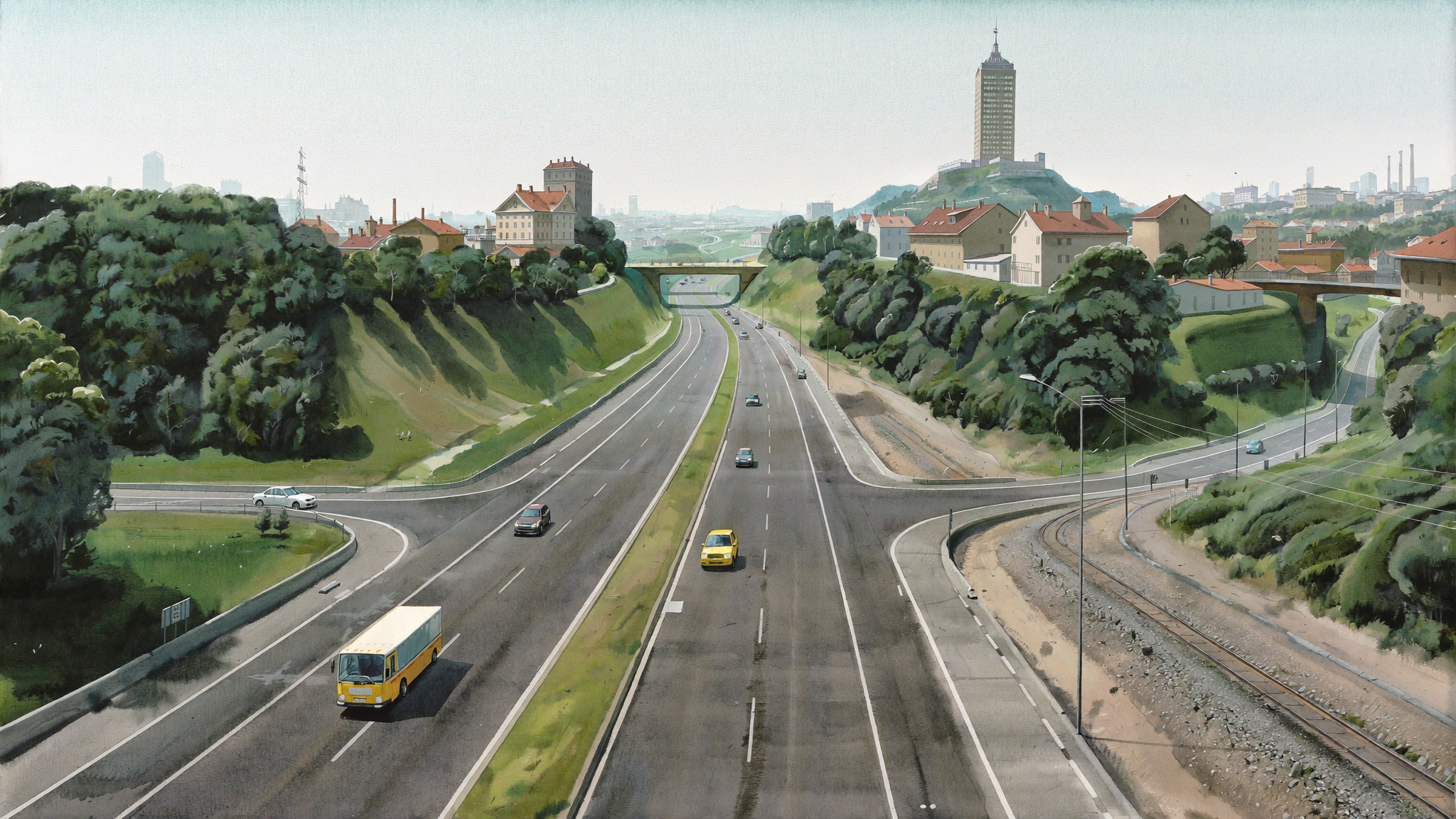
The backgrounds were where the team got stuck longest. Pure watercolor backgrounds looked sloppy and lifeless in tests, and Amina said the team at one point seriously discussed dropping watercolor altogether and pushing the whole film toward 3D. The fix came from lighting. When the time of day moved from midday to late afternoon and the prompt added warm evening light and harsh shadows, the frames gained volume and depth, and laying golden-hour lighting over watercolor backgrounds became the film's visual formula.
The taxi went the other way and lost its watercolor. At first the car had heavy watercolor texture too, but once it moved on video it looked cheap, like an image stretched over 3D geometry. Amina's analysis was that heavy watercolor texture is too much information for a model to hold in motion, and a watercolor prop on a watercolor background doubles the dense textures fighting in every frame. The car became clean 3D, and a version with its roof blown off was made by editing the existing image with Seedream 5.0 Pro.
The video prompts are not short. Amina said the team writes essay-like prompts even for four-second shots: "Every detail we don't write, the model decides for us, and it is a terrible guesser." She added that the first 20% of a prompt matters most because the model reads from top to bottom and follows the text less strictly the further it goes. The team's prompts are split into five blocks: scene context and style, active references, shot structure, locks and constraints, and the 12 principles of animation. That structure lives as a skill written once in Claude and shared across the team.
The standout shot in the video METAL reviewed has the taxi tipping onto two wheels to squeeze between two trucks. In Blender, the team set when the car tilts and when it lands using a preview with only gray geometry and a camera, no color or materials, then generated the shot with that preview as the video input and images of the taxi, trucks, characters, road, and lighting attached as references. According to the prompt write-up Higgsfield published alongside the video, Seedance 2.5 was used for this sequence's video generation.
Failures take up a large part of the video. In a shot beside a truck door, the Blender camera sat so close that the model could not interpret the gray shapes, and pulling the camera back solved it. In the seatbelt scene, a screenshot attached to lock the camera angle happened to be missing the girl's headphones, so they vanished from every new take; the team fixed it by drawing the headphones back into the screenshot by hand in Photoshop.
The team also showed a shot it never solved. A gag in which the girl grabs a ceiling handle that rips off, panics, and grabs another that rips off too did not make the final sequence. Amina explained that the brief pause as she realizes the first handle is broken is the heart of the gag, but a gray character could not convey the expressions and hand movements, and adding detail made the model copy the Blender geometry instead of the character sheet. The team calls this the performance gap. "We had expected the bigger action scenes to be harder, but it turns out AI struggles with the subtle character acting instead," Amina said.
METAL previously reported that Higgsfield showed in August how it built a yakuza scene with 3D blocking in Blender, and on September 23 it covered a one-hour film made with AI. What sets this video apart is that it shows the order of decisions rather than the finished product. Read through a humanities lens, what this making-of records is not tools replacing labor but labor moving to a new place. Drawing by hand has shifted into choosing and correcting assets and writing prompts, and what the animators held onto longest was still the half-beat in which a character hesitates. Higgsfield said that once the film is finished it will publish a full breakdown including the total number of generations, the budget, and how long production took.
Comments