


Image: METAL
Summary
- According to reports, NorthPoint Development offered Hazle Township's 4,500 residents a potential $10,000 each in exchange for permission to build a 1,300-acre data center.
- Residents formed the Alliance to Stop the Line, filed 20 formal protests and used right-to-know requests to learn that the end user is Amazon.
- Shapiro's August Executive Order 2026-05 removed data centers from fast-track permitting and blocked permits without local approval, and the issue has become a factor in next month's gubernatorial election.
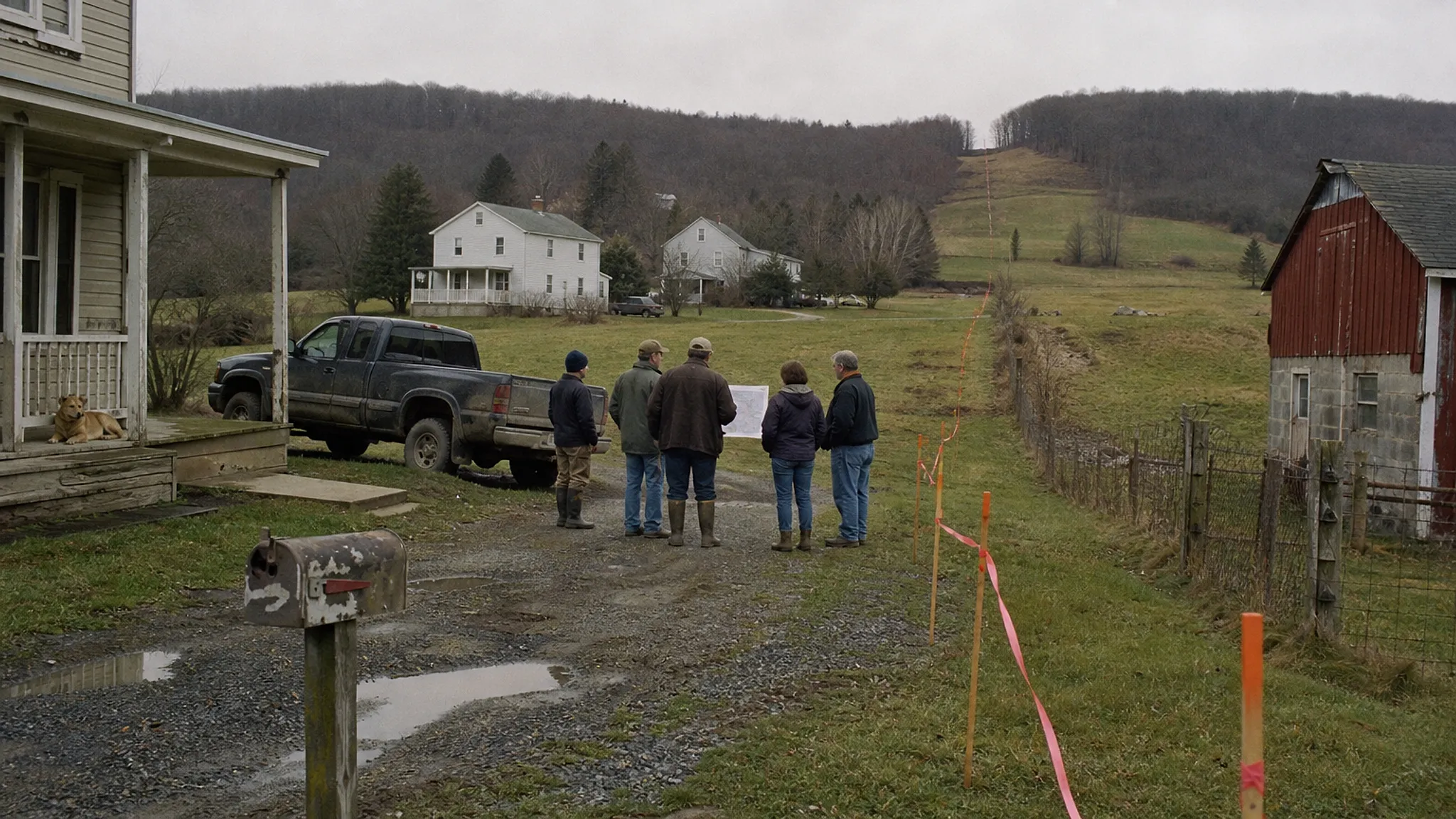
In Hazle Township in northeastern Pennsylvania, opposition to a $165 million data center plan is spreading into an alliance that cuts across party and class. According to reports, developer NorthPoint Development sent letters this summer offering the township's 4,500 residents a potential $10,000 each in exchange for permission to build a 1,300-acre data center. The plan, known as Project Hazelnut, is now scrambling the calculations of candidates from both parties ahead of next month's gubernatorial election.
The spark came from a power line. According to reports, around the same time about 30 properties in nearby Sugarloaf Township faced eminent domain threats from the local utility over a proposed high-voltage line that would power the data center. Residents formed the Alliance to Stop the Line and filed 20 formal protests with the utility, citing health and property-value risks. Others filed right-to-know requests asking who the real end user was, and the emails that came back named Amazon. According to reports, an Amazon spokesperson said the company is evaluating multiple sites across the commonwealth but has no definitive agreement with NorthPoint.
The faces of this movement are unfamiliar. According to reports, Annie Vinatieri, a Sugarloaf Township protester, said the opponents are a mix of working, middle and upper classes, mostly white, nonpartisan, and often new to environmental protest. "It's invigorating, in the sense that you're meeting people who might not be like-minded on a lot of things, but it feels for so many people like this a righteous cause," she said. "We can maybe disagree on the political finer points of things, but we can find this very real camaraderie in the midst of everything." She added, "I've never seen anything quite like it before."
The numbers point the same way. According to reports, about 70% of Americans in a Gallup poll opposed data center construction in their local area, including 75% of Democrats and 63% of Republicans. A Data Center Watch report published in June counted at least 75 data center projects worth more than $130 billion delayed or canceled in the first quarter of this year alone. Over the same period, active opposition groups grew from 396 to 833. Tatishe Nteta, a political science professor at the University of Massachusetts Amherst, said, "There has been little to no clear communication of the benefits, economic or otherwise, that are associated with data centers for everyday Americans."
The two parties reach the same conclusion by different roads. According to reports, Ben Green, an assistant professor of public policy at the University of Michigan's Ford School, explained that Democrats frame the issue in terms of climate change while Republicans focus on protecting land. "Massive corporations coming in and forcing a community to deal with some type of project and not really giving a community any voice and operating in secrecy, no one's really a fan of that," he said.
The state's stance flipped within a year. According to reports, Gov. Josh Shapiro announced Project Hazelnut in November 2024, right after an executive order fast-tracking permits for AI infrastructure, and in July 2025 he announced a $20 billion Amazon data center investment, the largest capital investment in the state's history. But as resident pushback grew, he signed Executive Order 2026-05 on Aug. 18 this year. According to the governor's office announcement that METAL reviewed, the order removes all AI data centers from the fast-track permitting program, bars the Department of Environmental Protection from issuing permits to projects without local approval, and prohibits nondisclosure agreements for data center projects. Developers must commit through a legally binding agreement to the GRID Requirements, which include paying the full cost of power infrastructure, hiring locally and meeting strict water standards. The order also calls for procedures under which data centers lose electric service before other customers when the grid is stressed.
The announcement also laid out the scale of the problem. More than 100 data center proposals in the state have been reported in public databases; 58 of them have discussed permitting with the department, 15 have applied for at least one permit, and only five have received all permits for their first phase. At the signing ceremony, Shapiro said six data center campuses made up of 51 giant warehouses had been proposed in Archbald alone, a borough of 7,500 people covering 17 square miles. "If you can't agree to our strict requirements and get the community where you want to build to say 'yes,' you're not going to have the Commonwealth's support either," he said. According to reports, Pennsylvania is home to 174 of the roughly 4,767 data centers in the U.S. METAL has reported that four U.S. senators from both parties introduced a bipartisan permitting bill that makes data centers pay for transmission costs.
The election is widening the fault lines. According to reports, Vinatieri said Democrats are discouraged by Shapiro's shift, while Republican gubernatorial candidate Stacy Garrity has largely not broken from President Trump's pro-data center position. She expects a meaningful number of voters could write in Democratic state Sen. Katie Muth, who has sponsored a statewide data center development moratorium. Green pointed to Texas Gov. Greg Abbott, who went from calling Texas the epicenter of AI development to halting approvals on 1,800 data center proposals, calling it one of the "signs of the strength of the backlash."
Through a sociological lens, the scene in Hazle Township is a rare cross-cutting alliance in a divided society. Concrete threats, homes along a power line, land facing eminent domain and a tenant kept secret, bound people together before the language of ideology could. The same logic explains why a $10,000-per-person offer failed to quiet the opposition: the compensation went to individuals while the decision was taken away from the community. Green said data centers can no longer be pushed forward with nothing but rosy statements about how great they are. This small township is showing that the next bottleneck for AI infrastructure is not power or chips but consent.
Sources
- Fortune — Rural Pennsylvania’s $165 million data center fight is an epicenter of bipartisan battle against AI →
- Commonwealth of Pennsylvania · Governor's Office — Governor Shapiro Signs Executive Order Demanding Data Center Developers Comply with Strict Requirements →
- Commonwealth of Pennsylvania · Governor's Office — Governor Shapiro’s Remarks as Prepared for Delivery at the Signing Ceremony for an Executive Order on Data Center Development →

Comments