


Summary
- OpenAI shared ChatGPT for Teens usage figures on Oct. 7. Teens spend under 15 minutes a day on average, and fewer than 2% use it for more than three consecutive hours.
- College Planner for US students in grades 10 through 12 is coming soon. It brings application requirements, deadlines, tasks and financial-aid steps into one plan, and OpenAI is also supporting College Advising Corps and a student advisory council at Boston Children's Hospital.
- After testing with more than 4,000 prompts, Common Sense Media rated the teen mode an "unacceptable risk," and OpenAI countered that the testing did not reflect how the safeguards actually work.
OpenAI on Oct. 7 released the first usage figures for ChatGPT for Teens, its version for users under 18, and announced that it will soon add College Planner to help with college application preparation. According to the company, teens spend under 15 minutes a day on ChatGPT on average. The same day, the youth-protection nonprofit Common Sense Media gave the teen mode its lowest rating, "unacceptable risk." For a single service, the company's usage data and an outside test reached opposite conclusions on the same day.
ChatGPT for Teens is the default experience automatically applied to accounts identified as under 18. According to reports, OpenAI began rolling out the mode in August; it switches on when age information or the company's age estimate indicates a user is under 18, and it enables parental controls and restrictions on sensitive topics. METAL previously reported on ChatGPT's teen mode for ages 13 to 17 and OpenAI's $5 million in support for research on AI's effects on teens.
The figures OpenAI released center on learning. Teens who gained access to the teen mode sent about 2.7 million more learning-related messages on average than those who did not yet have it, the company said. The most-selected conversation starters were "ask questions to develop my ideas," "give feedback on my draft" and "help me check my evidence." In one week, nearly 1.2 million teens used Learning Visualizations to work through math and science concepts visually, and more than 180,000 used Study Mode for step-by-step learning support.
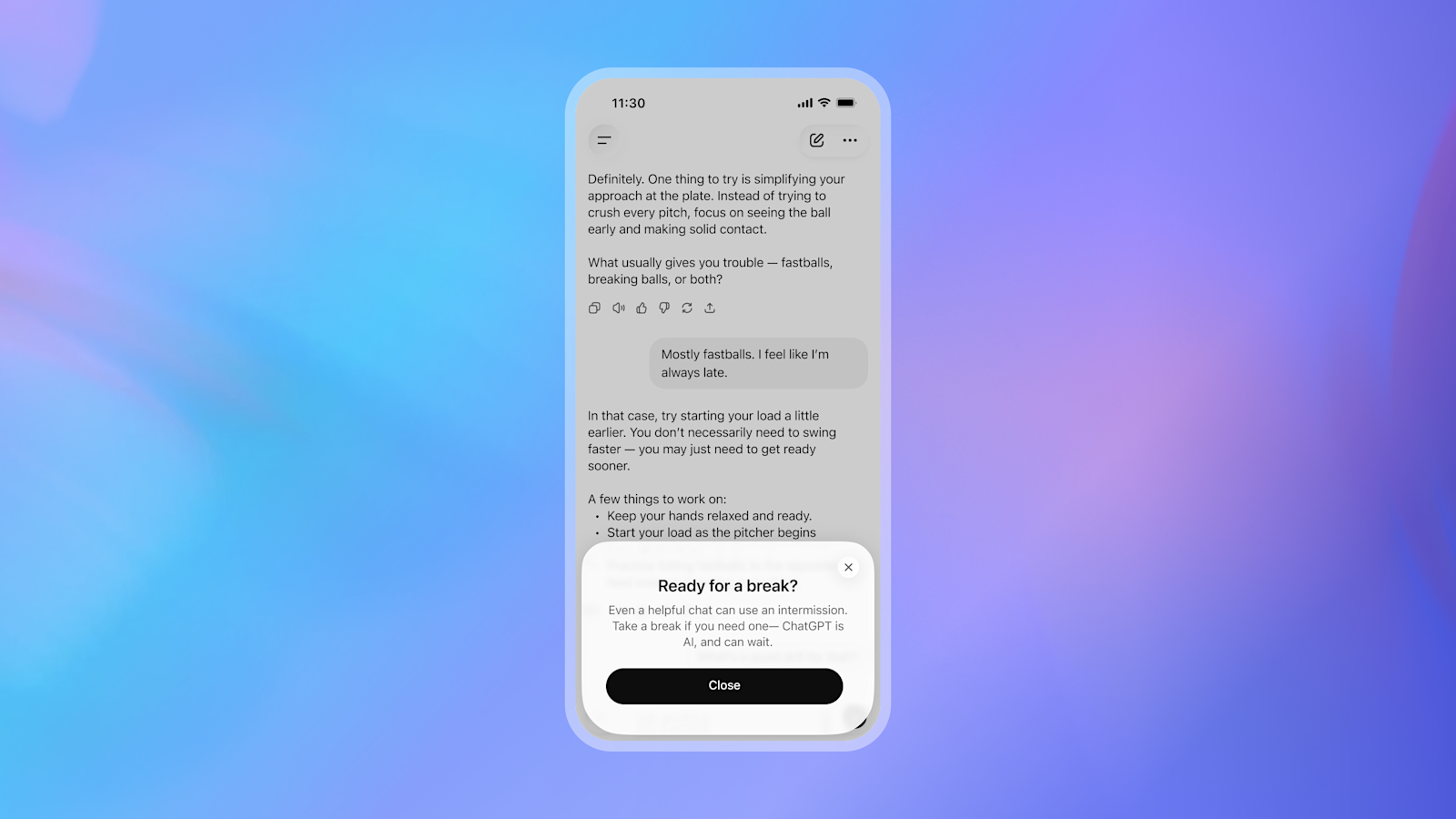
The usage-time figures were framed against social media. Fewer than 2% of teens use ChatGPT for more than three consecutive hours, and in almost half of teen conversations with a break reminder, teens took a break or ended the conversation within five minutes, OpenAI said. Citing the publicly reported average of five hours a day that teens spend on social media, the company argued that ChatGPT is a tool for learning and creativity rather than passive scrolling. It also reported that more than 80% of teens with sessions longer than three hours sent at least one learning-related prompt.
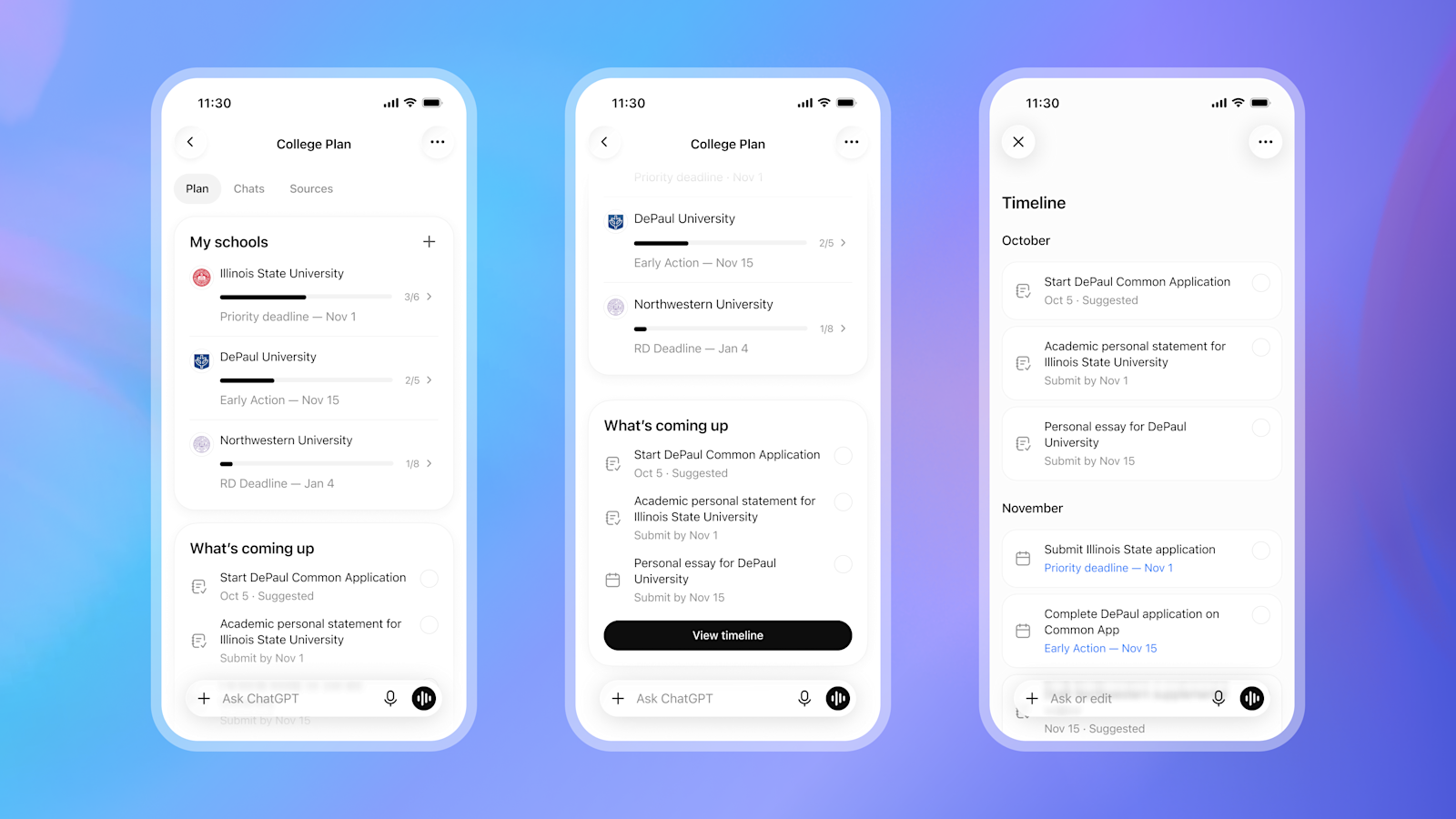
The centerpiece of the new features is College Planner. According to OpenAI, hundreds of thousands of US teens use ChatGPT each week to plan applications, track deadlines, research schools and understand financial aid. College Planner bundles application requirements, deadlines, tasks and financial-aid steps for the schools on a student's list into one plan and shows what is left through a timeline. It also helps students find scholarships and fee waivers. The first version is for US students in grades 10 through 12 planning to attend a four-year college, with plans to expand to more countries and to two-year colleges, technical colleges and trade schools. The company drew a line, saying it designed the tool to help with practical steps without taking over the personal work of deciding where to apply.
OpenAI is also backing human advising. It is funding College Advising Corps, a nonprofit that places recent college graduates as advisers in under-resourced high schools, to expand into new states and create an AI fellowship. "For students navigating the college application process, an unanswered question about a form, deadline, or fee can feel like a closed door," said Ekaterina Struett, CEO of College Advising Corps, adding that she sees promise in College Planner as a tool to help students prepare for those conversations and stay on track.
Teens are also getting a direct channel for their views. OpenAI will support Boston Children's Hospital's Digital Wellness Lab and its independent Student Advisory Council over the next three years. In the 2026–27 school year, about 22 students will take part across two tracks. About 12 students aged 14 to 18 will work on digital wellbeing projects in their communities, and about 10 aged 16 to 20 will focus on building AI chatbots and emerging technology. The company said it will seek their feedback on teen safety defaults, parental controls and notifications, and AI literacy. "Young people bring critical insights and knowledge that adults don't have," said Dr. Michael Rich, the lab's founder and director, and Cori Stott, its executive director. "They see what works, what fails, and what needs to change."
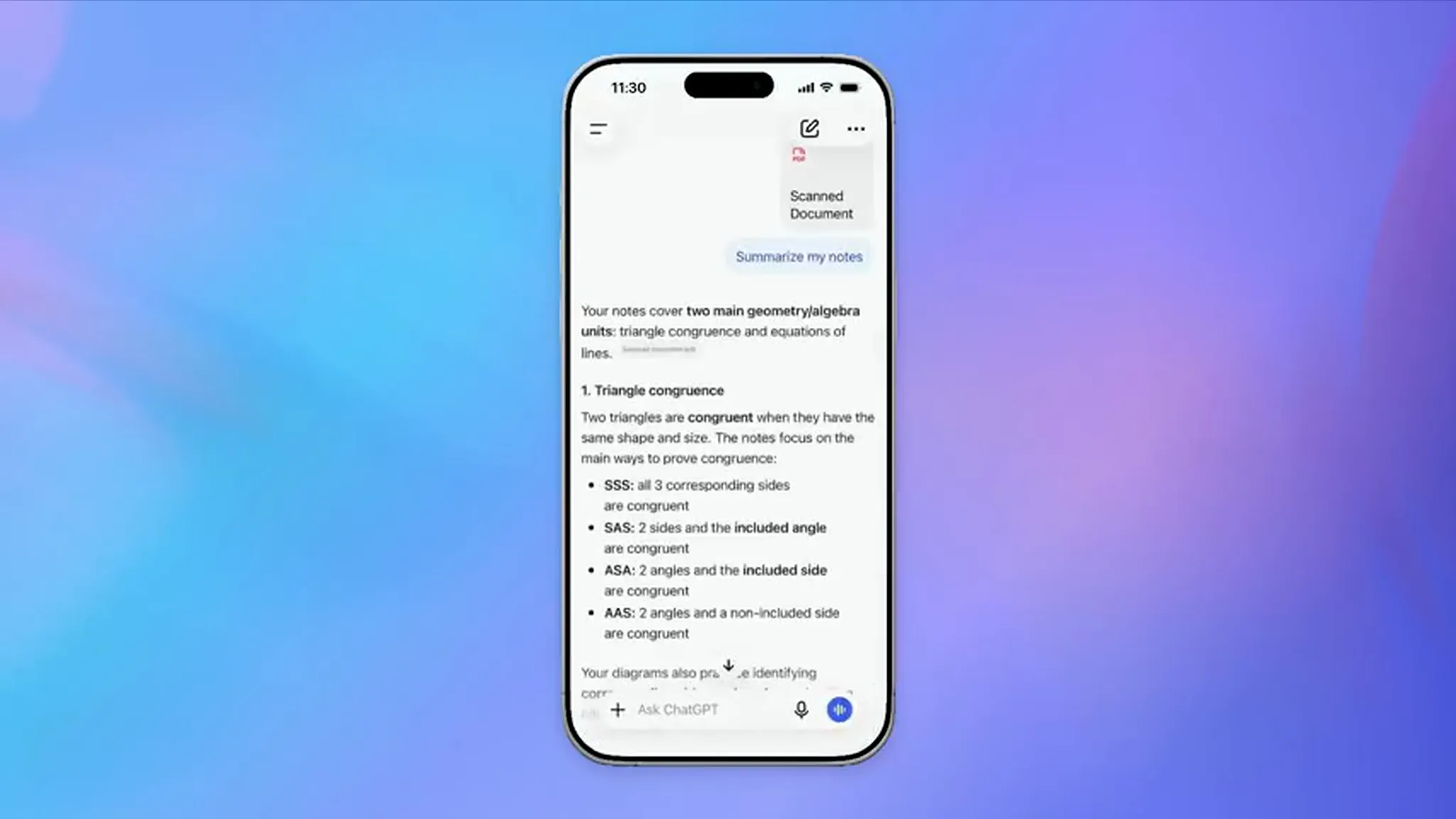
Study tools have expanded too. A feature that combines several pages of notes photographed in a row into a single PDF for upload has arrived on iOS, with Android support in the works. The 21-second official demo video METAL reviewed shows pages of a notebook being photographed one after another and uploaded as a single bundle. When students upload notes or choose a topic, ChatGPT creates flashcards and supports marking known cards, revisiting missed ones and shuffling. Decks are saved in the Library, and students can set up review sessions with a scheduled task. The feature that turns notes into interactive quizzes was also improved.
Common Sense Media reached the opposite conclusion. According to reports, the group's Youth AI Safety Institute tested the teen mode with more than 4,000 prompts. It linked more than a dozen newly created teen accounts to parent accounts and talked about crisis topics such as eating disorders and self-harm for close to an hour, but no alert arrived, and across weeks of testing only four alerts came. In three of five severe-harm categories, ChatGPT fell short of the group's goal of detecting 95% of crisis prompts. The group called for keeping users under 18 off the platform until outside testers verify the safeguards. An OpenAI spokesperson pushed back, saying the testing does not "accurately reflect" how the safeguards work and that "the bulk of their testing may have begun and concluded before activation of parental controls was complete." The company explained that for security and scale reasons, it can take hours for account linking and safety alerts to become active.
Seen through a sociologist's lens, this announcement is a contest over what gets measured. OpenAI presented usage time and learning-message counts, while Common Sense Media measured whether alerts go off at moments of crisis. A 15-minute daily average says how much of teens' time the service holds, but not whether safeguards work in rare crisis conversations. College Planner's promise to organize the application process for students at schools short on college counseling faces the same test. Whether the tool narrows gaps will ultimately be settled by measurement outside the company, and OpenAI's pledge to report back to the student advisory council on what it changed and why is the first such test.
Sources
- OpenAI — Helping teens learn, plan, and shape the future of AI →
- Digital Trends — ChatGPT for teens is getting a college planner and new study tools →
- SSBCrack News — ChatGPT's First Teen Usage Report Clocks Under 15 Minutes a Day, but a Watchdog Calls the Teen Mode an 'Unacceptable Risk' →
- Digital Trends — OpenAI promised safer ChatGPT for teens, but a 4,000-prompt test found its safeguards falling dangerously short →



Comments