


Summary
- OpenAI began rolling out GPT-6 to all ChatGPT users on Oct. 7. Paid plans get it the same day and Free and Go the next day, with GPT-6 Sol answering on paid plans and GPT-6 Luna on free ones.
- The new Intelligent UI feature builds screens inside the chat by mixing graphics, charts, buttons and input forms depending on the question. A native component library and a compiler let the interface appear as the answer is generated.
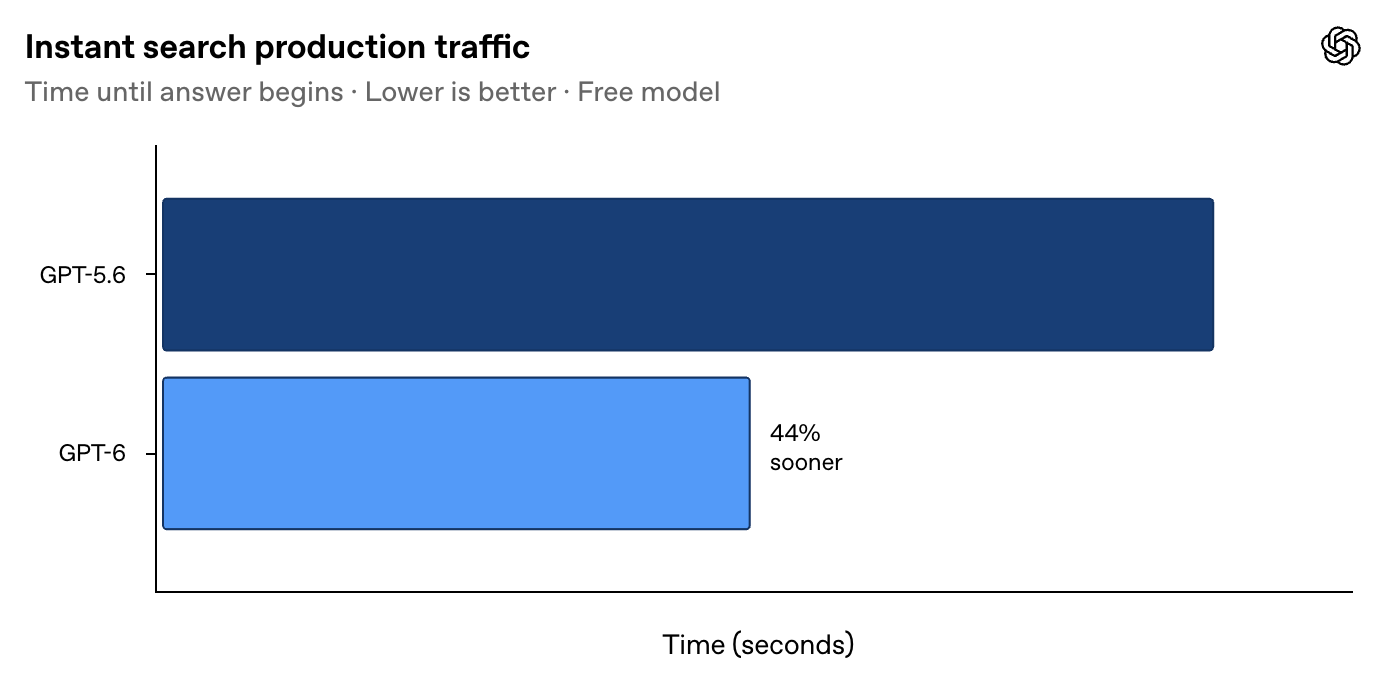
- GPT-6 starts writing its answer while it is still thinking, and the company said GPT-6 Instant began answering web-search questions 44% sooner on average than GPT-5.6 Instant.
OpenAI began rolling out GPT-6 to all ChatGPT users on Oct. 7. The move extends the GPT-6 generation, first released to paying customers last month, to the more than 1.2 billion people who use ChatGPT every week. The rollout comes with a new feature called Intelligent UI. Instead of answering only in text, it mixes interface elements such as graphics, charts, tappable buttons and input forms and places them directly in the chat.
The rollout order follows subscription tiers. On launch day it reached the Chat tab on Plus, Pro, Business and Enterprise plans worldwide, and it expands to Free and Go plans the following day. For Enterprise, availability depends on the company's admin settings. GPT-6 Sol generates answers on paid plans, while GPT-6 Luna does so on Free and Go. OpenAI said both models are tuned for everyday conversation. The models powering Work and Codex are not changing in this release. According to reports, the GPT-6 family had until now been available only in Work and Codex, while the Chat screen used by the most people ran on the GPT-5.6 series.
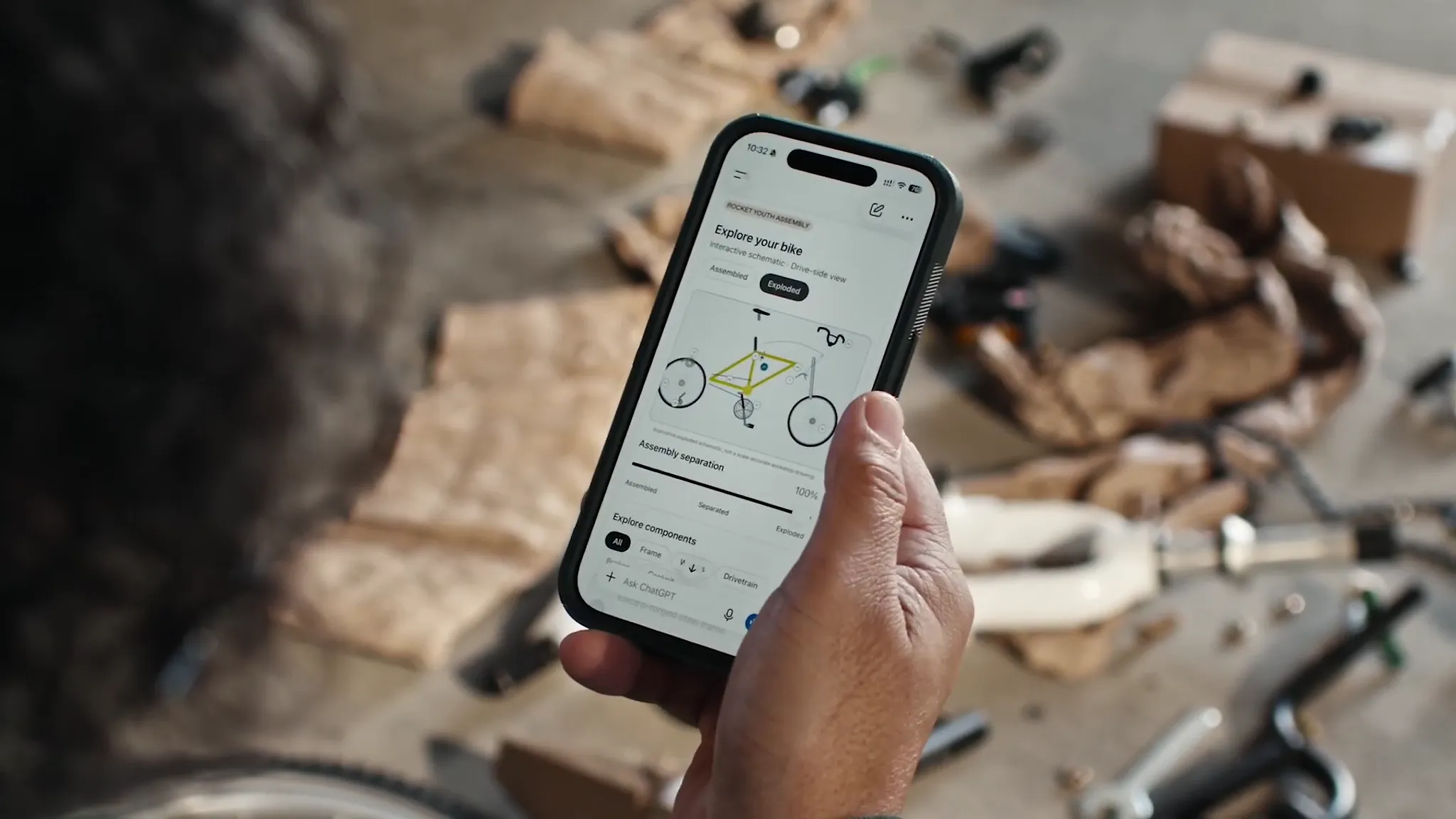
The core of Intelligent UI is that the model chooses the format of the answer. According to OpenAI, it lays items side by side for comparison questions and draws a diagram you can tap through for questions that need explaining. When a paragraph of text is the most useful answer, it simply answers in text. The announcement used a Sunday lamb roast plan as an example. GPT-5.6 Instant wrote a table of meat weights by number of guests, while GPT-6 Instant built a screen that recalculates the shopping list as soon as the guest count changes, along with an eight-step cooking checklist. The demos also showed road-trip stops pinned on a map and a screen that lets users tap through the structure of a 7-speed bike part by part.
Users can also ask for a tool to be built on the spot. OpenAI cited a calculator showing how savings could grow, a bill splitter for dinner with friends and a game played inside the chat. For learning, it highlighted explanations that let users change an input to see how the result shifts or work through a problem step by step. In an X post, the company described Intelligent UI as something that "makes everyday questions more visual, complex topics easier to grasp, and interactive tools for your task available on the spot."
The mechanism combines fixed parts with free assembly. OpenAI built a library of native, streamable interface components and, separately, a compiler that processes the interface as the model generates it. The library gives every answer a familiar design foundation, while the model decides how the pieces fit together. Thanks to the compiler, the interface appears progressively as it is generated rather than waiting for the whole answer to finish. This structure is also what keeps the experience consistent across web and mobile. During training, the company said, it evaluated the interfaces the model created for clarity, usefulness and completeness, teaching it when to add interactivity and when text is enough.
OpenAI did not hide that work remains. The announcement states that "there's still work ahead to improve the model's design judgment and expand what it can create." Even so, the company framed the feature as a major shift in how people interact with ChatGPT. Rather than fitting every question into the same conversational format, it said, ChatGPT combines interface, data and actions to create new ways of exploring information.
Speed was reworked as well. GPT-6 begins writing its answer before it has finished thinking. Since reasoning models arrived, users could hand over harder problems but had to wait for the model to finish thinking. OpenAI said it trained the model to take the user's waiting time into account and build the answer progressively from what it knows and has found so far, keeping answers delivered in several parts as cohesive and factual as one written all at once.
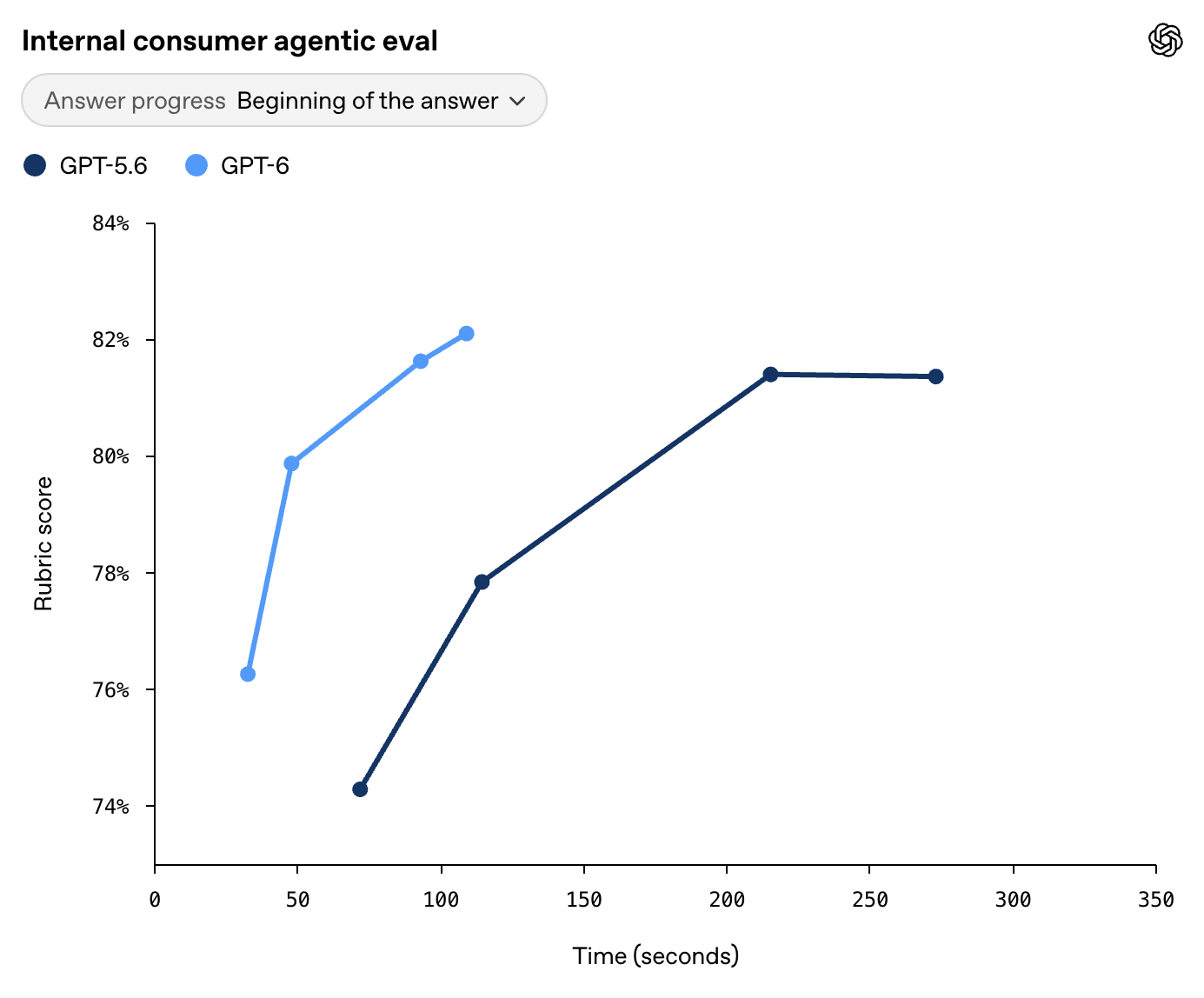
The company published two figures. In an internal evaluation of everyday agentic tasks, GPT-6 Extra High began answering at the same point as GPT-5.6 Medium while scoring higher overall than GPT-5.6 Extra High. In the announcement chart METAL reviewed, the GPT-6 curve also sits above GPT-5.6 at every point where the answer begins. On questions that need web search, GPT-6 Instant started answering 44% sooner on average than GPT-5.6 Instant. The chart notes that the 44% figure was measured on real production traffic for the free model. The company said the model is also better at deciding when to search and at finding information that supports its answers, but both figures come from OpenAI's own internal measurements.
Safety training built on the earlier advances of Astra. According to OpenAI, GPT-6 resists attempts to bypass its safety training better than GPT-5.6 Sol, especially attacks that adapt across multiple turns. Safeguards against high-risk misuse involving cyberattacks, biological threats and violence were updated with lessons from real-world use. The model was trained to use conversation history and context to recognize risks not visible in a single prompt, and to reduce unnecessary refusals of harmless requests. The company's assessment is that it now states more clearly when it lacks the information or tools to answer, with detailed results in the system card. METAL previously reported on OpenAI's GPT-6 Sol and Luna release and its GPT-6 model guide.
Seen through an AI engineer's eyes, the weight of this announcement lies less in model scores than in how the interface is built. Instead of having the model write raw HTML, OpenAI has it pick and assemble parts from a vetted component list, and has a compiler render the result as it streams. It is a compromise that keeps the design from drifting each time while handing the choice of format to the model. It also sits on the same axis as the think-while-answering feature. Both move up the moment the first screen of an answer appears. OpenAI wrote at the end of its announcement that "instead of people adapting to software, software will adapt to people." Even if 1.2 billion people ask the same question, each may now get a different screen, and the remaining question is how often the format the model picks is truly better than a paragraph of text.



Comments