


Image: @runwayml (X) (video still)
Summary
- Runway unveiled DIFFUSE, a hiring platform for AI-native creatives, on September 22.
- Of more than 1,000 creative job postings at nearly 400 companies, 17 percent named AI skills or generative tools.
- Vetting criteria, search ranking, fees, contracts and payment handling do not appear in the announcement.
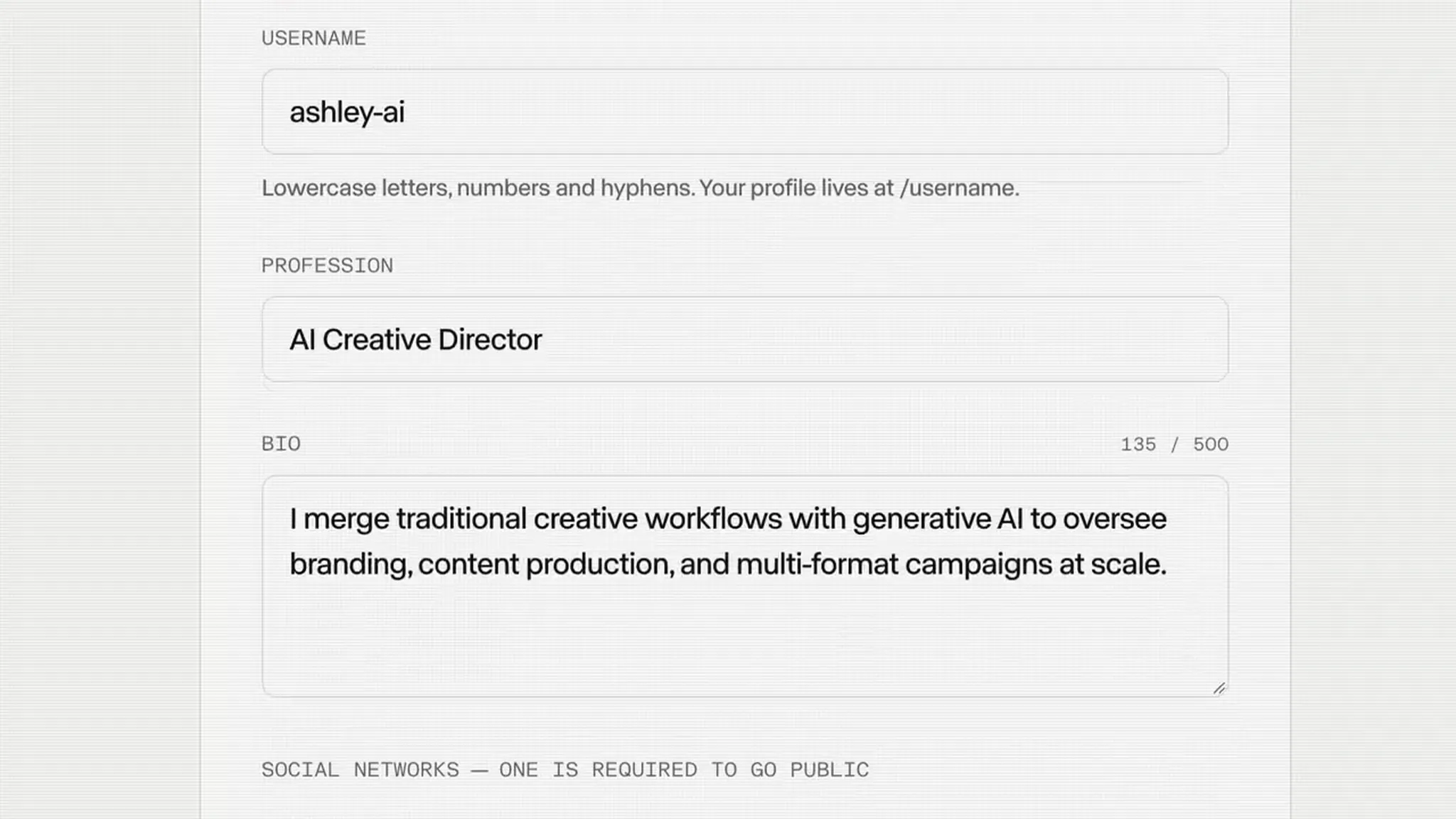
Runway opened DIFFUSE on September 22, a hiring platform linking creatives who work with AI to the companies searching for them. The address is diffuse.runway.com and it is usable right now. Independent artists, boutique studios and production companies post profiles and portfolios, while brands, agencies and studios search inside it and reach out directly.
The numbers the company offered as evidence came from job postings. Runway looked at more than 1,000 open creative job postings from nearly 400 companies, and wrote in its announcement that 17 percent of them named AI skills or generative tools. In that same sample, the video-specific tool requested most often was Runway. The company did not disclose the period over which the sample was gathered, the collection method, which job categories were included, or what it counted as an AI-related skill.
The tone of the announcement is not defensive. Runway wrote in its official X post, "There's a lot of worry around AI displacing creatives but the reality we keep seeing is different: an entirely new creative workforce is emerging, and demand for it is accelerating." In the announcement the company also conceded that some roles do look different than they did two years ago, while arguing that alongside that change, the artists, directors and visual storytellers who reached for these tools first have built a new layer of talent.
The platform answers a single question. Runway said the request it receives most often from enterprise customers and partners is, "who can we hire to help us integrate these tools?" Embedded in that sentence is a recognition that selling a model and finding the people to fit that model into a pipeline are two different problems.
DIFFUSE did not start from nothing. In December 2024 Runway first released a directory, called the Talent Network, gathering creatives and companies using AI video tools. Applications arrived through a Google form then, and a dedicated job board remained only a plan. According to reports, DIFFUSE turns that directory into a searchable product, expanded so members build profiles, publish reels and take inquiries from prospective clients directly.
According to reports, the production companies on the list are Tool, Builders Club, Silverside, Obsidian, Zukunft, [AI]imagination, and EDGLRD, Harmony Korine's digital IP studio. METAL checked the diffuse.runway.com landing page and found multimedia artist Sasha Kasiuha featured as this week's pick, alongside "Nighthawk," the film she made for Maison Margiela. In the new-profiles row below sit directors Holden Boyles, Jeremy Higgins and Léo Cannone, visual artist YZA Voku and creative director Leilanni Todd, with a note that profiles are added weekly.
What the searching side is looking for is visible too. According to reports, buyers can find people who have worked with models such as Runway's Gen-4.5 and Aleph, and the core features are searchable profiles, portfolio reels and direct inquiries. The same reporting read the move as an extension of Runway's shift from model vendor to a generative-media infrastructure layer. The company earlier released Media Router, a developer platform other companies use to put generative media into their own products, and its customers were named as Adobe, Cloudflare, ElevenLabs, Expedia, Shutterstock and Quora.
The skeleton of the agreement has not been published. How applicants are vetted, and whether every profile is accepted, is absent from the announcement. How search rankings and recommendations are set, and whether paid placement exists, did not appear either. Whether fees fall on creatives or on hiring companies, and whether the platform handles job listings, contracts, payments and dispute resolution, is not written down. Nor is how portfolio ownership, client confidentiality, consent and training-data provenance are treated, or whether work made with competing models and model-agnostic workflows can be featured on a profile.
These blanks are not minor. The reels creatives upload usually mix in client work, and every one of those frames carries a scope of disclosure and a scope of permission. In generative media, which references and which models a result passed through is increasingly becoming a condition of a delivery contract. Whether the platform introduces and steps away, or stays a broker answerable for the transaction, decides whom you ask when something goes wrong. Judged only by the features announced, DIFFUSE is closer to a searchable portfolio and a lead-generation channel, and contracts and payment still sit between the parties.
A picture of vertical integration reads alongside it. When a company that adopted Runway finds people fluent in the tool through that same company's network, training time and integration risk fall. The thicker the pool of experienced creatives grows, the higher the cost of moving a workflow to another video platform climbs. This is the structure that appears when the company selling a model also runs the labor market for that model. Knowing how to operate a tool and having delivered with it are different things, so portfolio quality, credits and references remain at the center of hiring decisions.
METAL reported that UBS added AI ability to its junior banker hiring. That was finance and this is video, but the sentence sits in the same place. It is the moment AI tool fluency moves out of the preferred column and into the requirements box of a posting. The 17 percent figure marks that this shift has already begun; it does not tell us what net effect the technology has had on employment, pay or existing roles. Reading the two as one throws the judgment off.
METAL covered the case of ChatGPT driving Runway and Blender directly. What crossed over then was generation; what crosses over now is the act of finding people. Once a model company holds the roster of the people who use its models, the criteria and the order of that roster become the distribution of work. That most of what DIFFUSE left unpublished concerns exactly those criteria and that order is the most important fact about this platform right now.
Sources
- Runway — Introducing DIFFUSE: A New Hiring Platform for the AI-Native Creative Workforce →
- Runway — DIFFUSE — All of the world's top AI talent. All in one place. →
- Runway — Runway 공식 X 게시물 — DIFFUSE 공개 →
- AlphaSignal — Runway Launches DIFFUSE to Connect AI Video Creators With Studios →
- VentureBeat — AI filmmakers take note! Runway launches talent platform to meet, greet, and get hired →
- YouTube — 런웨이 — Introducing DIFFUSE | Runway →


Comments