


Image: METAL
Summary
- The official Claude account showcased seven user creations made with Claude Opus 5.5 in a thread on September 25, and the opening post passed roughly 1.3 million views.
- Ryan Sael's lens lab took one prompt, 1 hour 26 minutes and $25.66 in API cost, and his original post drew 2.11 million views.
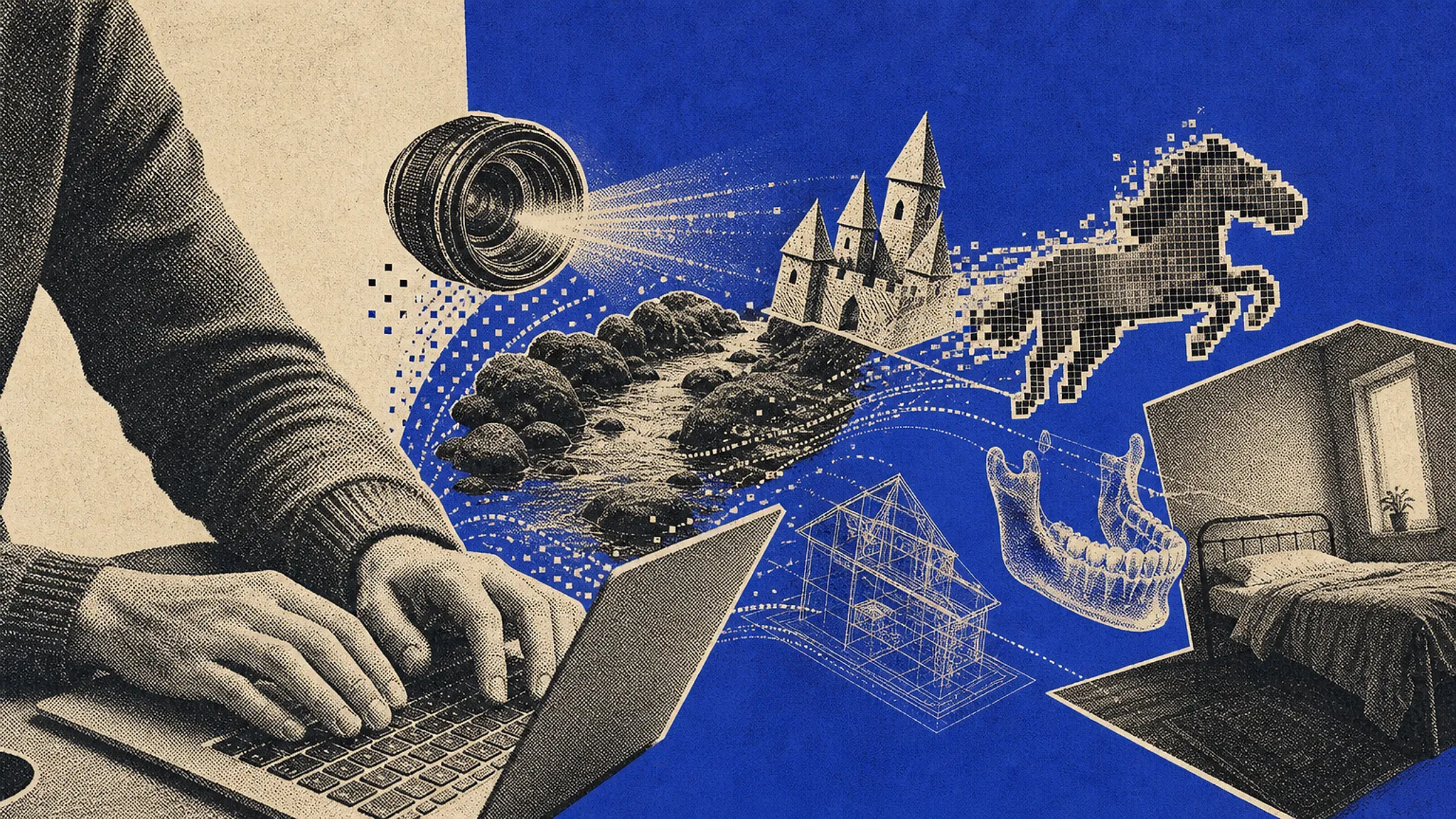
- A 3D stream, Osaka Castle, a galloping horse, a house taking shape, a dental CT viewer and a bed placement were all drawn with code rather than image generation.
Anthropic's official Claude account picked out seven user creations that people made with Claude Opus 5.5, the company's AI language model, on September 25. The thread opens with "Some of our favorite things people have explored and discovered with it so far" and strings together eight posts beneath it. A camera lens lab, a 3D stream, Osaka Castle, a galloping horse, a house being built, a dental CT viewer and a bed placed in a room made the list, and the opening post passed roughly 1.3 million views in less than a day.
The featured works share one thing. None came from an image generation model; all of them were drawn with code. Opus 5.5 does not make pictures directly. It writes programs that run in the browser and draw the screen. METAL has reported on Anthropic's release of Claude Opus 5.5, and this thread is an official collection of how far that model goes in real users' hands.
Ryan Sael's lens lab took the top spot. He asked Opus 5.5 to explain camera focus by building an interactive lens lab, and wrote that the result came out after 1 hour 26 minutes of work from a single prompt. The API cost was $25.66. Turn the focus ring and the glass elements shift, moving the sharp plane through the scene. His original post from September 23 drew 2.11 million views and more than 13,000 likes.
Work from two Japanese developers followed. Hayashimon built a clear mountain stream with Three.js. The transparent water, the light on the riverbed and the moss-covered rocks are all code. He wrote that "expressions that were too difficult and I'd been avoiding now feel like I can pull them all off," and the post passed 260,000 views. Onofumi built the same Osaka Castle twice, in the browser with Three.js and in the 3D program Blender, and compared them. The Blender version took about 1 hour 30 minutes to render on an M4 MacBook, using free CC0 textures. He said he had never once opened Blender and summed up: "Blender if you want realism, Three.js if you want ease."
Some pieces created motion without a single image. The galloping horse posted by Victor M fits in one HTML file with no image files and no external libraries. Plain JavaScript and Canvas 2D draw a 128×96 pixel screen, and articulated legs driven by inverse kinematics run through a 12-pose gallop. He added one line: "Something is happening." A creator going by Techartist used Three.js and the shading language TSL to build, in 3D, a sketch turning into a house. The building grows through four stages: first lines, massing, detail and the finished home.
Two everyday uses closed the list. Paolo Rosson had a 3D X-ray of his jaw taken before a root canal, and his dentist said he would need specialized software to open the raw data. It was 800 files in DICOM format. He had Opus 5.5 build a viewer in Claude Code, and wrote that the result of a single prompt was "nicer than what he showed me on his screen." Shimecki said that when his wife asked how a new bed would fit in Mila's room, he answered with Opus 5.5, and posted an 87-second video; the post passed 310,000 views.
The last post in the thread was a question. The Claude account asked, "What are you going to explore with Opus 5.5 this weekend?" and replies filled with other users' work. In the replies METAL reviewed, people who did not make the list posted browser games, a solar system simulation and a sauna design tool, asking for their own work to be seen. One reply asked whether the lens lab was real optics math or just convincing visuals.
Seen through a sociologist's eye, what stands out in this list is less the technology than the place of the people who made things. Not one of the seven is a company product. Someone who wanted to understand focus, a patient who wanted to open the files from the dentist, a couple thinking about furniture placement: individuals who stood outside the threshold of specialist software built tools that fit their own questions. The figures $25.66 and 1 hour 26 minutes are a scale for how low that threshold has become. By choosing to show scenes like these instead of a benchmark table, Anthropic is positioning Opus 5.5 not as a professional's instrument but as a tool that turns each person's curiosity into form.
Sources
- Claude (@claudeai) — Claude Opus 5.5 has been out for a few days (thread) →
- Ryan Sael (@RyanSael) — Interactive lens lab built with Opus 5.5 →
- ハヤシモン (@hayashimon1) — Opus5.5とThree.js 清流の表現 →
- おのふみ (@onofumi_AI) — 同じ大阪城を、Three.jsとBlenderで作り比べ →
- Victor M (@victormustar) — Procedural galloping horse by Opus 5.5 →
- Techartist (@techartist_) — From sketch to home with Opus 5.5, Three.js + TSL →
- Paolo Rosson (@redp314) — DICOM viewer built with Claude Code and Opus 5.5 →
- Shimecki (@scheemunai) — Bed placement visualization with Opus 5.5 →
Comments