


Summary
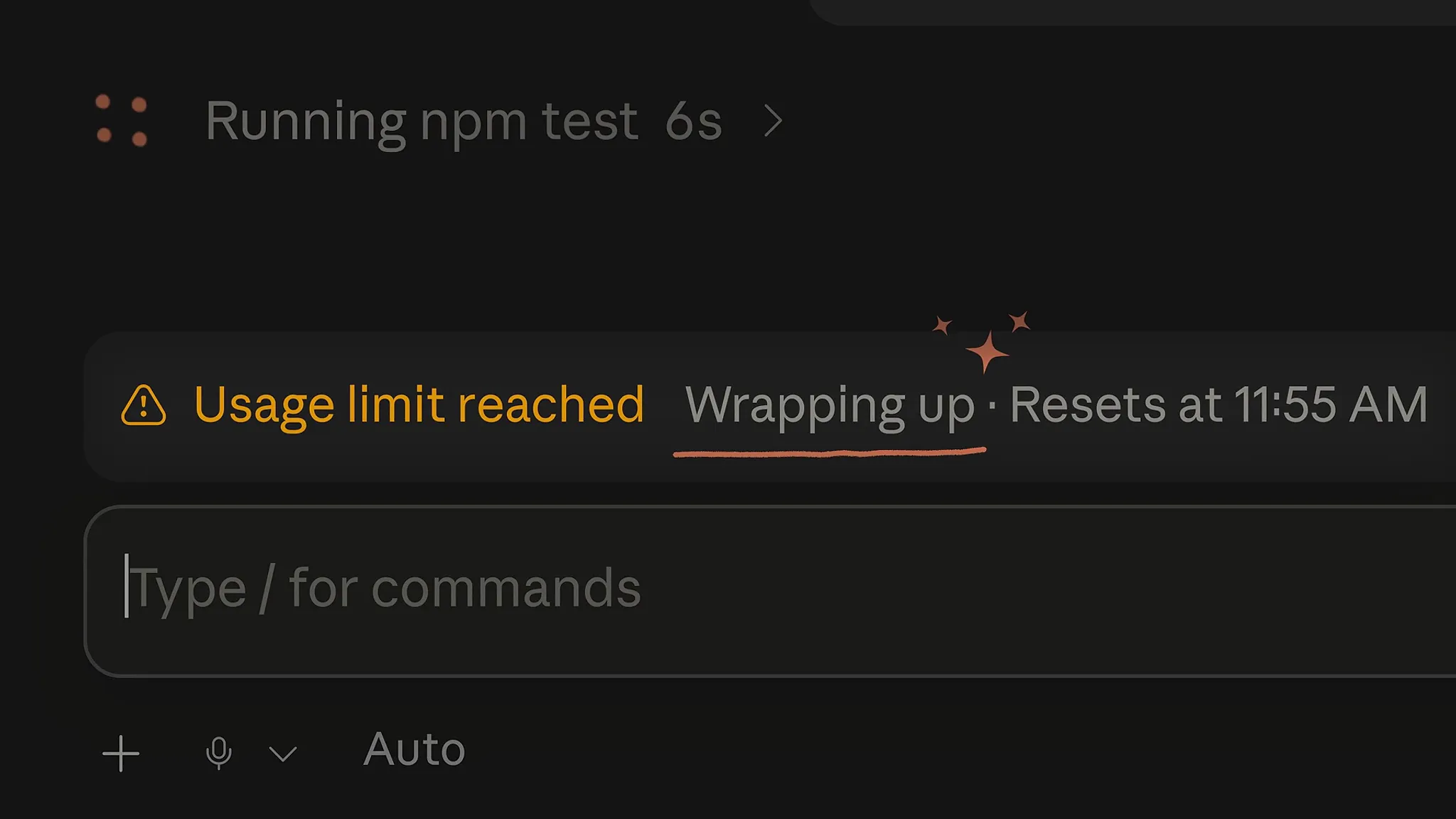
- On September 25, Anthropic's developer account ClaudeDevs said Claude Code will now look for a graceful stopping point instead of cutting off mid-edit when it hits the 5-hour limit.
- The wrap-up draws on a small, fixed allowance taken from the weekly limit; in a 12-second demo, Claude got 14 tests passing, noted the remaining work, and then stopped.
- The change follows automatic resume after a limit resets (2.1.234) and pausing dynamic workflows (2.1.271), this time refining the moment the limit is reached.
Anthropic has added a wrap-up feature for the 5-hour limit to Claude Code. When a task runs into the 5-hour session limit, Claude Code no longer drops out in the middle of editing code; it looks for a good place to stop, tidies up the work, and then halts. Anthropic's official developer account, ClaudeDevs, posted on X on September 25 (US time) that "Claude Code will now try to find a graceful stopping point when you hit your 5-hour limit mid-task, instead of cutting off mid-edit."
The extra usage is not free. In the same post, ClaudeDevs explained that Claude Code "gets a small, fixed allowance pulled from your weekly limit to wrap up what it can." The amount used after the 5-hour window closes is capped, and that amount is deducted from the week's limit. The post did not say exactly how large the allowance is or which plans it applies to.
The feature slots into a two-layer limit system. According to Anthropic's help center, the usage limits on the Pro and Max plans are a single pool shared by the Claude apps and Claude Code, and Claude Code used inside development tools such as VS Code or JetBrains draws on the same limits. The Usage page in settings shows progress bars for the 5-hour session limit and the weekly limit separately, and the weekly limit is shown both for all models and for Fable.
Until now, users who hit the session limit had four options. The help center lists upgrading to a higher plan (Pro to Max 5x, Max 5x to Max 20x), turning on usage credits, switching to a Claude Console account and using API credits, and waiting for the limit to reset. Whichever they chose, the edit in progress stopped exactly where it was at the moment the limit hit; this change inserts one more step at that moment.
The 12-second demo video, which METAL reviewed, shows the process step by step. A user asks Claude to fix a bug where the session cookie is not refreshed when the token rotates, logging people out after 15 minutes. While Claude edits session.ts and runs npm test, a notice appears saying the session usage limit is approaching. The notice soon changes to usage limit reached, wrapping up, with a reset time of 11:55 AM. The model shown at the bottom of the screen is Opus 5.5.
During the wrap-up, Claude finishes editing both files. According to the on-screen record, session.ts gained 18 lines and lost 6, session.test.ts gained 24 lines and lost 3, and 14 tests passed. Claude then leaves a one-line note that the same fix is still needed for the mobile path in src/auth/mobile.ts, and stops. The final notice says the work was wrapped up past the usage limit and shows the reset time.
The feature is the next step in how Claude Code has been handling limits. According to the public changelog, since version 2.1.234 Claude Code automatically continues a session when a claude.ai usage limit resets, a behavior that can be turned off with the "Continue automatically at usage limit" option in /config. Version 2.1.239 added the reset time for the session or weekly limit to the message shown when the monthly spend limit is used up, and version 2.1.269 made /goal runs pause until a usage limit resets and say why.
Work that runs many agents at once has moved in the same direction. Version 2.1.271 made dynamic workflows pause when they hit a usage limit and continue automatically after it resets, rather than dropping the affected agents. Earlier still, version 2.1.80 added a rate_limits field to status line scripts with the usage percentage and reset time for the 5-hour and 7-day windows. As of METAL's check, the changelog for the latest version, 2.1.282, did not yet list the wrap-up feature.
Developers reacted quickly. About an hour and ten minutes after it went up, the post on X had drawn 230,000 views, 8,531 likes and 334 replies. METAL has previously reported on Anthropic's announcement adjusting Claude Code's weekly limits and on ways to steer hours-long work, and this change sits where those two stories, long tasks and weekly limits, meet.
Seen through an AI engineer's eyes, the feature does not remove the limit; it changes how work gets cut off. A repository interrupted mid-edit is left with half-applied changes and broken tests, and the next session has to start by working out what was finished and what was not. The scene in the demo, where Claude gets the tests passing, writes down the remaining work and then stops, resembles a production server that receives a shutdown signal, finishes the requests it is handling and only then goes down. The price is a fixed allowance taken from the weekly limit, and for users who often fill the 5-hour window early in the week, those allowances can add up and shrink their headroom later in the week. In the end, the new habit users need is reading the two bars on the Usage page together.



Comments