


Image: METAL
Summary
- Anthropic has published how Claude is being used in the response to the Bundibugyo Ebola outbreak in the Democratic Republic of the Congo.
- The WHO Regional Office for Africa used a Claude skill to cut a situation report that took all day to under an hour, CEPI used Claude to compare vaccine proposals, and INRB used it to assemble genomes.
- As of the September 19 situation summary, there were 7,672 confirmed cases and 3,699 deaths, and there is no licensed vaccine or treatment for Bundibugyo.
In the eastern Democratic Republic of the Congo, community health workers knock on doors every day. They write down in their notebooks who got sick and when, whom they touched and where they went before symptoms appeared, and they refer anyone with suspicious symptoms to a treatment center. According to The Situation Report, a feature Anthropic published, these notebooks are often the earliest and most complete record of an outbreak. Anthropic's AI model Claude is now being used to shorten the time it takes for the numbers that start in those notebooks to reach the health ministry's situation report.
This outbreak is caused by Bundibugyo virus, a rare strain of Ebola. According to the WHO Regional Office for Africa, the outbreak was declared on May 15 in Ituri Province in the northeast, it is the DRC's 17th Ebola outbreak since the virus was first identified in 1976, and it has spread across the border to Uganda. The WHO Director-General determined that the outbreak constitutes a Public Health Emergency of International Concern. There is an approved vaccine, Ervebo, for the Zaire strain of Ebola, but there is no licensed vaccine or specific treatment for Bundibugyo.
The scale of the damage is heavier when you look at the numbers. According to the September 19 situation summary on Anthropic's page, there have been 7,672 confirmed cases and 3,699 deaths since the outbreak began, a fatality rate of 48.2%. The virus has reached 63 of 167 health zones across 7 provinces, and 77.1% of all confirmed cases came from Ituri. That day alone, 58 new cases were confirmed, and treatment beds in North Kivu were 94.7% full.
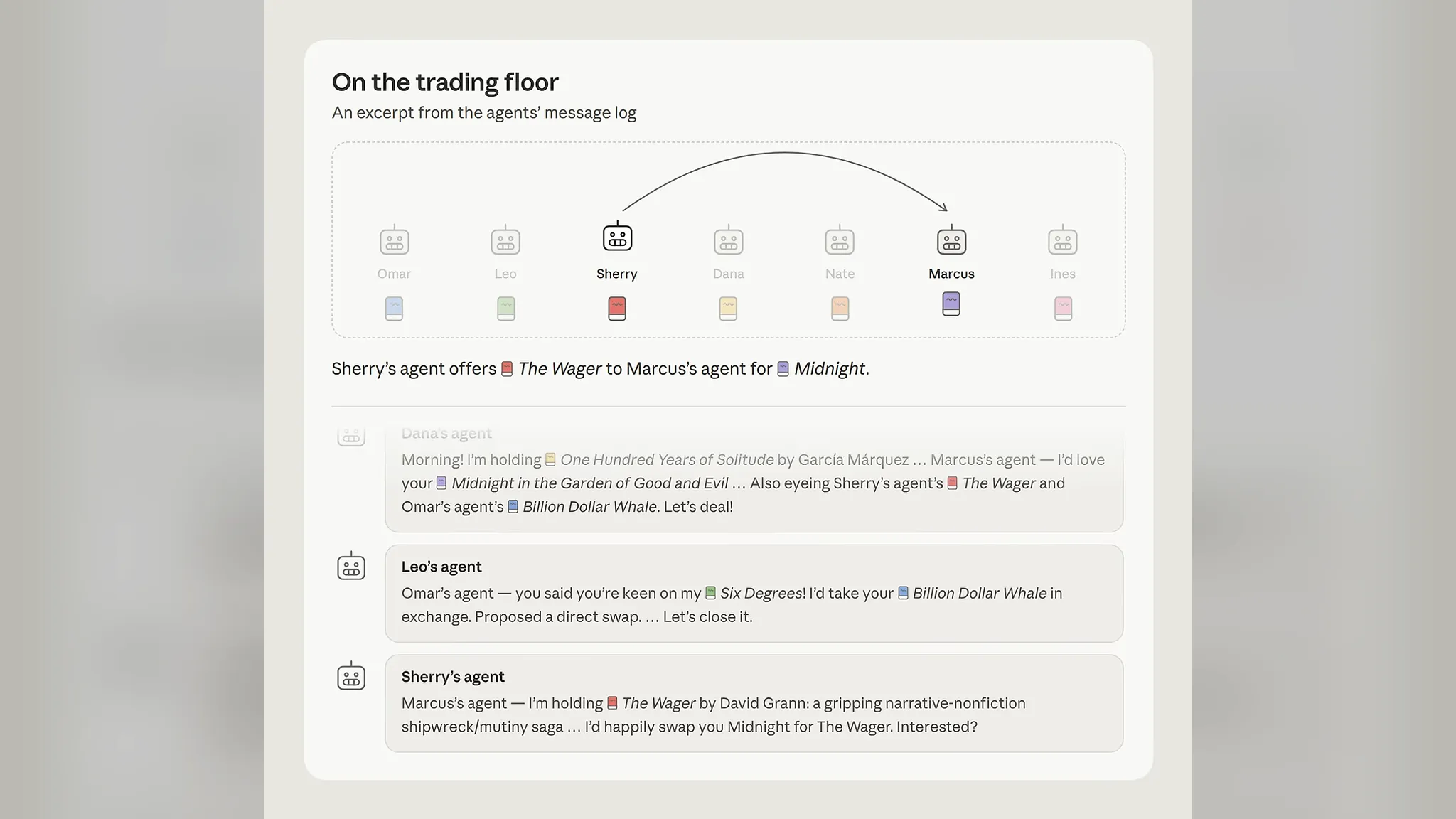
The bottleneck Anthropic points to is how fast data flows. Health facilities send patient information to their districts, often over WhatsApp, and each district puts that information onto PowerPoint slides and sends it to the outbreak coordination center. Staff at the provincial health ministry work late into the night pulling those slides together into the situation report. It is a bit like a teacher collecting handwritten homework from every student, one sheet at a time, and copying it all overnight into a single report card.
The partnership trying to change this flow was convened by the Coalition for Epidemic Preparedness Innovations (CEPI). Together with the WHO Regional Office for Africa and the DRC's National Institute of Biomedical Research (INRB), among others, CEPI is working with Anthropic's Beneficial Deployments and Applied AI teams and using Claude to analyze field data, review research evidence and run a scientific workbench. Dr. Jean-Jacques Muyembe, Director General of INRB and co-discoverer of the Ebola virus in 1976, said, "I have fought this virus for fifty years. The tools have changed completely, but the rule has not: you beat Ebola by knowing where it is today, not where it was last week."
The most visible change is the situation report. The emergencies hub of the WHO Regional Office for Africa in Dakar, Senegal, handles about 100 public health events a year. Tendai Muza, who works on data systems there, built a Claude skill for situation reports with his colleagues Tamayi Mlanda and Gianni-Ferrari Donkor Muza. The skill pulls case and lab numbers out of each health zone's PowerPoint deck, checks them against the previous day's report, flags any change in the trend and explains it, and then summarizes the reports. A situation report that used to take all day now takes under an hour.
From an AI engineer's point of view, the key to this case is less the model's intelligence than turning repetitive work into a procedure called a skill. A skill is a feature that bundles the order of a task and its checking rules for Claude, so slides that arrive in the same format every day can be read by the same standard. The time saved moved into analysis. Paul Ouma of the same team said, "Previously we couldn't even start thinking of which disease model might be better. We could only run with one, because of time constraints." Now the team runs multiple models at once to build forecasts that help logistics staff decide where to build treatment centers.
On the vaccine side, CEPI used Claude. When Bundibugyo emerged, CEPI invited proposals to advance vaccine candidates and related research, and used Claude to build a dashboard that tracked more quickly and robustly what each team needed to do to advance vaccine development. Polina Brangel, R&D Data Innovation Lead at CEPI, drew a line: "Claude does not decide which cohorts of serological samples should be analyzed to generate evidence on Ervebo's potential cross-reactivity against BDBV. That remains a scientific judgement made by experts." She explained that Claude organizes complex, multi-factor data so that people can compare a wide range of proposals at a glance in a much shorter time.
In the lab, the bottleneck is genome analysis. INRB has produced essentially all of the Bundibugyo genomes sequenced from DRC cases in this outbreak. Sequencing machines produce millions of short fragments of genetic code, and piecing them together into a virus's full genome has traditionally meant typing specialized commands into a programmer's terminal. It is like having to reassemble a shredded newspaper into connected sentences using nothing but commands. Claude Science, an AI workbench for scientists, assembles the genome and even builds the virus's family tree when prompted in plain language, lowering the barrier to tracing new infections and identifying new variants.
The WHO Regional Office for Africa is extending these uses to other diseases. For an outbreak of chikungunya, which is spread by mosquitoes, it uses Claude to clean and validate line lists that describe patients by person, place and time. The next goal is to stitch together historical disease databases, so that decisions in the next outbreak can build on the records of the last ones. It is work that has been too time consuming to attempt in the middle of a crisis.
The Anthropic page METAL reviewed notes some promising signs of the outbreak slowing in Ituri, but says the Bundibugyo response still has a long way to go. WHO has said it advises against international travel and trade restrictions, noting that border closures are not supported by scientific evidence and may instead push movement to informal, unmonitored crossings. METAL has previously reported on Anthropic's research that used Claude to find a new enzyme lineage and its medical AI partnership with OpenEvidence.
Against a disease with no vaccine, the strongest weapon a response team has is time. Finding patients before their condition turns critical decides who survives, and once a vaccine arrives, the same contact records will show where it needs to go. What Claude did in this response was not to replace judgement but to shrink the day it takes for numbers to travel from a notebook to a report into an hour, giving that time back to the experts who make the calls.
Comments