


Image: METAL
Summary
- On September 22, Anthropic and OpenEvidence said they will offer an AI clinical decision support tool free to physicians in low- and middle-income countries.
- According to reports, about 100 countries including Uganda, Angola, Sudan, Haiti and Mongolia are covered, and financial terms were not disclosed.
- US clinicians consulted OpenEvidence 42 million times in August alone.
Anthropic and medical knowledge platform OpenEvidence announced a partnership to bring AI-powered clinical decision support to physicians in regions that have not had access to the technology. The two companies disclosed the collaboration on September 22 local time, and a specialized version of OpenEvidence will be offered free to healthcare providers in dozens of low- and middle-income countries. According to reports, it is being rolled out in about 100 countries, including Uganda, Angola, Sudan, Haiti and Mongolia, based on a list provided by OpenEvidence.
OpenEvidence answers doctors' questions by drawing on peer-reviewed medical research and treatment guidelines. It is already free to clinicians in the United States and Europe. The new specialized version targets places where limited access to medical literature, specialist expertise and continuing medical education can impair patient care.
The roles are split. According to the two companies, Anthropic's technology will provide back-end support, while OpenEvidence will tailor the tool to different regions, taking healthcare infrastructure into account. Financial terms of the collaboration were not disclosed.
The scale has already been shown in the United States. According to founder Daniel Nadler, US clinicians consulted OpenEvidence 42 million times in August alone, and he said that in 2026 several hundred million Americans will have been treated by a doctor who used OpenEvidence. Nadler said "access to medical knowledge shouldn't depend on geography."
Anthropic president Daniela Amodei pointed out that this is something the market alone would not produce. She said "the technology itself has advanced so dramatically that the sort of structure needed for (bringing OpenEvidence to low-resource regions) is there, but the market incentives alone would not let it happen without this type of entrepreneurial, philanthropically minded work."
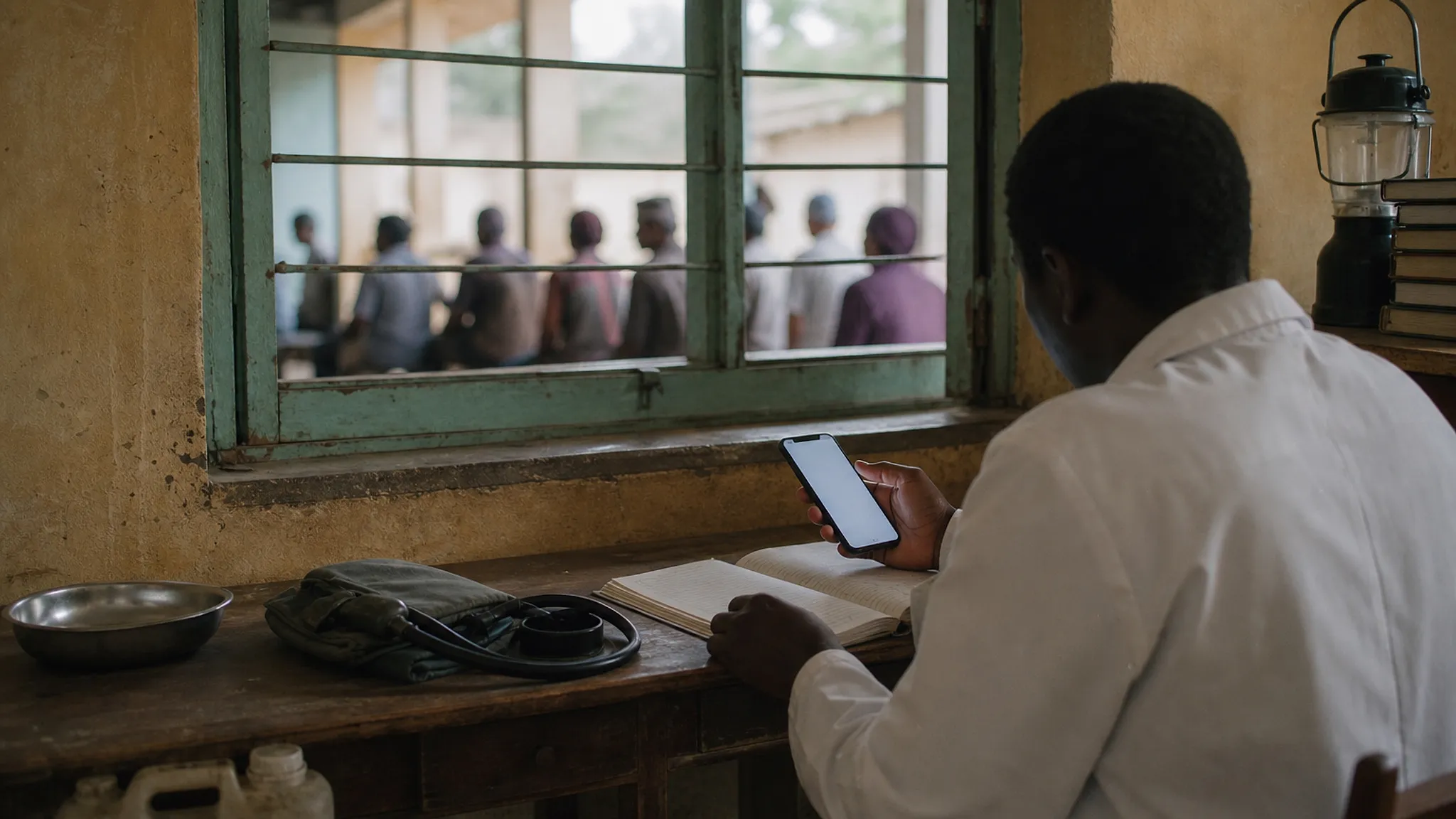
Localization is the key. Earlier this year, OpenEvidence said it was working with health organizations in Rwanda and Botswana to adapt its tools for settings where disease patterns, diagnostic resources and available treatments differ markedly from those in wealthier countries. Nadler said "one hundred percent of what we are building for these places is context adaptive." He explained that even where medical facilities do not have around-the-clock electricity, most physicians have smartphones, giving them access to medical information that a decade ago would only have been available at leading institutions such as the Mayo Clinic.
A physician on the ground also weighed in. Dr. Ahmed Bendary, a cardiologist at Benha University in Egypt, said expanding this access beyond the United States and Europe "would be a tremendous leap forward, particularly in regions where institutional subscriptions to major medical journals are limited," adding that evidence-based, point-of-care tools become even more vital in such places.
Criticism comes along with it. According to reports, as healthcare systems around the world explore whether generative AI can help address shortages of physicians and specialists, supporters argue it can help clinicians quickly navigate vast amounts of medical information, while critics caution that systems trained primarily on data from high-income countries may not reflect local practice conditions. OpenEvidence's emphasis on localization speaks directly to that concern.
This is not Anthropic's first move in the life sciences. According to reports, Anthropic built a lab last week to do physical biology work as it pushes its AI ambitions into drug science. METAL previously reported that Anthropic released code for optimizing biology models with Claude, and this collaboration carries that direction out of the lab and into the clinic. METAL confirmed that Anthropic's newsroom had not posted a separate announcement of this collaboration.
The weight of this medical AI partnership lies less in model performance than in distribution. A tool used 42 million times a month in the United States already existed, and the open question was who would pay when it is handed down without charge. The two companies filled that gap with the language of philanthropic collaboration but did not disclose the financial terms. Whether the tool works in line with local practice conditions across about 100 countries will first be shown by the results of the localization work that began in Rwanda and Botswana.



Comments