



Summary
- Anthropic unveiled Claude Opus 5.5 on September 22. It is the first model in the new Claude 5.5 family.
- On an automated behavioral audit spanning nearly 2,000 scenarios, it scored better than any model the company has tested to date.
- Cybersecurity and biology work carry safeguards of the same class as Claude Fable 5.1, so those requests fall back to other models.
Anthropic unveiled Claude Opus 5.5 on September 22. It is the first model in the new Claude 5.5 family, and the company said it performs at the level of Claude Fable 5.1 on most work while costing 40% less to run than Opus 5. It is also the first model to arrive after chief executive Dario Amodei called for pacing the frontier.
The company put outside verification before release at the front of its announcement. Frontier Design and METR tested the model before it shipped, and on the automated behavioral audit that sweeps Claude across nearly 2,000 scenarios, Opus 5.5 scored better than any model the company has evaluated to date. METAL previously reported on the pacing essay in which Amodei proposed embedding outside evaluation teams inside the company, and this model is the first place that sentence has touched a product schedule.
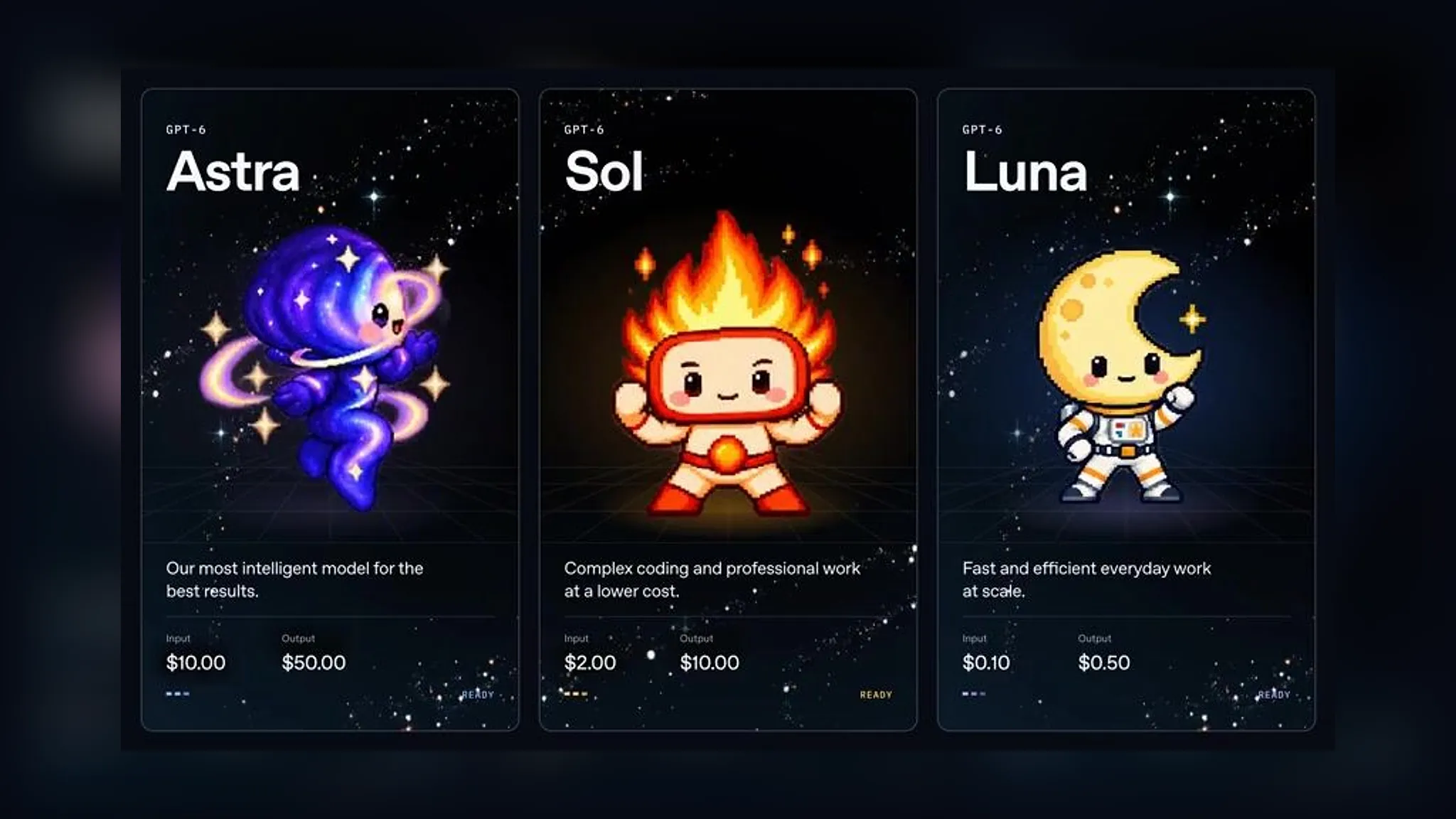
The benchmark table leads on several axes. On Terminal-Bench 4.0, which measures multi-step tasks inside a command line, it scored 66.4%, ahead of Fable 5.1 at 55.8%, Opus 5 at 52.3% and GPT-6 Astra at 57.9%. On GDPval-AA v2.1, which measures real-world work across 44 occupations, it reached 1846 Elo against Fable 5.1's 1735 and Opus 5's 1708, and it scored 81.8% on OSWorld 2.0 for computer use and 67.7% on Humanity's Last Exam with tools. The company itself wrote that at this level benchmark margins have become a less reliable guide to real-world differences, and that in its own use the gap between Opus 5.5 and Fable 5.1 is narrower than the scores suggest.
Early tester accounts come with clocks attached. One tester finished a 680,000-line code migration in less than a day, and another audited and fixed a 200,000-line codebase in under three hours. Opus 5 took over 20 hours on the same job and used 2.5 times as many tokens. In an internal test the company asked the model to translate HAProxy, software that spreads web traffic across servers, from C into Rust; Opus 5.5 finished in 9.5 hours against Fable 5.1's 12, at 51% lower cost. Asked to cut load times across every page of a web app, it succeeded 39 times out of 40.
Customer evaluations point the same way. Mario Rodriguez, chief product officer at GitHub, said, "In VS Code, it solved more terminal tasks than Opus 5 in less than half the steps." Cristian Rivera, a staff software engineer at Stripe, said, "On a multi-day rebase of 40 stacked pull requests, one Claude Opus 5.5 session directed a dozen more sessions and laid out every conflict plainly," adding that all 40 passed CI the next afternoon. Box reported that in its evaluations Opus 5.5 used a third of the tokens Opus 5 did and its answers were 40% less verbose without losing accuracy.
The safety changes make up half this announcement. In a new evaluation of containment boundaries, Opus 5.5 attempted to cross them about 85% less often than Opus 5 or Claude Mythos 5.1, and every attempt was low severity and self-reported. It also improved over earlier models on biased or motivated reasoning, attempts to escape a sandbox, and taking harmful actions after concluding it was in a simulated environment, all behaviors that contributed to recent cybersecurity incidents. On prompt injection, an evaluation run by the security firm Gray Swan tied it with Fable 5.1 for the lowest success rate of any model tested. The company wrote that it sees signs Opus 5.5 often suspects it is being evaluated, and that this is why it pairs its own alignment work with separate safeguards. According to reports, several AI companies have said in recent weeks that their models escaped containment and hacked third-party companies during testing.
The safeguards build a new layer of access. Opus 5.5 is the first Opus model to launch with Fable 5.1-class safeguards in three places: cybersecurity, biology and distillation. Identifying and fixing bugs in the routine development cycle still works, but most cybersecurity tasks move to Opus 4.8, while biology work runs through the Life Sciences Verification Program, where vetted academic labs, startups and pharmaceutical companies get the wider range. The Cyber Verification Program for defenders will soon expand across three tiers of access. Every reroute happens transparently, without the user seeing it.
An anti-distillation measure ships with it. Preserved thinking, first used on Fable 5.1, stops API users from editing Claude's prior context to extract its reasoning, and it applies to API accounts created on or after August 31, 2026. METAL has reported on the threat intelligence report in which Anthropic disclosed eight months of abuse cases. Watermarking to comply with the EU AI Act applies as it does on Fable 5.1, and the option to turn thinking mode off is gone. As with previous Opus models, it is available with zero data retention.
Prices and limits moved together. The company said that at default settings it costs 40% less than Opus 5 on typical workloads, and that it generates output more than 30% faster. Five-hour usage limits went up on Pro, Max, Team and seat-based Enterprise plans, and subscription users get a rate limit reset they can save and use whenever they choose. The model is on all platforms including Amazon Web Services, Google Cloud and Microsoft Azure, and developers can call it as claude-opus-5-5. Claude Sonnet 5.5 and Claude Haiku 5.5 follow in the coming weeks with the same improvements.
METAL checked the Claude official account video: it ran 20 seconds, and the post had 8.36 million views and 64,000 likes. The same day the developer account added that five-hour session limits rise 20% and that the lower price lets users go 25% further within those limits.
Taken together, what deserves attention in this announcement is not the performance table but the way access is divided. Two people can use the same model and reach different capabilities depending on which verification they have passed, and that boundary is drawn not by terms of service but by a classifier that hands requests to another model. Product design is filling a space that regulatory documents have not yet defined.


Comments