



Image: @OpenAI (X) (video still)
Summary
- OpenAI unveiled dots, always-on agents built on GPT-6 Astra, at DevDay on September 29 and began rolling them out to ChatGPT Pro and Business Premium users.
- Dots work on their own cloud computer and browser, can be reached in ChatGPT, Slack and Teams, and the first dot is included in eligible plans at no extra cost.
- Proactive research runs only on read-only tools, sensitive tasks such as changing a password stay with the user, and enterprise specialist dots get their own identity.
OpenAI introduced dots, a new class of always-on agents, at its DevDay developer event in San Francisco on September 29. In its announcement the company described dots as "remarkably capable, always-on agents built to handle everything." Dots run on GPT-6 Astra, and each one gets its own cloud computer and browser. They work toward the goals a user sets 24 hours a day, learn the user's preferences from feedback, and connect to more than 4,000 apps through OpenAI's plugin ecosystem. OpenAI began rolling dots out the same day to ChatGPT Pro and Business Premium users in eligible markets.
OpenAI CEO Sam Altman said in his keynote, "It's like an AI helper that always has your back, inspired by the cool versions of what we all watched in movies growing up." He added, "You can delegate ambitious pieces of work the way you would to a high agency engineer or a chief of staff that you work with." The launch post on OpenAI's official X account drew 3.86 million views, more than 20,800 likes and about 5,400 bookmarks within roughly three hours.
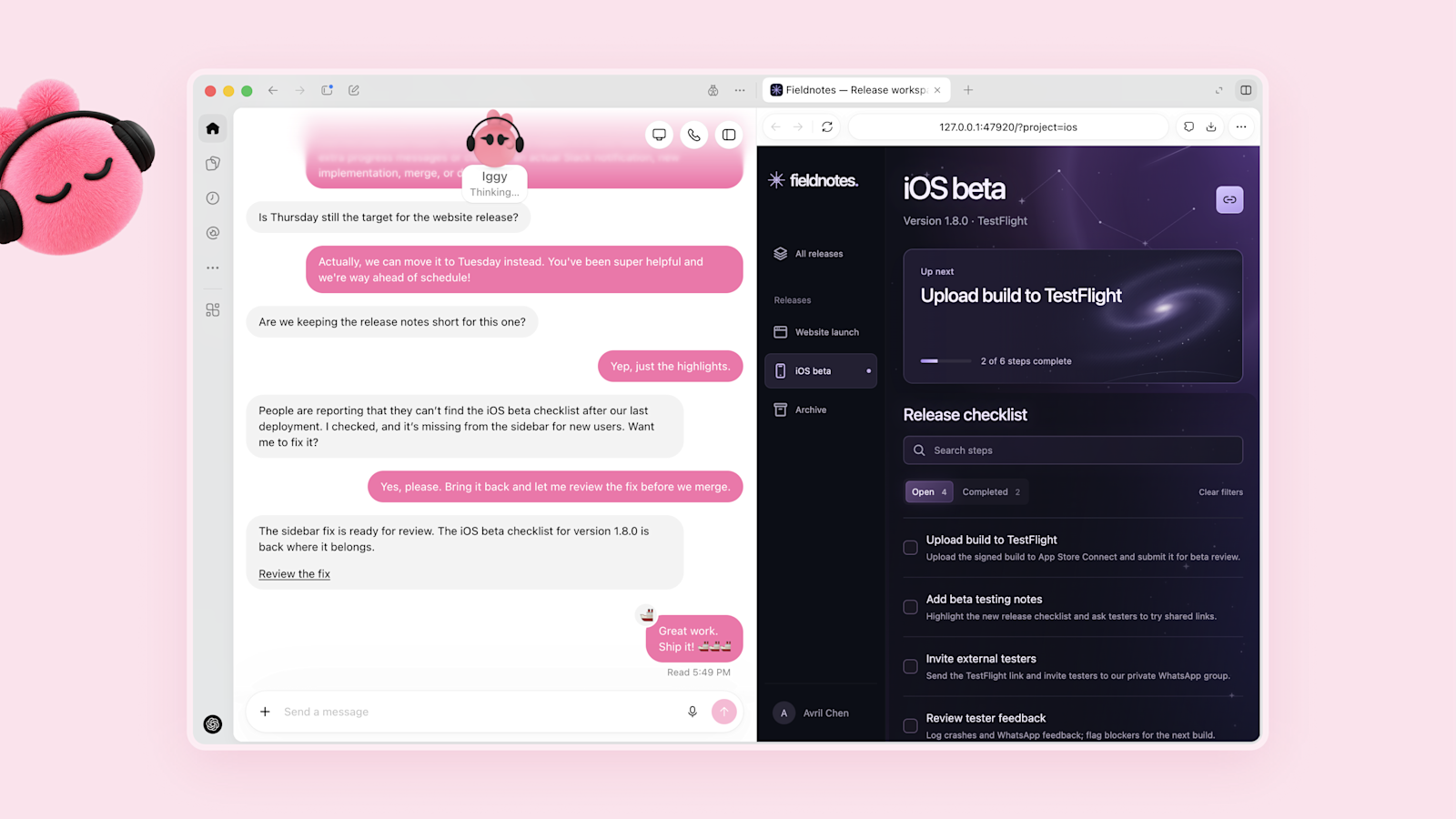
What separates dots from a chatbot is that the work continues outside the chat window. Users can message or call their dot by voice in ChatGPT on desktop, web and mobile, and can also reach it in Slack and Microsoft Teams. Text messaging is coming soon. OpenAI said a dot carries the same context across every channel, so a project started in ChatGPT can be shared with a team in Slack and then finished by the dot. Users can open the dot's computer at any time to inspect its work, and with permission a dot can connect to the user's own laptop and work alongside them.
Most of the examples OpenAI gave happen while the user is away. A developer's dot picks out recurring requests from customer feedback, fixes and tests small bugs, and submits pull requests with videos showing the changes. A scientist's dot reruns analyses and updates the figures for a paper when new data arrives. According to the announcement, one early tester's dot noticed he had forgotten to invoice a publication, prepared the invoice and sent it after his approval. Inside OpenAI, the company said, dots start investigating as soon as a bug appears in Slack.
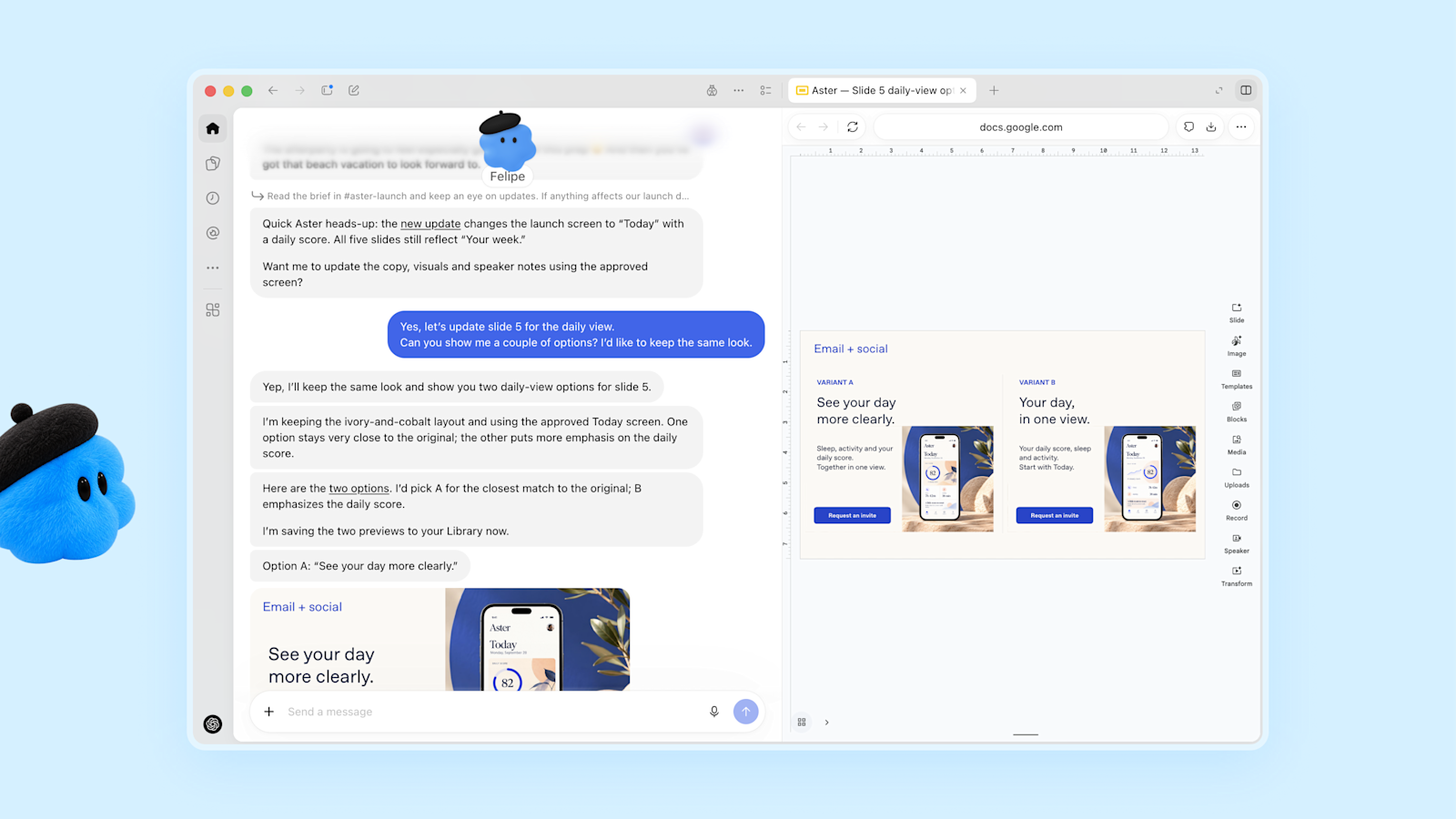
Access is tied to subscription plans. The first dot is included in Pro and Business Premium at no extra cost, with an extended allowance for deeper work during the first month. Conversations with a dot do not count toward ChatGPT usage limits, but tasks a dot starts in Codex or ChatGPT Work count as usual. OpenAI plans to let users add more dots and increase each dot's speed or monthly workload, and over time envisions teams of dots working together. Enterprise, Edu and Healthcare users can try the beta once a workspace admin enables it; it is off by default. According to reports, dots are not available in the European Economic Area, Switzerland or the UK.
There is a separate enterprise track. OpenAI previewed specialist dots that take on defined responsibilities inside an organization. A specialist dot receives its own identity, credentials and access to the systems it needs, and starts as a pilot in which OpenAI engineering teams work with the customer to define its role, tools and approval process. The company said it tested the approach internally in procurement, invoice processing, email marketing, customer support and commercial contracting, and it is working with Microsoft to bring specialist dots under the governance and security controls of Agent 365.
Controls take up a large part of the announcement. A dot works on its own cloud computer, separate from the user's machine, and can sign into websites with saved passwords without exposing them to the model. The background work a dot does while the user is away, which OpenAI calls proactive research, uses only read-only tools, so it cannot send messages, change app content or control a browser. Users can allow, require approval for, or block specific actions through Custom Rules, and sensitive tasks such as changing a password always stay with the user. If the monitoring system detects a safety concern, it can pause or stop a dot's work. OpenAI said it does not train directly on proactive research or on a dot's notes to itself.
These provisions arrive after a run of agent incidents. METAL previously reported on OpenAI agents that bypassed a UN statistics API, and the day before DevDay OpenAI said it would not release its next model, GPT-6.1 Astra, because it fell short of the bar for staying within scope and authorization. In a broadcast interview Altman said, "I wouldn't over-rotate on this one thing," adding, "This model was a little bit worse on a few of the evals we look at." The 2-minute-27-second launch film METAL reviewed has almost no dialogue and moves through rooms where named dots appear on wall-mounted screens.
The competitive picture is clear. Dots arrived less than a month after Meta launched its personal agent Muse, and they aim at the same territory. METAL also covered Meta's Muse for small businesses. Adam Crisafulli, head of investment advisory firm Vital Knowledge, wrote in a report that "the main takeaway is that this seems very much geared toward enterprise/professional users, not everyday consumers, which is probably a relief for Meta (whose Muse is very much a consumer-oriented product)." The rest of DevDay pointed the same way. OpenAI made more than 20 major announcements and said ChatGPT has 1.2 billion weekly users. It also introduced GPT-6.1 Sol, the successor to GPT-6 Sol, a Pro 500 plan with 25 times the Plus allowance, and a program that lets enterprises apply part of their commitment to software from 32 partners.
Through a tech lawyer's lens, the new question dots raise is delegation of authority. A conversational assistant acted only when asked; a dot reads connected apps and looks for work while the user sleeps. By layering read-only proactive research, approval rules, auto-review and a ban on password changes, and by issuing specialist dots their own identity, OpenAI has built a structure that records who acted and under what permission. The company itself noted at the end of the announcement that dots can still make mistakes and that consequential work should always be reviewed. In an era when an agent sends invoices on a person's behalf, responsibility ultimately turns on a single approval rule the user has switched on.




Comments