


Image: Black Forest Labs
Summary
- Black Forest Labs unveiled FLUX 3 Action, a 7B-parameter open-weight world-action model.
- It posted a 42.92 percent RoboLab success rate, beating both the 16B Cosmos 3 Nano and the 3.3B π0.5.
- Paired with GPT-6 Astra in a hybrid setup, it solved 90 percent of episodes while cutting the cost per success by 29 percent.
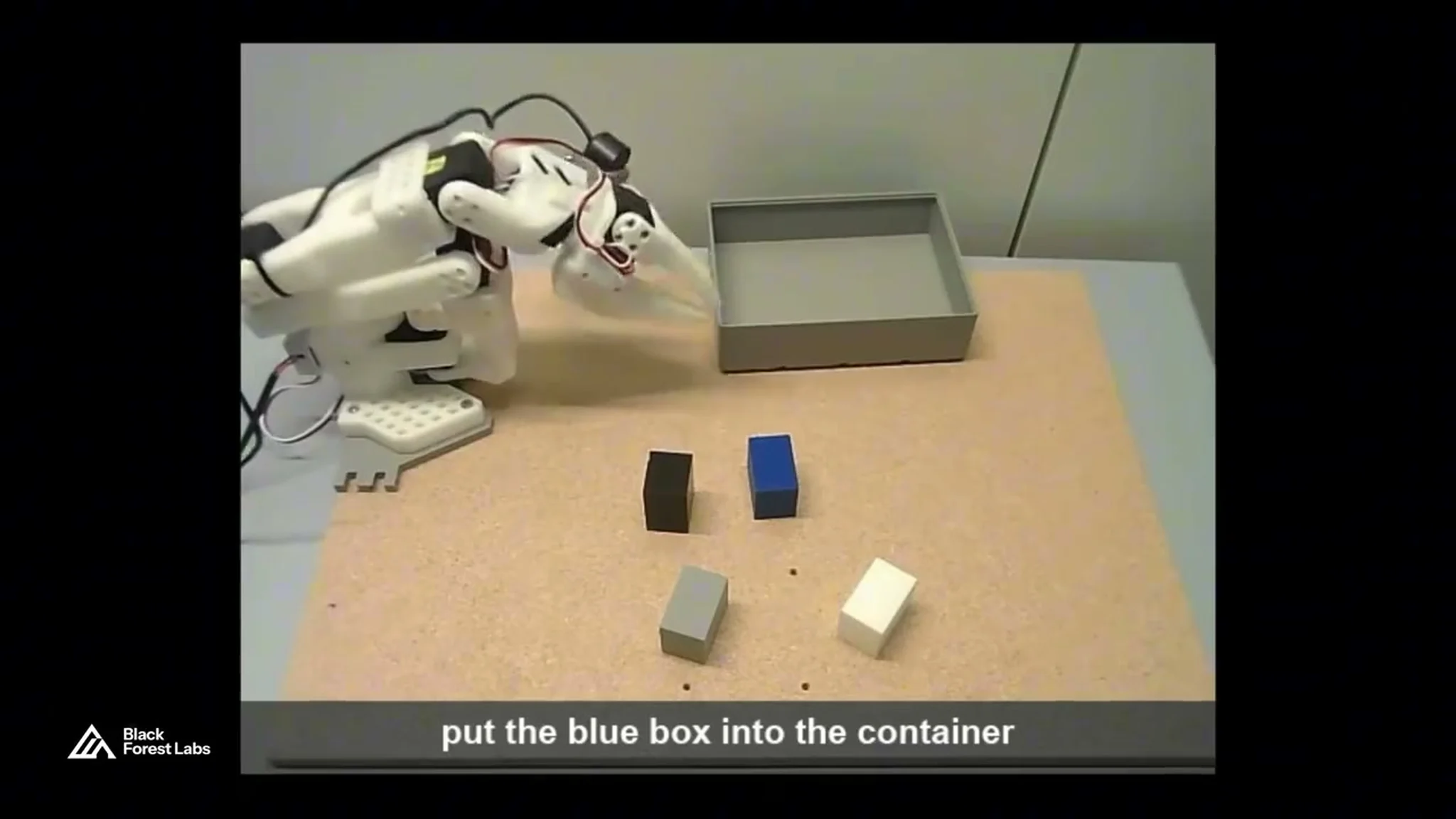
Black Forest Labs, the company that made its name with the image-generation model FLUX, released something quite different in September. It isn't a model that draws pictures — it's one that moves a robot arm. The model is called FLUX 3 Action, or F3A for short, a 7B-parameter open-weight world-action model. The company didn't just drop the weights; it published a report covering everything from pretraining to fine-tuning to inference optimization.
The term "world-action model" probably sounds unfamiliar at first. The model watches footage from multiple cameras mounted around a workbench, and a single model predicts both the next moment of video and the robot's next move at the same time. Put simply, a world-action model has one model produce the upcoming frame and the robot's next action together. It's a bit like picturing a scene in your head before you reach for something and move. Because it predicts video alongside action, the intuition for how the world works — learned from huge amounts of video — carries over into action prediction.
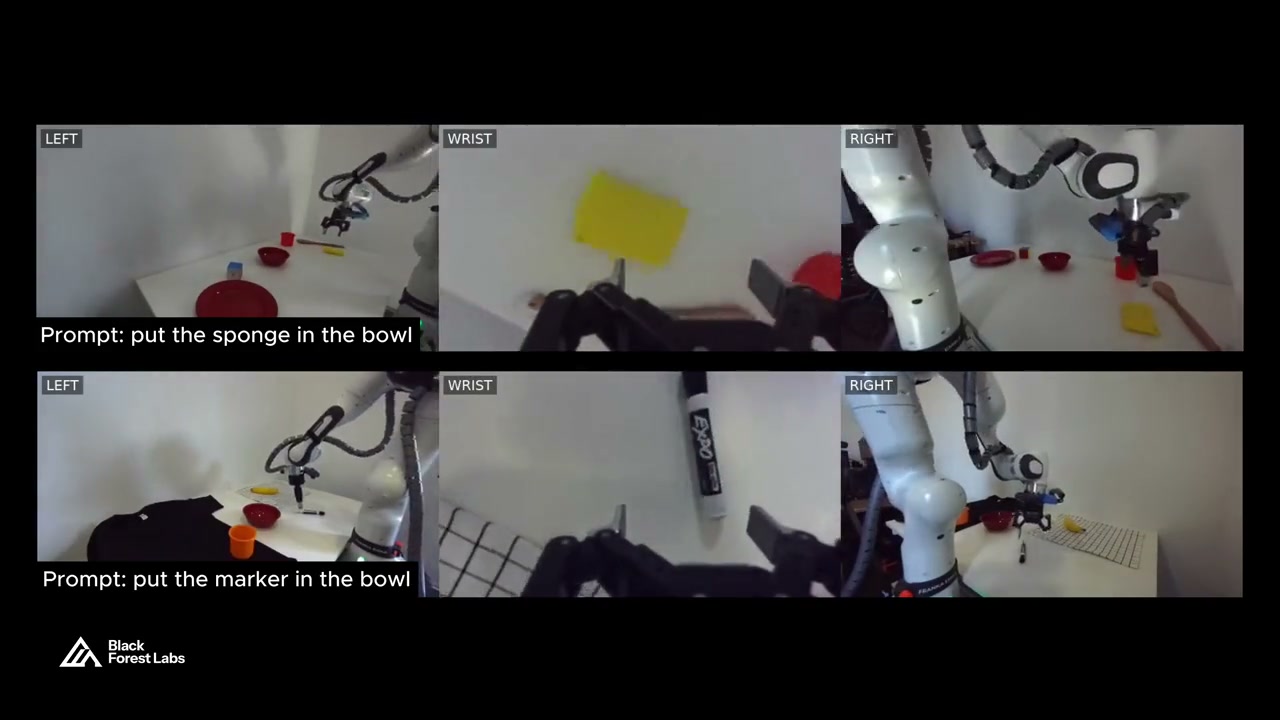
The problem is that intuition isn't free. Every robot policy released so far has forced a choice between two options. World-action models that predict video alongside action perform well but are slow and heavy, while vision-language-action models that spit out a move straight from an image and an instruction are fast but give up a lot of success rate. In driving terms, one driver mentally plays out the next ten seconds before turning the wheel, while the other just reacts to whatever's in the windshield. The first driver does better, but by the time they've finished thinking, the car has already covered that much ground.
The numbers make the gap plain. NVIDIA's Cosmos 3 Nano succeeds 36.8 percent of the time on the RoboLab benchmark, at 16B parameters. The 3.3B-parameter π0.5 manages only 28.0 percent. Running in FP8 on a B200 GPU, Cosmos 3 Nano takes roughly 4.7 times as long to produce one second of robot motion as π0.5 does in BF16. Pick the better performer and you pay in latency and hardware cost; pick the faster one and you give up nearly one in four successful attempts.
F3A did away with that trade-off. A 7B checkpoint that samples just once scored 38.3 percent on RoboLab, the highest of any published policy, and ran 1.34 to 2.28 times faster than π0.5 on both workstation and datacenter GPUs. Give up a little latency, and the guidance-distilled checkpoint pushes the success rate to 42.2 percent. The figure on the leaderboard table is 42.92 percent — beating a 16B model at less than half the size. In FP8, it's 1.52 to 3.95 times faster than Cosmos 3 Nano. On top of that, its planning horizon is 2.13 seconds, more than double π0.5's 1.0-second horizon.
There are two main reasons behind this. One is a multimodal pretraining approach the company calls Self Flow, which mixes images, video, and audio, though video makes up more than 95 percent of the tokens. A control group proves it works: a checkpoint trained on robot data alone, with no pretraining, never cleared 1 percent on RoboLab, while the pretrained version started at 11.6 percent and climbed to 12.4 percent. In other words, robot demonstration data alone simply isn't enough to go around.
The other is distillation. The extra guidance pass that used to run at every step to boost quality was folded into the student model and eliminated, gaining 1.8 to 2 times the speed, and the number of sampling steps itself was cut to one. What matters is that this was achieved without separating video from action — earlier solutions gained speed either by cutting the interaction between the two or by throwing a second GPU at the problem.
The training mix is worth a closer look too. Video tagged with action information makes up 63.05 percent of all training samples, and within the overall total, gameplay recordings account for 19.55 percent, first-person footage with hand-pose annotations 13.54 percent, handheld human gripper footage 14.03 percent, and teleoperation logs from 14 robot types 15.93 percent. The remaining 36.95 percent is general video with sound. That means data pulled directly from actual robots makes up only around a sixth of the total.
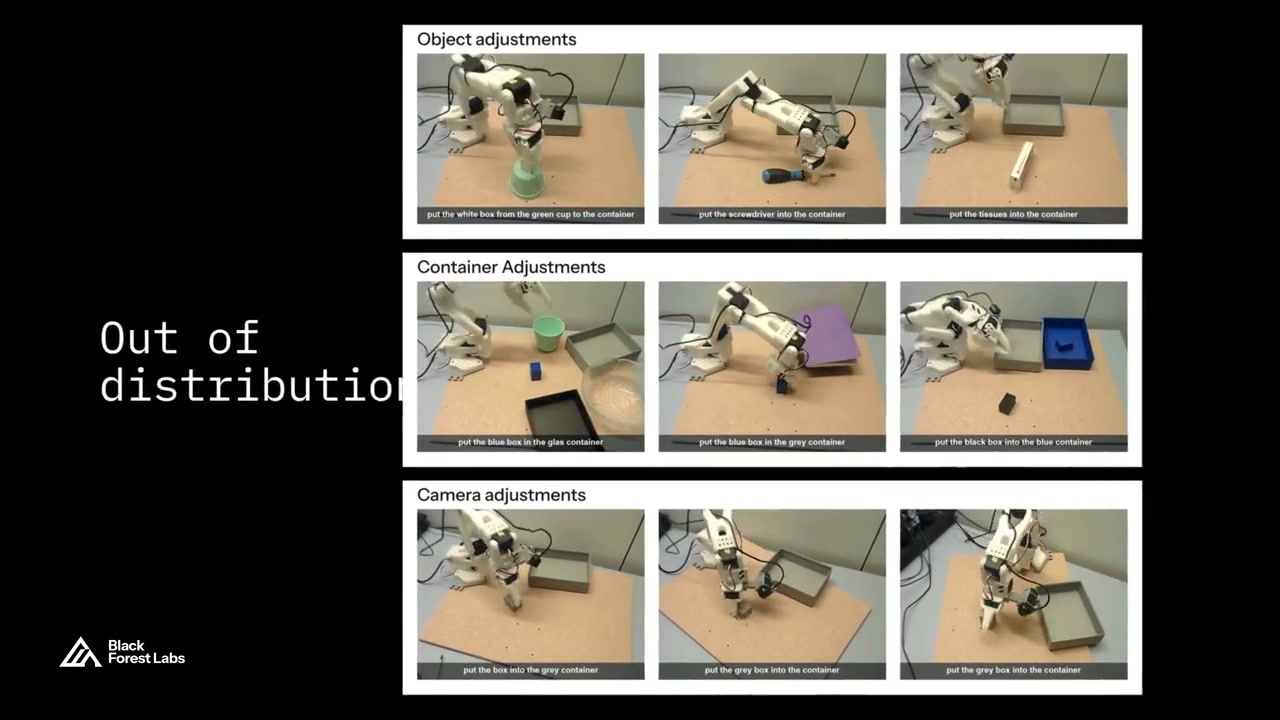
In robotics, simulation scores alone are never trusted, so the team validated on a real arm too. Positronic Robotics loaded the policy onto a Franka arm in its own lab and ran 10 DROID tasks three times each. Every model got the same task, the same setup, and the same 240 seconds per attempt, and the operator didn't know which model was controlling the arm. F3A finished 28 of 30 attempts. The same recipe was also applied to the cheaper SO-101 arm, which kept completing tasks even when objects, containers, and camera positions were changed from what it saw during training.
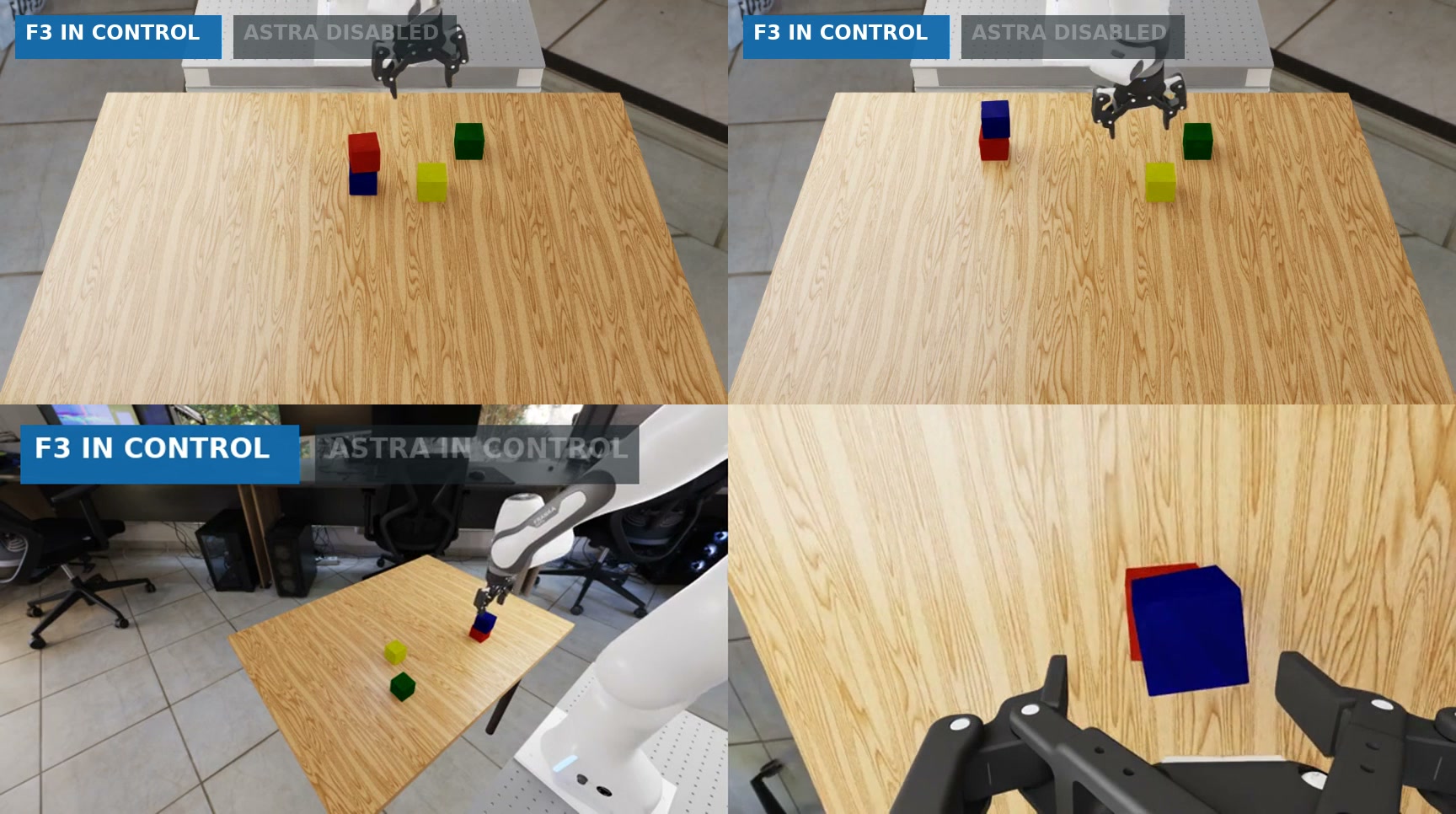
The most interesting experiment paired F3A with a reasoning model. GPT-6 Astra, run at maximum reasoning, solves every task in this benchmark. But each call adds 35.77 seconds for every second of robot motion, and costs $13.47 and an average of 16 minutes per success. F3A processes that same one second in 21.08 milliseconds, coming in at $0.09 per success and under two minutes on a single H200 GPU that costs $3 an hour. Most of those two minutes is the model sitting idle while the robot moves, so running 47 more rollouts on the same GPU costs nothing extra. Still, some tasks are left that F3A can't solve on its own.
So the team built a setup where Astra normally leaves control to F3A and steps in only when needed. On every turn, F3A puts out a prediction, and Astra decides whether to execute part of it, revise one to five steps of it, propose its own move, or stop. This hybrid solved 90 percent of episodes — including tasks that no action policy could solve alone — while cutting the cost per success to $8.77 and the time to 8 minutes. Building the same setup with π0.5 instead comes out to $12.28, barely different from pure reasoning's $13.47. The better the fast policy gets, the less thinking the whole system needs to do.
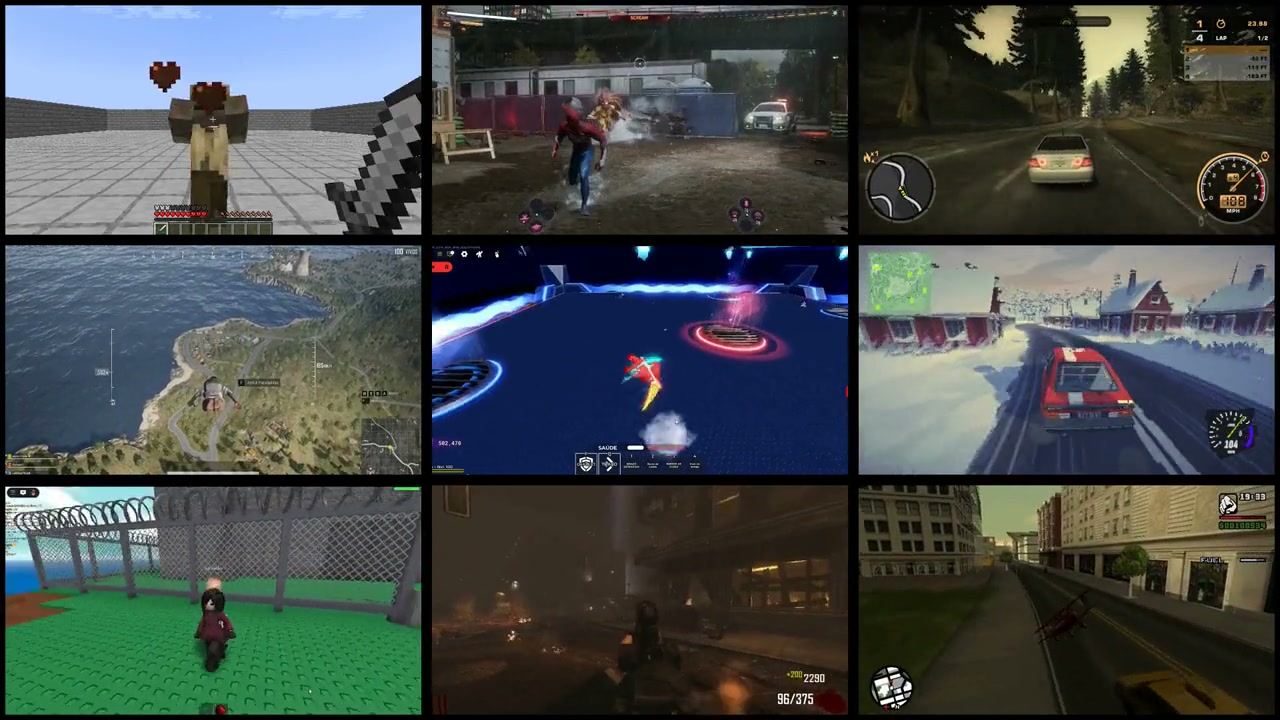
The report explains near its end why the company loaded in so much gameplay data. Abilities like navigating unfamiliar spaces toward a goal, picking an object out from a cluttered background, or anticipating and adapting to how another agent will move can't be evaluated safely at scale on real robots. Games, by contrast, are environments designed over millions of hours specifically to test those abilities, and they run in parallel, faster than real time, with zero risk. The distance between an agent that plays games and one that operates software instead of a person turns out to be shorter than it looks.
This is the moment the competitive axis for robot models shifts from scale to efficiency. With the 7B weights open and speed on consumer GPUs already measured, labs without a large cluster can now start from the same line. From here, it's a race to find the best fine-tuning recipe.


Comments