


Image: METAL
Summary
- A super PAC tied to SEIA is spending $250,000 on ads for Democratic commissioner Peter Hubbard and candidate Shelia Edwards in Georgia's Public Service Commission election in November.
- It is SEIA's largest investment in an election; the group raised $2 million through its nonprofit and chose races with tight margins and approachable spending levels.
- The current commission has approved six rate increases since 2023, and last December approved 10 gigawatts of new gas plants and batteries for data center demand, raising average household bills by an estimated $20 a month.
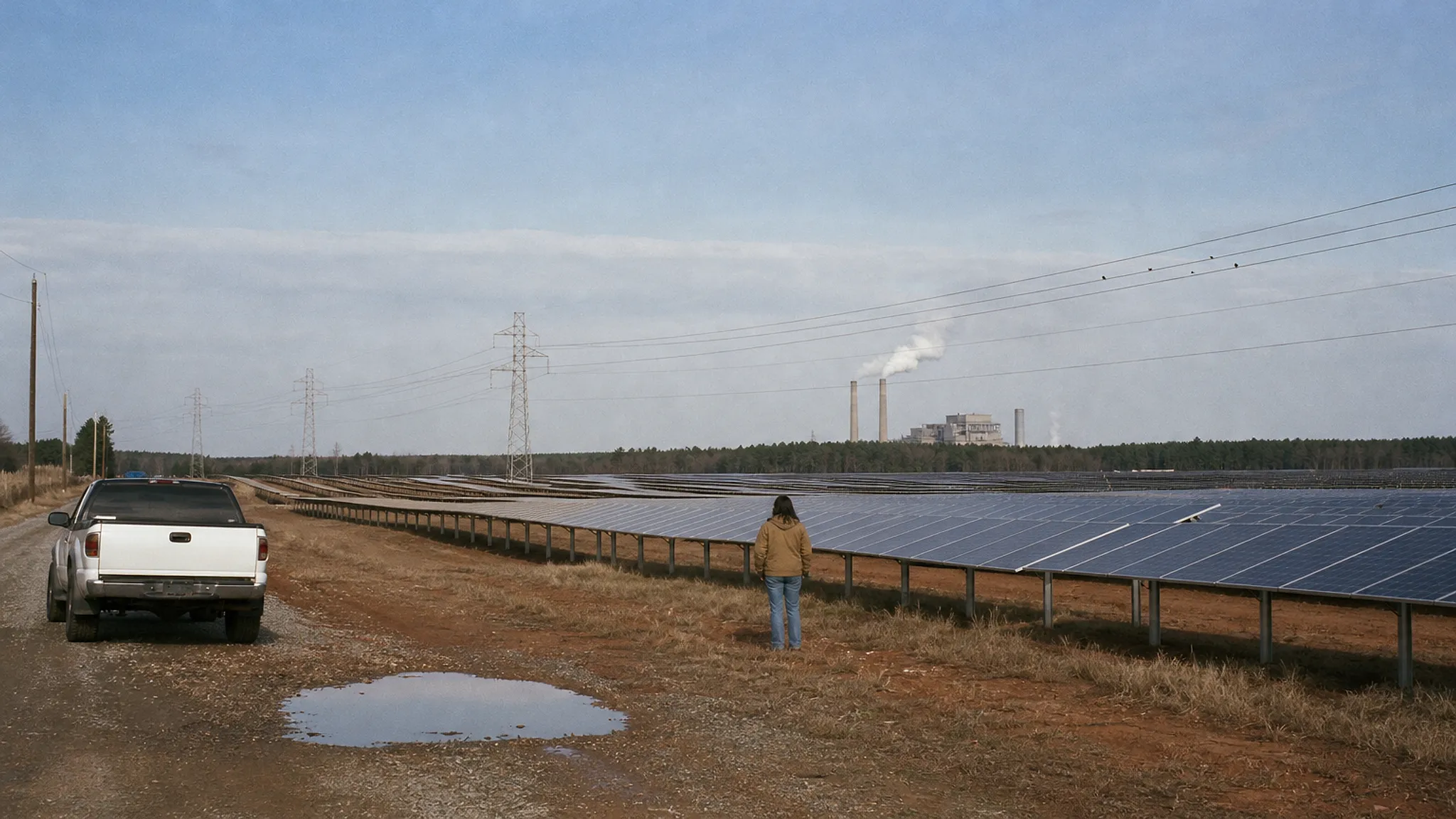
The Solar Energy Industries Association (SEIA), the group representing the U.S. solar industry, is spending $250,000 on ads supporting two Democratic candidates in Georgia's Public Service Commission election in November. According to reports, a super PAC tied to SEIA is running ads for commissioner Peter Hubbard and candidate Shelia Edwards on digital platforms and connected TV such as streaming services. If both candidates win, majority control of the five-member commission, which approves utility spending and rates, would shift from Republicans to Democrats. The commission has approved large new gas plants citing data center demand.
Voters in nine U.S. states will directly choose their utility regulators this November. Among them, Georgia is one of the only states where party control of the commission could flip. The Georgia Public Service Commission oversees utility investments and the rates charged to captive customers who cannot choose another supplier. Last year, as energy affordability rose as an issue in American politics, Democrats won two of the five seats on the previously all-Republican commission. Hubbard has to run again this year because of the election schedule, and Edwards is running for an open seat.
The $250,000 is small compared with the $77.6 million spent on Georgia's U.S. Senate race. Still, it is the largest amount SEIA has put into a single election. The trigger was last year's congressional budget law, which slashed tax credits for renewable energy despite the industry's lobbying. Steph Bosh, SEIA's senior vice president of communications, said the association then took a "hard look" at what it needed to build durable political power. Bosh took the helm of SEIA's 501(c)(4) nonprofit, the Community Clean Energy Coalition, and raised $2 million from industry and philanthropic sources, which is being spent this cycle through the affiliated American Power Forward PAC.
"If you've got one or two million, you need to spend that money really wisely," Bosh said, adding, "it's not our goal to be everywhere across the whole country." SEIA analyzed where politicians were getting in the way of clean energy, then picked races with tight vote margins and approachable levels of election spending. Utility regulator races do not attract the money and attention of congressional or higher-ranking statewide contests. The calculation is that a few hundred thousand dollars can leave a mark, and that simply letting voters know the race is happening can help.
A separate PAC founded by clean energy investors and entrepreneurs, the Invest in Tomorrow Coalition, is far more aggressive. Targeting politicians who led the push against clean energy policies in last year's federal budget process, the group saw all five of its targets lose in this year's primaries, while one pro-renewables Republican it backed won. This month it announced a new slate of targets for the general election and said it would spend $15 million on negative ads. SEIA has kept its distance from that effort. SEIA CEO Tim Pawlenty said in an earlier interview that the association is "in the business of making more friends, not more enemies."
Georgia faces massive new grid investment, making the next few years crucial in deciding what utility Georgia Power builds. According to SEIA, the current commission has approved six utility requests to raise rates since 2023. Last December, the day before the two Democratic commissioners were sworn in, it gave sweeping approval for Georgia Power to build 10 gigawatts of new gas plants and batteries in anticipation of data center demand. The decision is estimated to raise average household bills by about $20 a month. On Sept. 4, Republican commissioner Tricia Pridemore resigned and soon began lobbying for DC Blox, one of the largest AI infrastructure developers in Georgia. Pridemore said that, under the state's revolving-door policy, she would not appear before the commission on behalf of her new employer for at least the first year.
The question is what will supply power for data centers. At one extreme, Georgia Power could add up all the data center demand that big tech companies say they want to build and erect as many gas turbines as needed to match it. A more critical commission could push for a larger share of cheap solar and batteries. The industry argues that while gas turbines keep getting more expensive and their delivery dates keep slipping, solar paired with storage is low-cost, relatively quick to build and can shield consumers from fuel price swings.
METAL previously reported on the U.S. solar industry's race to commercialize tandem panels, and also covered the U.S. Department of Energy's emergency order for PJM that mobilized even data center backup generators. According to the original report METAL reviewed, SEIA's ad support targets two of the commission's five seats and aims to flip its majority with roughly one 310th of what was spent on Georgia's U.S. Senate race.
Seen through a sociologist's eyes, this race shows how the new power demand of data centers is reshaping local politics. Most voters do not even know the names of their utility regulators, yet their votes decide household electricity bills and the fuel burned at local power plants. Industry money is aimed precisely at that gap in attention. The case of a former commissioner moving to an AI infrastructure company right after resigning also shows how close regulators and the regulated can be.
"Our goal is to raise a lot more in the future," Bosh said. If Democrats win a majority on the commission, SEIA's strategy of spending small sums effectively will gain credibility. Georgia's election in November becomes a local vote on whether electricity in the data center era will come from gas or from solar.



Comments