


Summary
- On October 9, OpenAI launched composer predictions in beta in Codex, suggesting the next message based on the conversation and how the user talks to it.
- Personal ChatGPT Pro users aged 18 and older can use it in local and SSH threads in the latest Codex desktop app with GPT-6 Astra or GPT-6.1 Sol.
- During the beta, generating predictions does not consume usage limits or credits, and accepted predictions are sent only when the user sends them.
OpenAI has launched composer predictions in beta in its coding agent Codex, a feature that suggests a user's next message in advance. The official developer account OpenAI Developers said on X on October 9 (US time) that "Codex can now suggest your next message based on your conversation and how you talk to it." The feature is available to personal ChatGPT Pro users aged 18 and older, and only in the latest Codex desktop app. In the same post, the company described it as "one of the most loved new features we've ever tested internally." Within a day, the post had passed 970,000 views.
The mechanics are simple. According to OpenAI's help documentation, when Codex finishes a response a suggestion for what the user might send next can appear in the message box, and pressing Tab puts it into the box. An accepted suggestion is not sent automatically; the user must review or edit it and send it themselves. The company advises reviewing predictions before sending because they may not always match the user's intent. A suggestion does not appear after every response, and the composer may choose to skip a prediction.
The scope is narrow. Predictions work only in local and SSH threads in the Codex desktop app when using GPT-6 Astra or GPT-6.1 Sol. They are not available in Chat on the web or desktop, while in Work they may appear in local Work threads and conversations. The feature is on by default for eligible users and can be turned off by switching off Show predictions under the Composer section of General settings. During the beta, it is not available on plans other than personal Pro.
The cost terms apply only for the beta period. According to the help documentation, generating predictions during the beta does not count toward Codex usage limits or consume credits, and it is included at no additional cost for eligible Pro users. Messages actually sent, including accepted predictions, follow normal Codex usage limits and billing. Tibo (Thibault Sottiaux), who works on Codex and ChatGPT at OpenAI, wrote on X that the predictions "often lead to a double take with how on point they are" and are "included in the Pro plans without consuming usage."
The documentation also describes what predictions draw on. Predictions use only the conversation in the current thread. If context from past work or connected apps is already in that thread, it can inform a prediction, but predictions do not look up memories or retrieve information from connected apps on their own. They work with memory turned off, and turning on Codex memories under Personalization in settings lets memory context already in the thread personalize predictions. Messages that are sent follow Codex's retention and deletion policies, and the feature requires no additional keyboard permissions on macOS.
The limits of the feature are clearly drawn. In the beta, predictions suggest one complete next message and do not update word by word as the user types. Predictions never automatically accept or send follow-up messages to continue a task. They can take several seconds to appear after Codex finishes responding, and longer in long conversations. Whereas suggestions on the new conversation page help start a task, composer predictions suggest the next message in a conversation already under way.
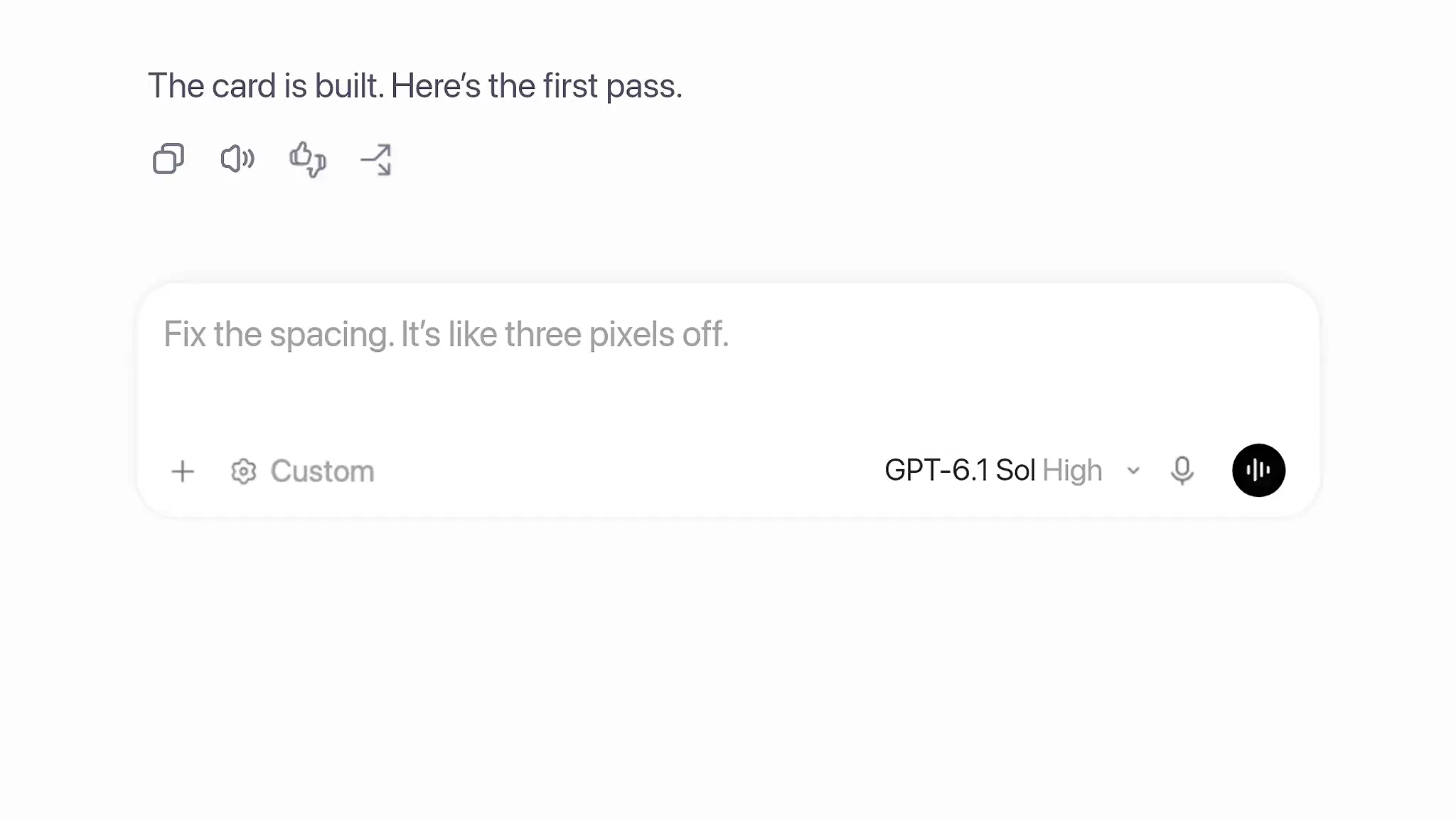
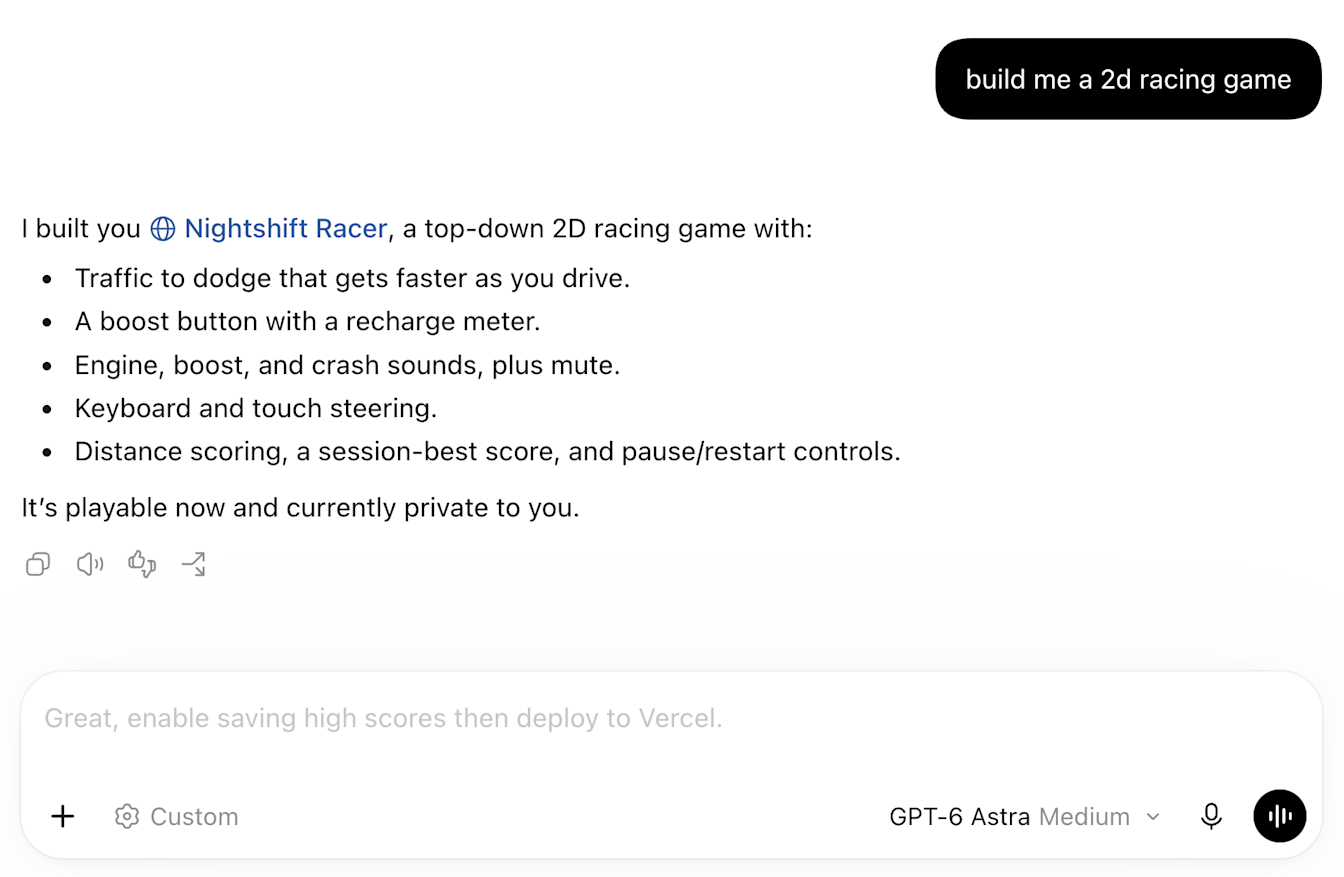
The 16-second official video and the help page screenshot reviewed by METAL show what predictions look like in practice. In the help page example, after a user asks for a 2D racing game and Codex builds it, the message box shows the suggested next message "Great, enable saving high scores then deploy to Vercel" in faded text. In the video, when the first pass of a card design appears, the prediction "Fix the spacing. It's like three pixels off" shows up, and in another scene the prediction reads "Run the tests before I commit this." The video introduces the feature with the line "It's probably what you were going to say."
This feature targets the side where people talk to the agent rather than the work the agent does. METAL previously reported that OpenAI released a demo video of new Codex features, and this prediction feature is aimed at reducing the effort of writing the next instruction in the desktop app.
Through a tech lawyer's lens, the design keeps the boundary of responsibility on the user's side. OpenAI repeatedly states in its documentation that accepting a prediction does not send it and that predictions do not send follow-up messages on their own to continue a task. In a coding agent, the next instruction is the next action. Whether it is running tests before a commit or deploying, leaving the button that sends that instruction to a human creates a record that a person made the final decision, whatever the agent does. Limiting eligibility to personal Pro accounts of users aged 18 and older and keeping predictions from searching memory or connected apps on their own follow the same logic. The open questions are whether, as convenience accumulates, a single Tab key comes to replace review, and whether generating predictions will count toward usage limits after the beta ends.




Comments