One email each morning — yesterday's AI, sortedGet it in your inbox

METAL LAB

Benchmark Emerges to Judge When AI Tutors Should Step In

Allen AI has released "TutorMoments," an AI tutor evaluation framework built on 462 real math tutoring sessions. Using over 1,500 key decision points flagged by 27 teacher annotators, it measures whether LLMs know when to help and when to hold back.

이미지: 허깅페이스

Summary

  • Allen AI unveils preview of "TutorMoments," an AI tutor evaluation framework based on real tutoring sessions
  • LLMs defaulted to over-helping; even when judgment criteria were spelled out in prompts, they still fell short of the varied strategies used by human tutors
  • Dataset, code, and model replays are all open, though the initial preview is currently limited to K-12 math in the US

The core dilemma AI tutors must solve

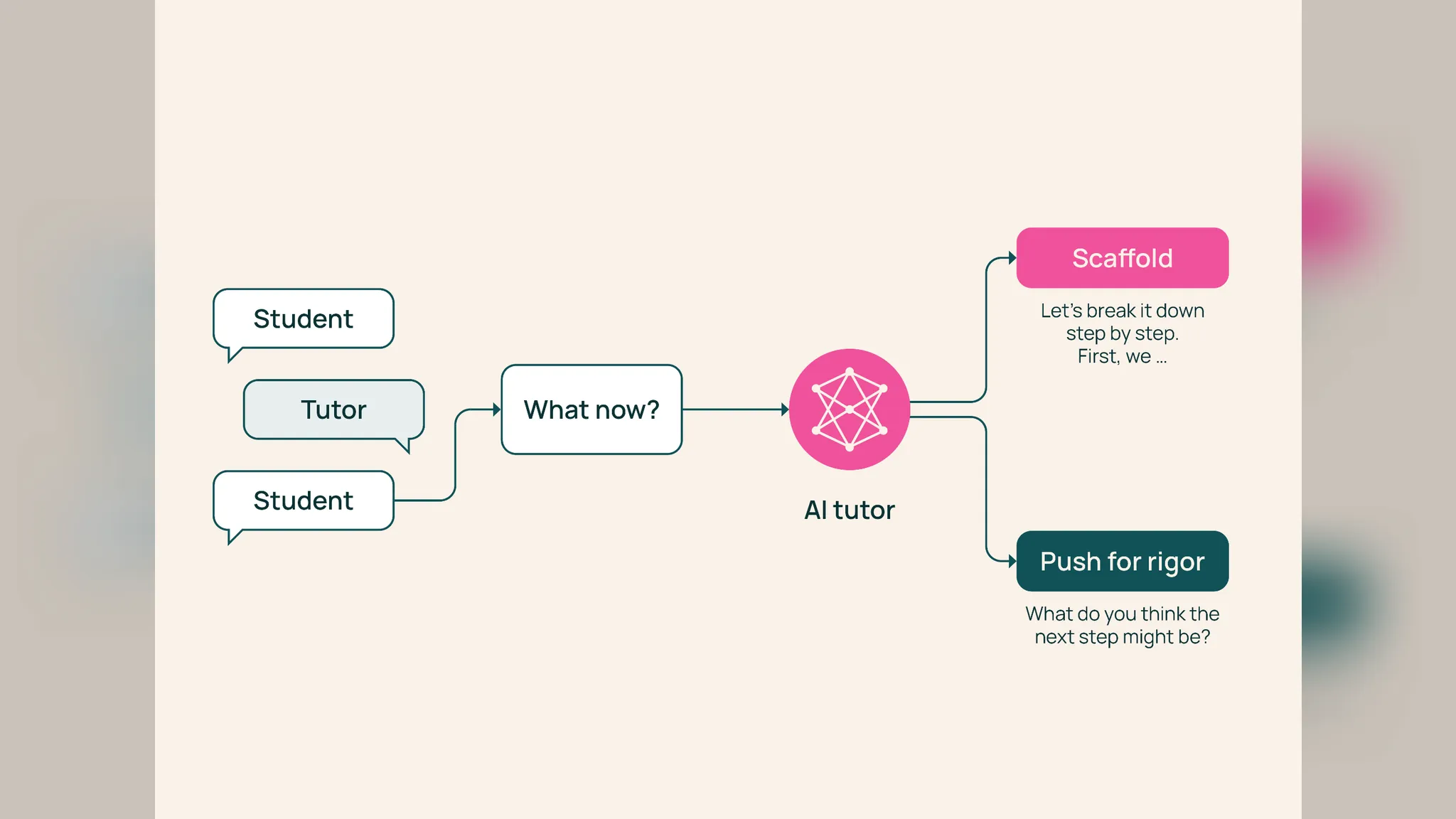
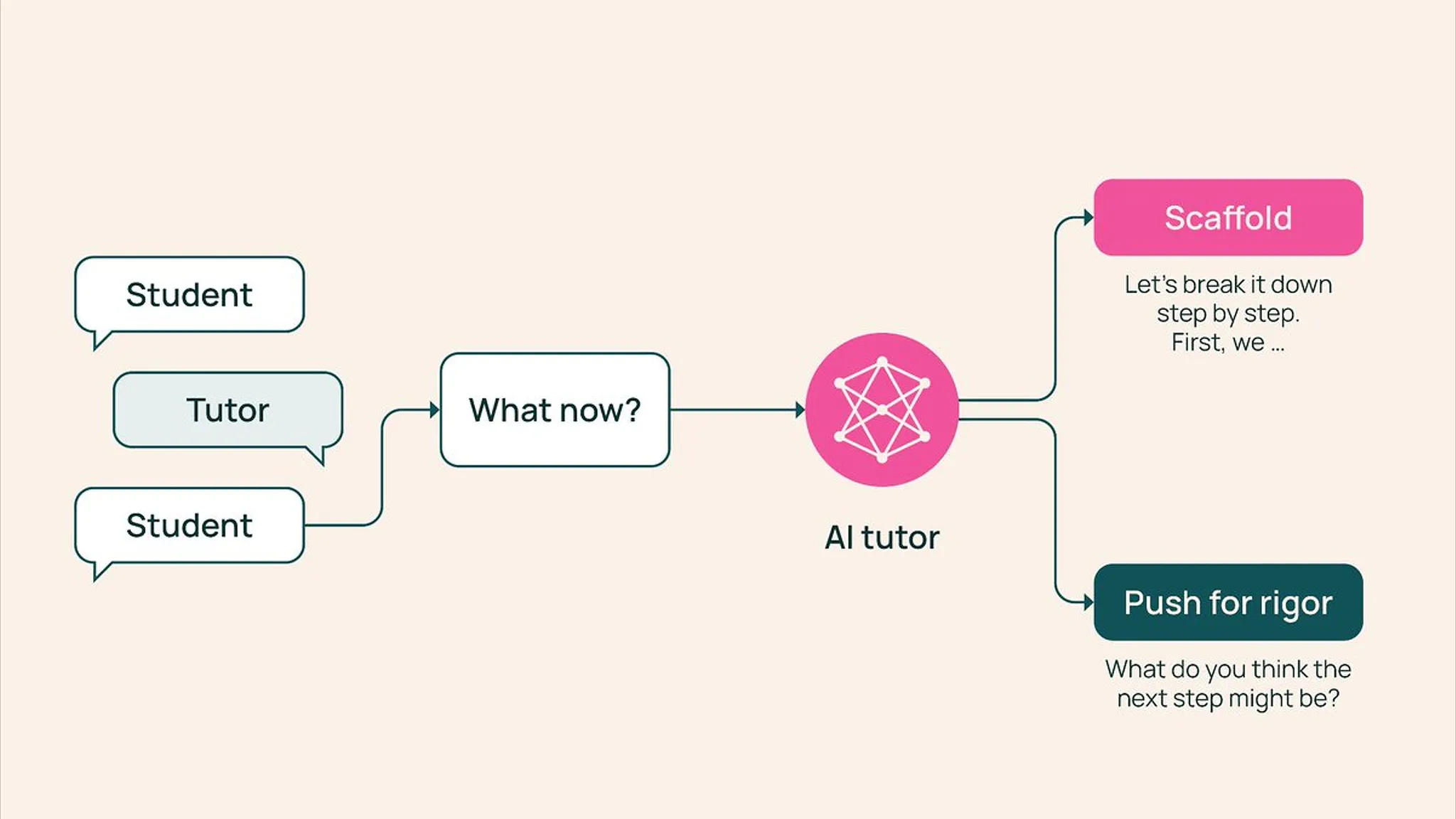
A good math teacher doesn't give a student the answer the moment they get stuck. Instead, they turn the question back with something like "What do you already know about this problem?" to get the student thinking for themselves. Conversely, if a student clearly understands the material, pushing them toward harder reasoning is more effective. This balancing act between "scaffolding and rigor" is at the heart of good tutoring—and it's structurally difficult for language models to get right.

LLMs are trained to be "helpful" assistants. Explaining concepts, listing out steps, and guiding toward an answer are their default behaviors. But in a tutoring context, that same behavior can cut short the "productive struggle" a student needs to work through on their own—a process that learning research has long shown is essential to deepening understanding.

Video: Hugging Face

Structure of the TutorMoments framework

TutorMoments is built on real one-on-one math tutoring sessions collected from a US-based tutoring program. The released preview dataset (TutorMoments-Preview) contains 462 one-on-one math tutoring sessions with students in grades 2–7 in the US, over 1,500 key decision points flagged by 27 practicing US teacher annotators, and thousands of free-text annotations. Most of the transcripts come from a high-intensity tutoring program serving students at Title I schools (those supporting low-income student populations), and were provided with parent/guardian consent. Personally identifiable information was first removed by the providing organization, then further scrubbed by Allen AI using a math-specific pipeline.

Diagram of the TutorMoments replay pipeline structure
Image: Hugging Face

The evaluation method is a "replay" approach. A transcript is paused at a key decision point, and a language model takes over as the tutor, engaging in a five-turn dialogue with a simulated student played by another language model. An LLM-based scoring pipeline then evaluates each replay against three criteria: first, whether support was provided when the student needed it (appropriate scaffolding); second, whether more challenge was introduced when the student was ready for it (appropriate rigor); and third, whether the problem was made easier than the situation called for (avoiding over-scaffolding). The ground-truth labels used for scoring come from multiple teachers annotating each decision point, with disagreements resolved by majority vote.

Preliminary results across seven models

Allen AI evaluated seven LLMs on TutorMoments under two prompting conditions. One was a baseline prompt that simply instructed the model to "tutor well" with no further guidance; the other was an evaluation-aware prompt that explicitly explained the tradeoffs between scaffolding, over-scaffolding, and rigor. All scores range from 0 to 1, representing the proportion of decision points of that type at which the model behaved appropriately.

Table comparing scores for appropriate scaffolding, rigor, and avoidance of over-scaffolding across 7 LLMs
Image: Hugging Face

Human tutors were included not as an idealized benchmark but as a naturalistic reference point. Evaluated on the same decision points using the same scoring method, human tutors scored 0.458 on appropriate scaffolding, 0.182 on appropriate rigor, and 0.496 on avoiding over-scaffolding. These figures are low because the dataset was deliberately built to capture "moments where tutoring could have gone better"—in other words, it's a collection of missed opportunities, not ideal practice.

The clearest pattern was the effect of prompting. Every model scored higher under the evaluation-aware prompt than under the baseline prompt, showing that a model's default "helpful assistant" behavior alone isn't sufficient for good tutoring. But making the tradeoffs explicit didn't fully close the gap either. While models used rigor-demanding strategies more often, they drew on a far narrower range of strategies than human tutors, and stepping back to let students work independently remained notably rarer among models than among human tutors.

Scope of release and current limitations

Alongside this preview, Allen AI has released the anonymized tutoring transcript dataset, the replay pipeline code, and the model tutor replay results at the evaluated decision points, all in the open. The technical report is available at tutormoments.allen.ai, the dataset on Hugging Face, and the code on GitHub.

However, there are several constraints at this stage. Automated evaluation can offer signals about how models behave at decision points, but it cannot substitute for research into actual learning outcomes with real students. The dataset is US-based, focused mainly on K-12 math, and drawn from a single pool of annotators, making it hard to generalize the results to other subjects, grade levels, or settings. Rigor scoring is less reliable than scaffolding scoring, and in the underlying annotations, rigor decision points (260) are fewer in number than scaffolding decision points (738).

Allen AI stated that it will use feedback from this preview to guide continued development, with plans for a larger, multimodal dataset, a strengthened scoring pipeline, and deeper analysis. The project was supported by the Gates Foundation and Learning Commons.