


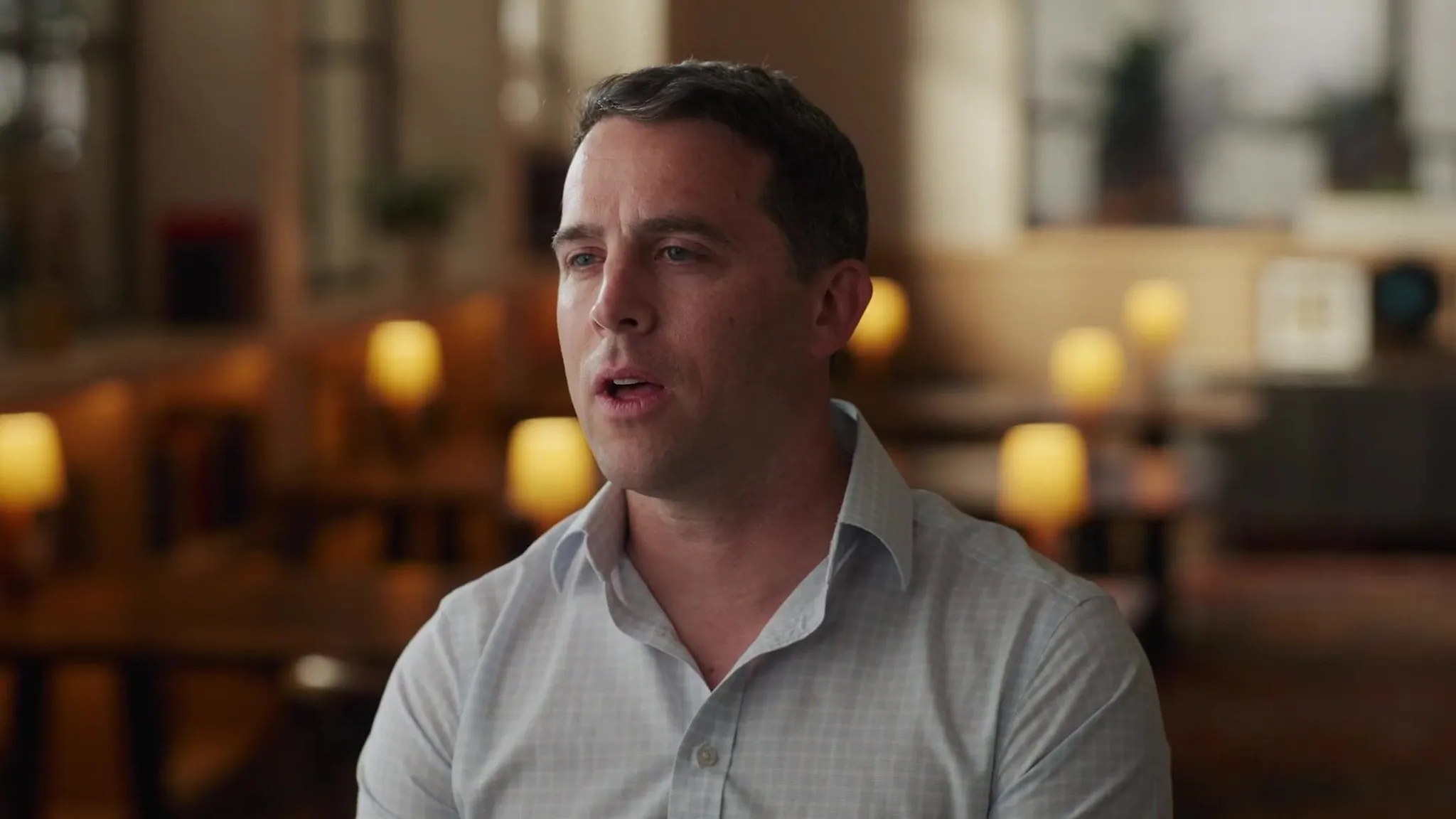
Image: @pridgenmd (X) (video still)
Summary
- OpenAI's developer account published a 90-second video on September 22 of surgeon Brian Pridgen using Codex.
- One of the tools he built is an MCP server attached to the PubMed API, which returns bespoke reports grounded in the literature.
- He states in the video's opening line that he is neither a programmer nor a technical person, but a doctor.
A surgeon who performs hand and microsurgery in San Francisco built the software his own practice needed. OpenAI's developer account posted a 90-second video of that work on September 22, and one of the tools it shows is an MCP server that pulls papers from the medical literature database PubMed. The person who built it is not a developer but Brian Pridgen, MD.
The video opens with that fact. Pridgen says, "I'm not a programmer. I'm not technical, I'm a doctor," and then explains that he had never been able to use the superpower of creating software until Codex opened it up for him. The problems he took on were not assignments handed down by an employer but the ones he ran into in his own practice.
The uses started small. He began with simple jobs such as restructuring files and renaming them, then moved toward reading large libraries of articles and picking out only what he needed, he says in the video. "What surprised me about Codex was that it's much more general purpose than a coding tool," Pridgen said.
That information retrieval tool was one of his earliest builds. He discovered that PubMed has an API, attached an MCP server to it, and explains that he could then retrieve material quickly and get bespoke reports grounded in the literature. On his own X post he wrote, "One example is a PubMed MCP server to review literature."
The part of the workflow he singles out most is voice. Explaining out loud conveys far more context about what he wants, and giving the model the freedom to interview him with questions before it acts fills in the things he would never have thought to mention, he says in the video. "Voice is just such an unlock," Pridgen put it.
A plugin resolved the point where he used to stop short of shipping. Naming the security plugin as his favorite Codex plugin, he said, "The things it catches are just incredible in the detail," and added that deploying and shipping something became far more comfortable. According to OpenAI's plugin documentation, the plugin scans code for vulnerabilities, validates plausible findings, supplies the evidence and remediation guidance alongside them, and is installed from Plugins in the ChatGPT desktop app. The documentation recommends gpt-5.6-sol with xhigh reasoning effort for the best scan quality, and states that a scan leaves behind report.md along with findings.json, coverage.json and scan-manifest.json. Findings can be exported as JSON, CSV or SARIF, or handed off through an approval step to a Linear, GitHub or Jira issue. The instruction to scan only code you own or have permission to assess sits at the top of the same document.
What stands out is not the list of tools but the occupation of the person who built them. Using software and making software have long been separate jobs, and the programs used inside a hospital have mostly been bought from outside. What Pridgen built is shaped to his own clinical workflow, so the step of writing requirements into a document, handing them to an outside development team and waiting disappeared entirely. In his X profile he writes that he is building a future for patients, physicians and agents, and lists surgiscribe.co and luminoshealth.co.
Where this video sits is a fact of its own. Pridgen's own post went up at 2:47 a.m. UTC on September 22, and seven minutes later OpenAI's developer account, with 430,000 followers, posted the same video again. At the time METAL checked, the developer account's post had 18,597 views and 144 likes, while Pridgen's original post had 8,963 views and 16 likes. A usage record from an account with about 1,100 followers moved straight onto the official developer channel.
In the 90-second video Pridgen identifies his specialty as hand and microsurgery and closes by saying that getting someone to solve one little problem is enough for them to see the magic of it. The final caption is his line about how much fun it has been to walk multiple people through that. This is not the first time OpenAI has released a short video of a user at work. METAL has reported that a video of the Perplexity team working with Codex was published in the same format.
Frontier models are turning up in clinical settings more often as well. METAL has reported on the case where an OpenAI model designed a 96-well plate for asthma research. That was a researcher handing study design to a model; this video is a clinician building his own working tools. The same model sits in two different places, the lab and the clinic.
The word Pridgen repeats across the video and his posts is superpower. He wrote it again while urging doctors who are not technical, like himself, to give Codex a try. Once professionals start building the tools of their own work, the boundary of what that profession can do moves with them. What the 90-second video leaves behind is not a score for a new model but a record that the boundary is already moving.


Comments