


Image: METAL
Summary
- World Labs has unveiled an R2S2R engine that recreates a single real-world robot task as thousands of variants in virtual environments for training
- Control models trained on the engine ran unassisted for one hour each on five robot platforms, including ALOHA
- The technology comes from SceniX, which World Labs acquired last July, and stems from the premise that robot development's real bottleneck is testing on physical hardware
One robot motion, multiplied into thousands
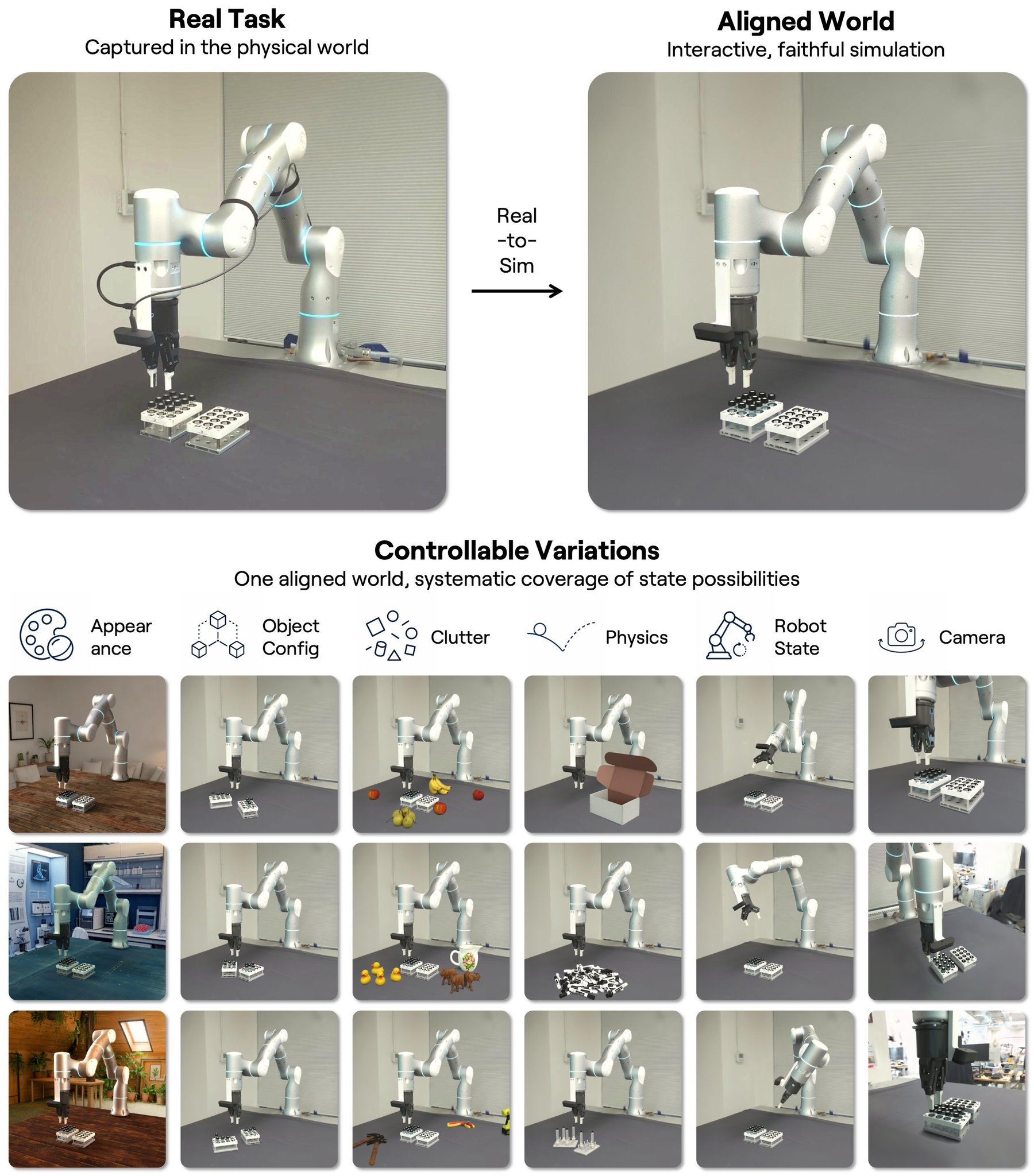
Film a robot arm plugging a cable into a hole just once in the real world, and World Labs' new engine turns that single clip into thousands of virtual variants — shifting lighting, moving and multiplying objects, changing the surroundings, tweaking physical properties like friction, and swinging the camera to new angles. World Labs, the startup founded by Fei-Fei Li, unveiled this simulation engine on August 15 under the name "Real-to-Sim-to-Real," or R2S2R for short. The approach captures the robot, its sensors, the work environment, and demonstration footage, then rebuilds them into a virtual world that doesn't just look similar but physically behaves the same way. The technology traces back to SceniX, a startup World Labs acquired last July.
The examples shown included organizing and routing cables, fitting an elastic cable end into a hole, and using two hands to pack items into a box — tasks that force the system to handle rigid objects, moving objects, and objects that change shape.
Checking virtual against real, side by side
World Labs also revealed how it verifies that a generated virtual world actually matches reality. The company runs the same sequence of actions in simulation and on the real robot at the same time, then compares the observations, object movements, and outcomes. That comparison is the test for whether a simulation is faithful enough to stand in for the physical hardware.
One hour on five robots, no human help
Control models trained entirely in simulation were then moved over to real robots for testing. The first was ALOHA, an open-source dual-arm robot from Stanford that's teleoperated using two small manipulator arms. It's far cheaper than commercial systems and fully open in its design, which has made it something of a standard reference platform in robotics research.
World Labs said each model ran unassisted for an hour on every one of five different robot platforms, including ALOHA. The tasks ranged from wrapping a power cord around a refrigerator with both hands, to precisely repositioning test tubes, to picking thin objects like markers or pencils out of a tangled pile. The company said the system isn't tied to any specific control model or robot type — meaning a virtual world reconstructed once can later be reused with different models and different robots.
| Test Platform | Unassisted Runtime | Representative Task |
|---|---|---|
| ALOHA (Stanford open-source) | 1 hour | Teleoperated precision manipulation |
| 4 additional platforms | 1 hour each | Cord wrapping, test tube repositioning, thin-object separation |
Why this approach, and why now
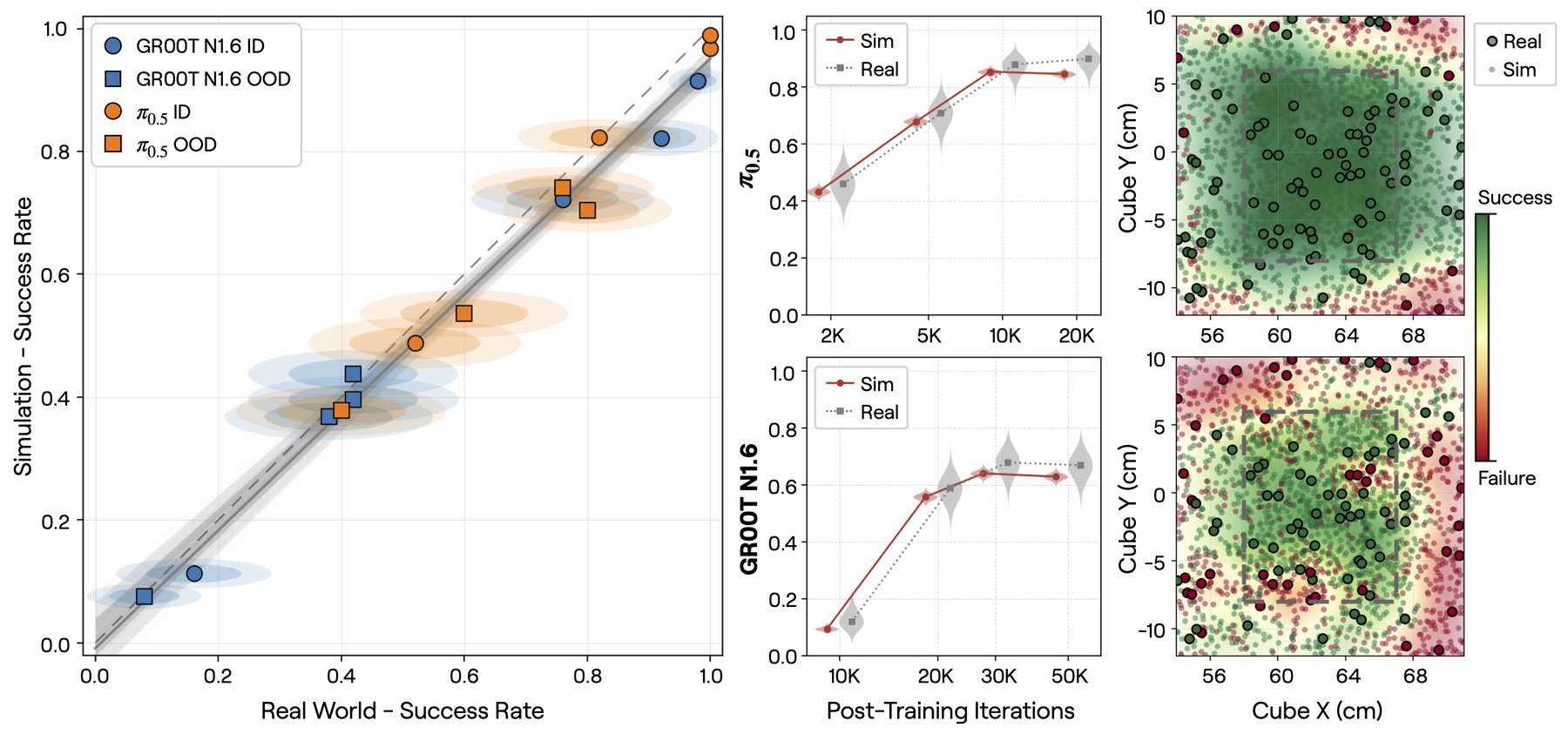
World Labs argues that the real drag on robot deployment isn't model architecture — it's the sheer volume of experience a robot needs before it can operate reliably. Real-world data is expensive to collect and hard to control, and even online video fails to systematically cover the range of object types, physical conditions, and failure cases needed. Language models can be evaluated at scale using text alone, but robot control models have always required actual hardware runs to check performance. World Labs' position is that simulation doesn't need to match real-world success rates exactly. What matters is whether it can answer the same questions — where a model fails, and which version performs better.
Editor's take
If there's one phrase robotics has repeated more than any other over the past year or two, it's "we don't have enough data." Dyna Robotics training on a million hours of human video, NVIDIA pushing video-based world models — these are different attempts at drilling through the same bottleneck. World Labs' R2S2R attacks that bottleneck from a genuinely different angle. Instead of collecting more data, it stretches a single piece of existing data into a physically accurate virtual world and reuses it. The idea of using simulation to sidestep the cost of physical data collection isn't new — language models absorbed internet text almost for free, while robots have to earn their data by physically colliding with the world — but few teams have shipped this level of polish since acquiring SceniX.
What actually matters here, practically speaking, isn't how closely the simulation resembles reality — it's that World Labs lowered the bar to "can it answer the same question." Cover enough robotics startups at this scale and you keep landing on the same conclusion: perfect physical fidelity in simulators has been out of reach for years, but current-generation simulation is already good enough for ranking models and spotting failure points. World Labs seems to have aimed squarely at that lower bar.
For teams in Korea working on robot foundation models, the detail worth watching is reusability. If it's true that a virtual world, once reconstructed, can be applied directly to different models and different robots, that could sharply cut the cost that used to come from building a simulation environment from scratch for every new platform. That said, one hour of validation on each of five platforms is a lab-scale proof, not yet grounds for commercial deployment.
The thing to watch over the coming months is how quickly other robotics startups fold the R2S2R approach into their own foundation model training pipelines. How fast robot learning manages to break free of its dependence on physical hardware will likely set the pace for the entire industry's development cycle.


Comments