


Image: METAL
Summary
- Spotify will attach an "AI Persona" badge to AI-generated artist profiles
- Once labeled, an artist's music is excluded by default from editorial and algorithmic recommendations unless a listener follows them directly
- Spotify will determine labeling through its own review rather than self-reporting, rolling it out first to profiles with larger listener counts
No Follow, No Play
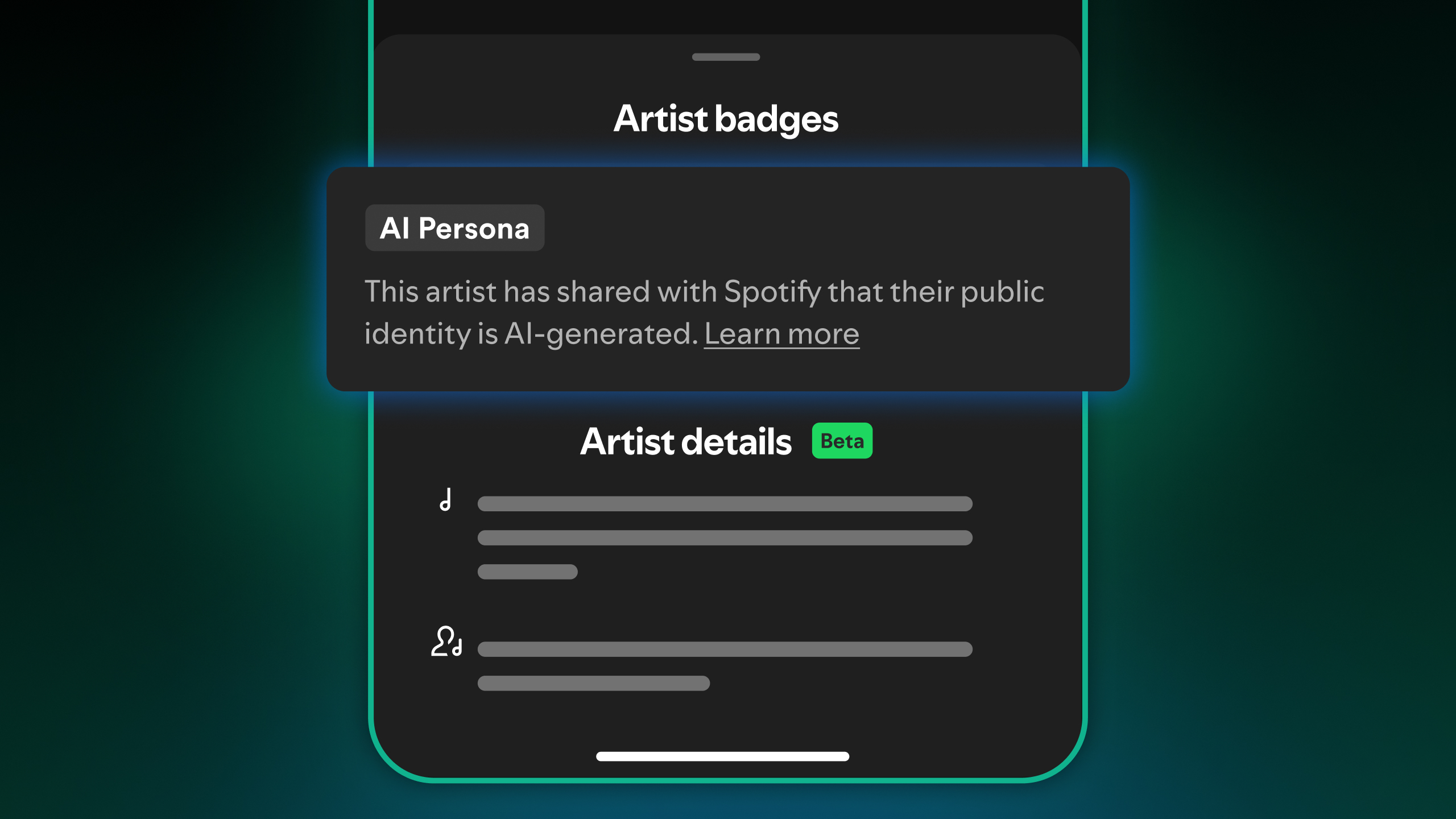
Spotify will attach an "AI Persona" label to artist identities created using AI. Rolling out in stages starting mid-September, the label means that once applied, an artist's music will not appear in editorial, algorithmic, or personalized recommendations unless a user follows that artist directly. Until now, AI artists could ride the recommendation algorithm the same way human artists could. This move effectively narrows their path to discovery down to a single channel.
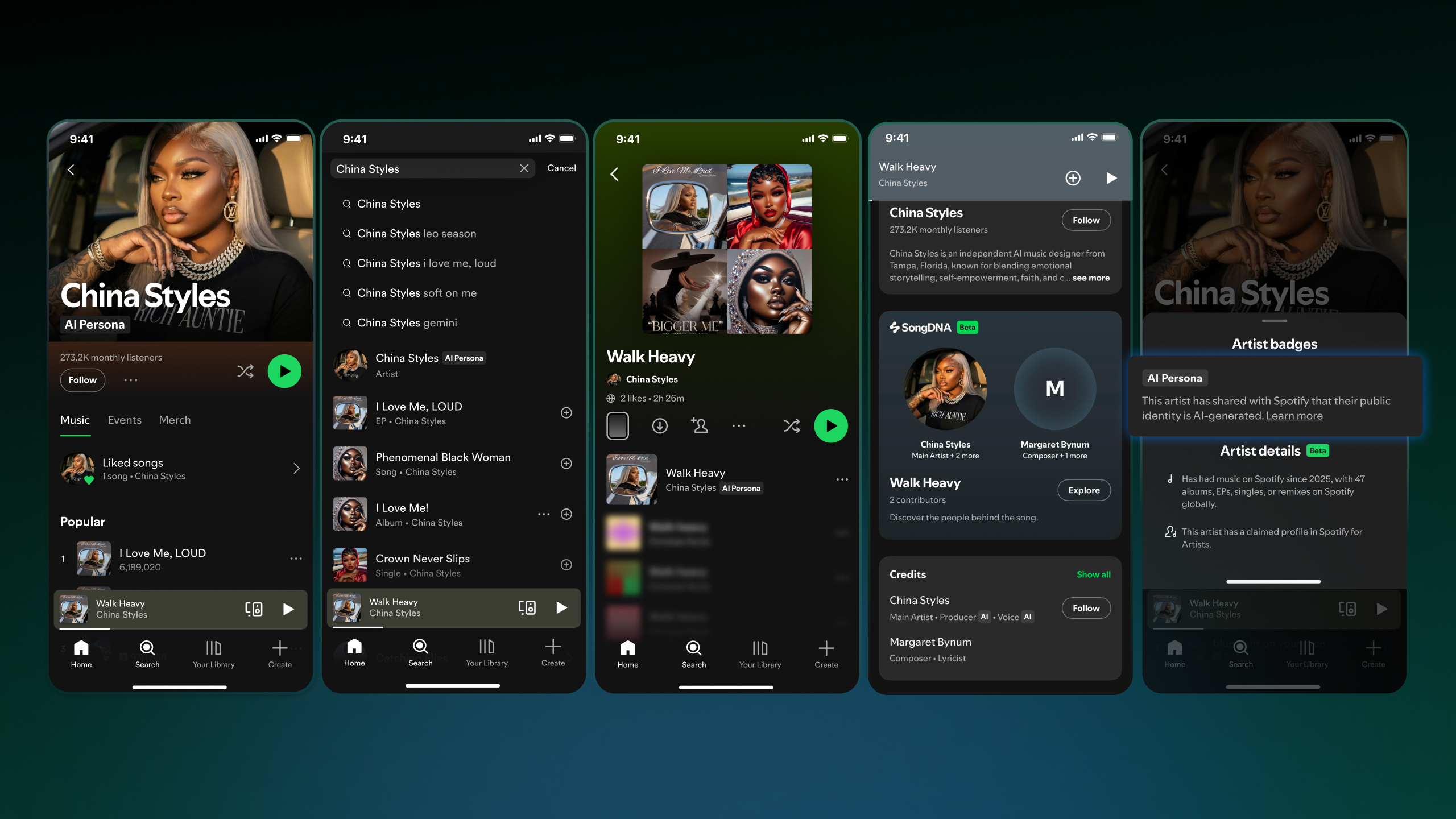
The label will appear across nearly every touchpoint a listener might encounter — profile banners, the About section, search results, and playlist track listings. It's designed to be a persistent marker rather than a one-off tag that appears and disappears.
Not Relying on Self-Reporting Alone
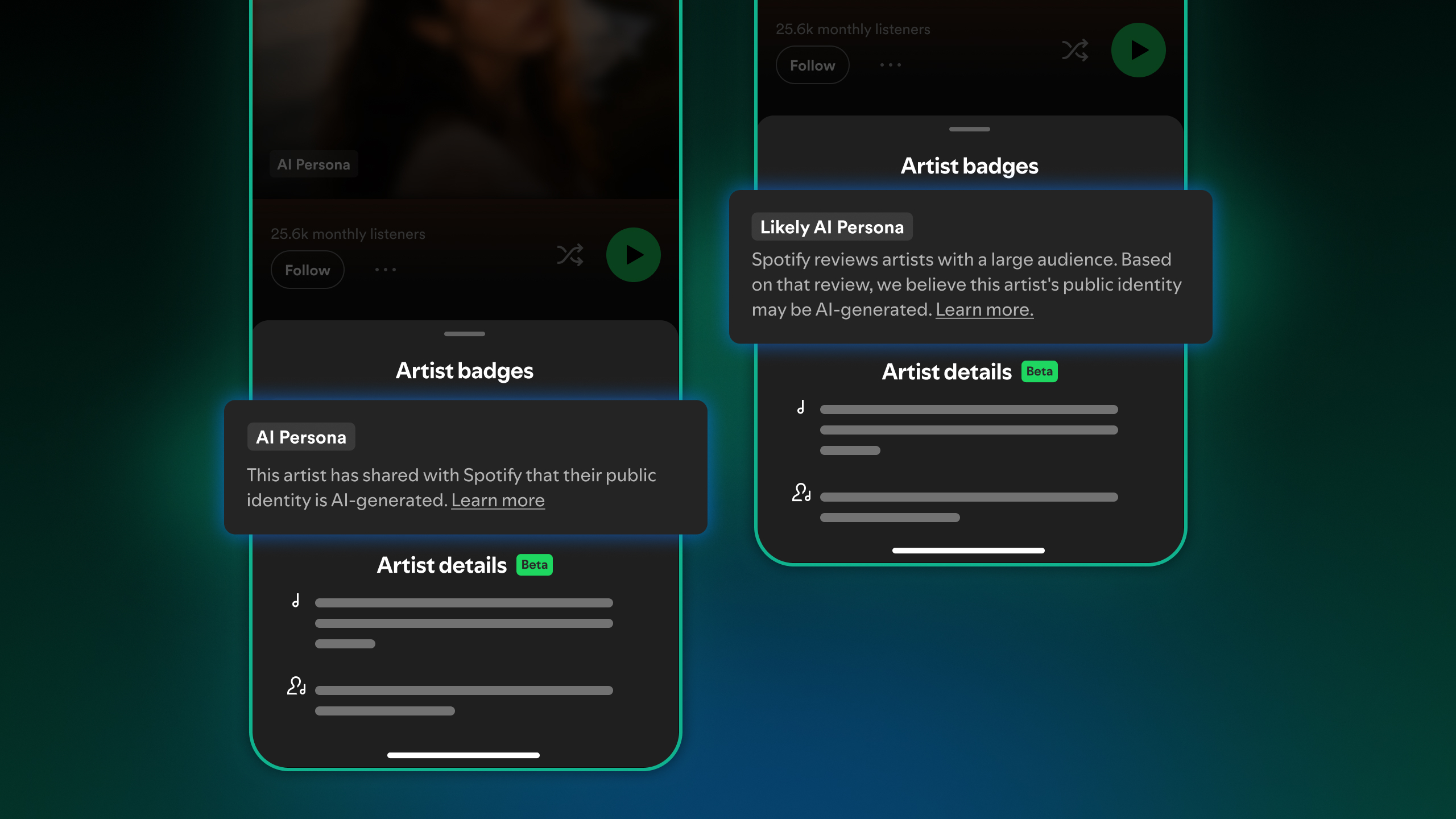
Artists are still permitted to disclose on their own that an identity was AI-generated, but Spotify says it won't depend on that alone. The company will conduct its own review to flag profiles whose names and images appear to be photorealistic AI generations. The screening won't happen all at once — profiles that exceed a preset listener threshold, meaning those already gaining significant traction, will be reviewed first. Spotify has also set up an appeals process for artists who believe the label was applied incorrectly.
Spotify made clear that this measure is not a judgment on the music itself. While the ways artists use AI as a creative tool vary widely, the company argues it can give a clear answer to one specific question: does this profile represent a real person? In its announcement, Spotify said "every artist has the right to choose how they present themselves," but added that its programming will prioritize artists who are actually building music careers.
Why Draw This Line Now
Spotify first introduced its AI music labeling policy in September 2025, using industry-standard technology to identify and flag AI-generated music while banning unauthorized AI voice clones and deepfakes from the platform outright. The new AI Persona label is the next phase of that policy, but with a key difference: it targets the artist's identity itself, not the music.
Behind this lies a shared concern among streaming platforms. As generative AI sharply lowers the cost of producing music, there's a growing risk that low-quality, mass-produced content — so-called "slop" — will overrun recommendation feeds. At the same time, Spotify continues to expand its own AI-powered features, including Prompted Playlists, AI DJ and chat, and an upcoming AI remix feature. The core of this policy is drawing a line between using AI as a tool and using AI to impersonate a person.
A similar trend is emerging across other platforms.
| Platform | Timing | Key Measure |
|---|---|---|
| Spotify AI Persona | September 2026 | Profile label + default exclusion from recommendations |
| Snapchat Spotlight | July 2026 | Ends monetization for fully AI-generated content |
| Suno | August 2026 | Watermarking/fingerprinting, limits on mass distribution |
While each company's approach differs slightly, they're converging in the same direction: rather than blocking AI-generated content outright, platforms are moving to strip such content of the automatic algorithmic benefits it once received.
What Actually Changes
For listeners, the chance of stumbling across AI artist music on the home screen or in playlists will decrease, since accessing it now requires actively following the artist. For artists, the fact that an identity is AI-generated is now more likely to work against gaining listeners — meaning they'll need to build a fan base directly, without algorithmic help. This appears to signal a shift for streaming platforms: moving beyond simply blocking AI-generated music, toward distinguishing who is behind an AI-made identity and adjusting the recommendation benefits accordingly.


Comments