


Image: METAL
Summary
- SpaceX has pushed back the full removal of xAI's unpermitted turbines by another year.
- It shows how power procurement for AI data centers is now outrunning the permitting process.
- Power has become the core bottleneck in the AI infrastructure race.
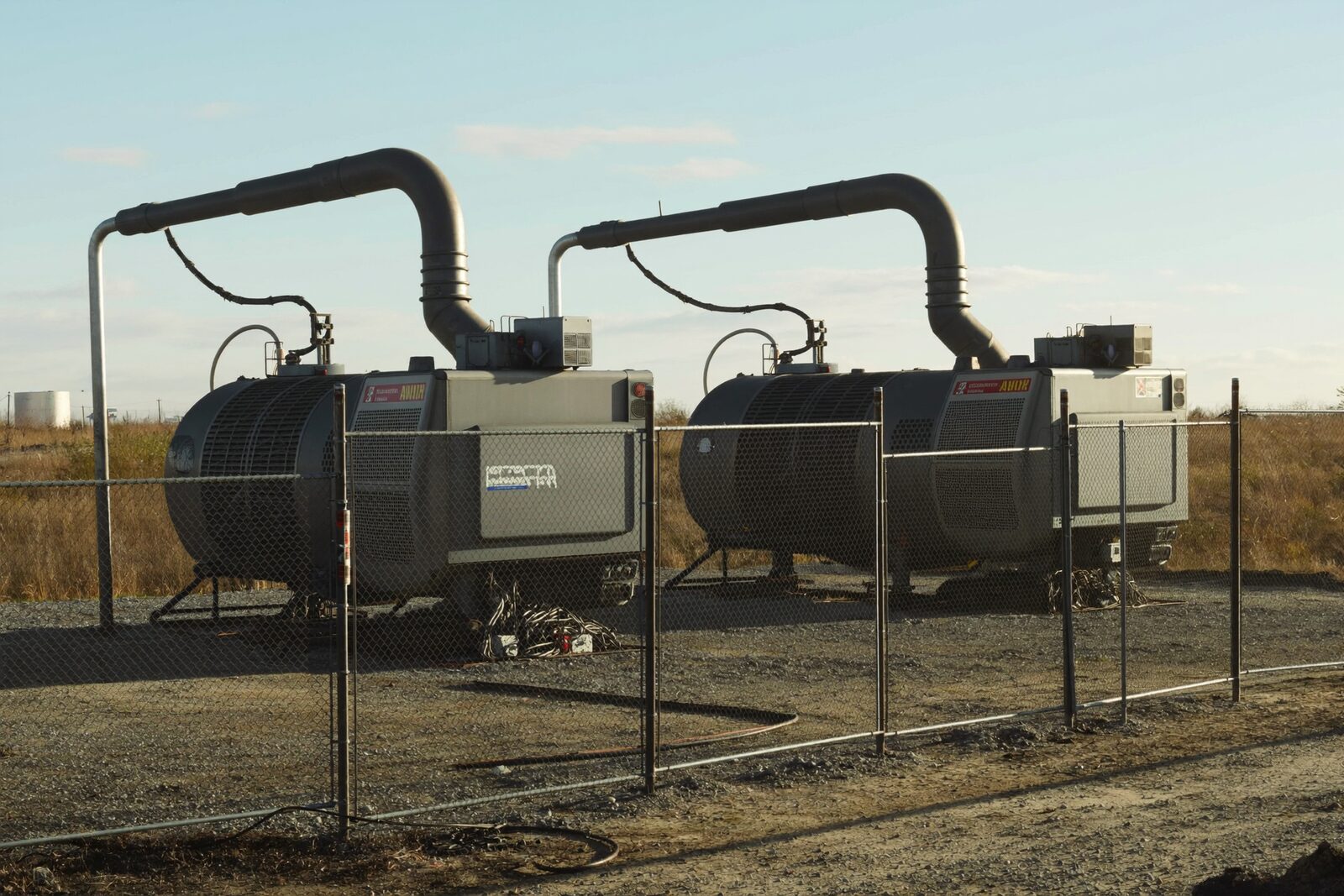
SpaceX has decided to delay the full removal of xAI's unpermitted turbines by another year. It's a snapshot of how far AI data centers are pushing the limits of power procurement.
Why the turbines are a problem
Large data centers often can't be run on grid power alone. Grid interconnection takes years, and if operations need to start before that, on-site generation is the only option. Gas turbines are one answer.
The catch is that they require a separate air pollution emissions permit. Turbines emit nitrogen oxides, and standards are stricter near residential areas. Running them without a permit is itself a violation.
| Stage | Typical timeline | Reality for AI data centers |
|---|---|---|
| Site acquisition/construction | 1-2 years | Pressure to shorten as capital pours in |
| Grid interconnection | Several years | The longest bottleneck |
| Emissions permit | Months to years | Frequently clashes with operating schedules |
| Actual operation | — | Some cases start before permitting is complete |
What delaying removal actually means
Delaying removal by a year is effectively the same as saying it will keep being used in the meantime. It signals either that an alternative power source hasn't been secured, or that securing one has been pushed back by that same amount of time.
What this reveals is where the real constraint on AI infrastructure lies. GPUs can be bought with money. Buildings can be built. Electricity can't be bought outright. You either wait for the grid to be ready, or you generate it yourself — those are the only two options.
Power has become the real competitive front
In the same week, it emerged that Google, in backing Anthropic's data center procurement, explicitly listed rent and power costs as items it would cover. The fact that power costs are named in a contract shows how large a share they now take up in overall costs.
| Cost item | Legacy IT infrastructure | AI data centers |
|---|---|---|
| Hardware | Largest share | Still large but relatively smaller |
| Power | Part of operating costs | Now large enough to be named in contracts |
| Cooling | Secondary | A design constraint as rack density rises |
| Permitting delays | A risk | A make-or-break factor for the business |
While GPU supply grabs the headlines, the things that actually stall projects are usually power and permitting.
From a domestic perspective
In Korea too, new data center projects frequently get stuck on grid interconnection and local government permitting. This overlaps with policy aimed at curbing concentration in the greater Seoul area and with local residents' acceptance issues. What the U.S. case shows is that even with enough capital, time can't be bought — and that's exactly why workarounds emerge.
For anyone evaluating AI infrastructure investments, it's safer to put three things at the top of the timeline.
- The actual timing of grid interconnection commitments — an application filing and a firm commitment are not the same thing. Check the date written in the document.
- Emissions permit requirements for emergency vs. continuous generation equipment — standards differ between emergency-use and continuous-use units. If continuous operation is the plan, apply under that standard from the start.
- Contractual allocation of liability in case of permitting delays — decide in advance who bears the cost of delay.
All three are administrative issues, not technical ones — and it's usually this side of things that kills a project.
Source: Reported by TechCrunch. The exact number of turbines and the specific terms of the emissions permit have not been confirmed.


Comments