


Image: METAL
Summary
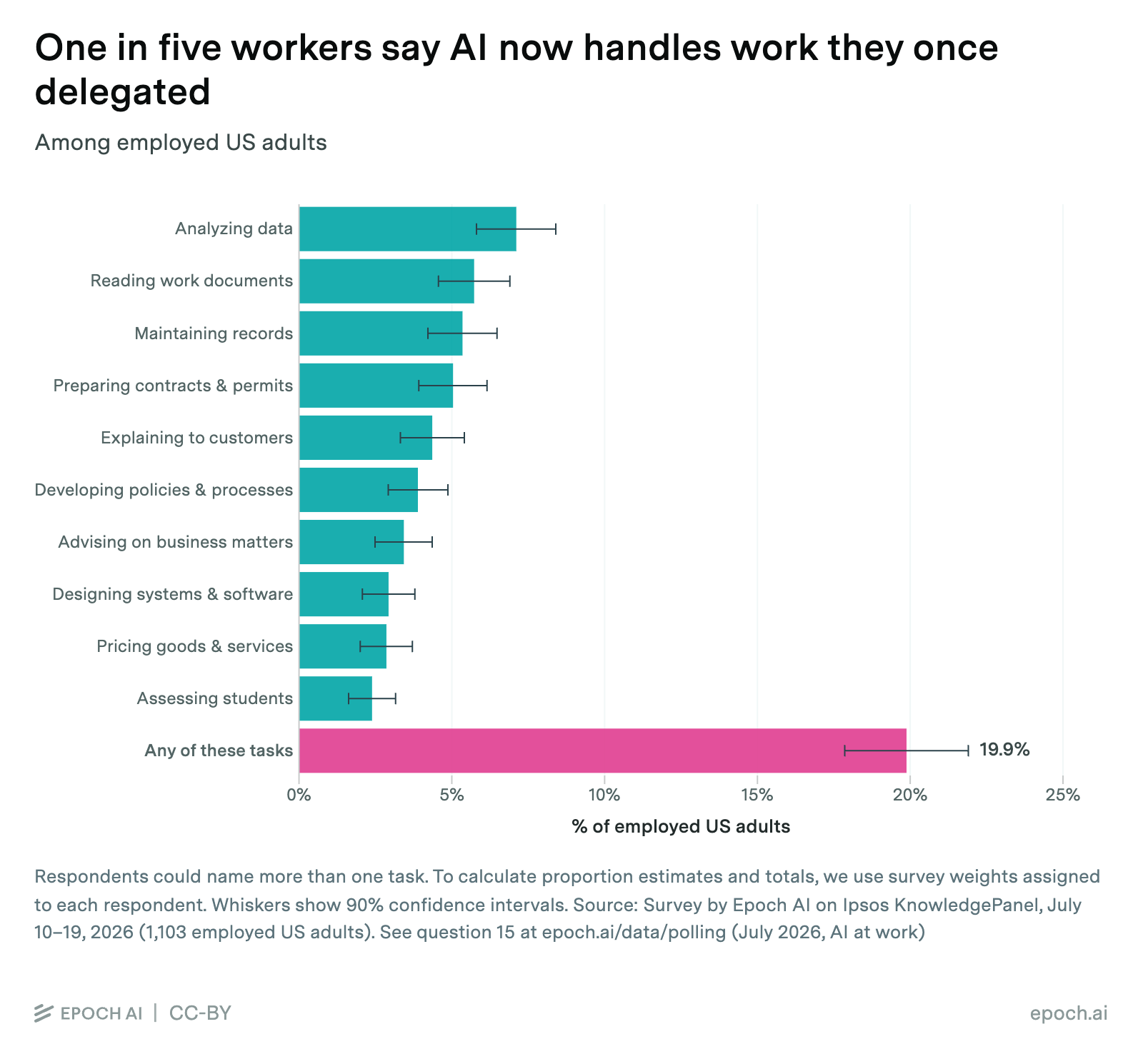
- Epoch AI and Ipsos surveyed 1,106 US employees and found that 20% now assign at least one task once handled by a colleague or outside worker to AI
- AI adoption was highest in software development (57%) and data analysis (46%), and lowest in records management (25%)
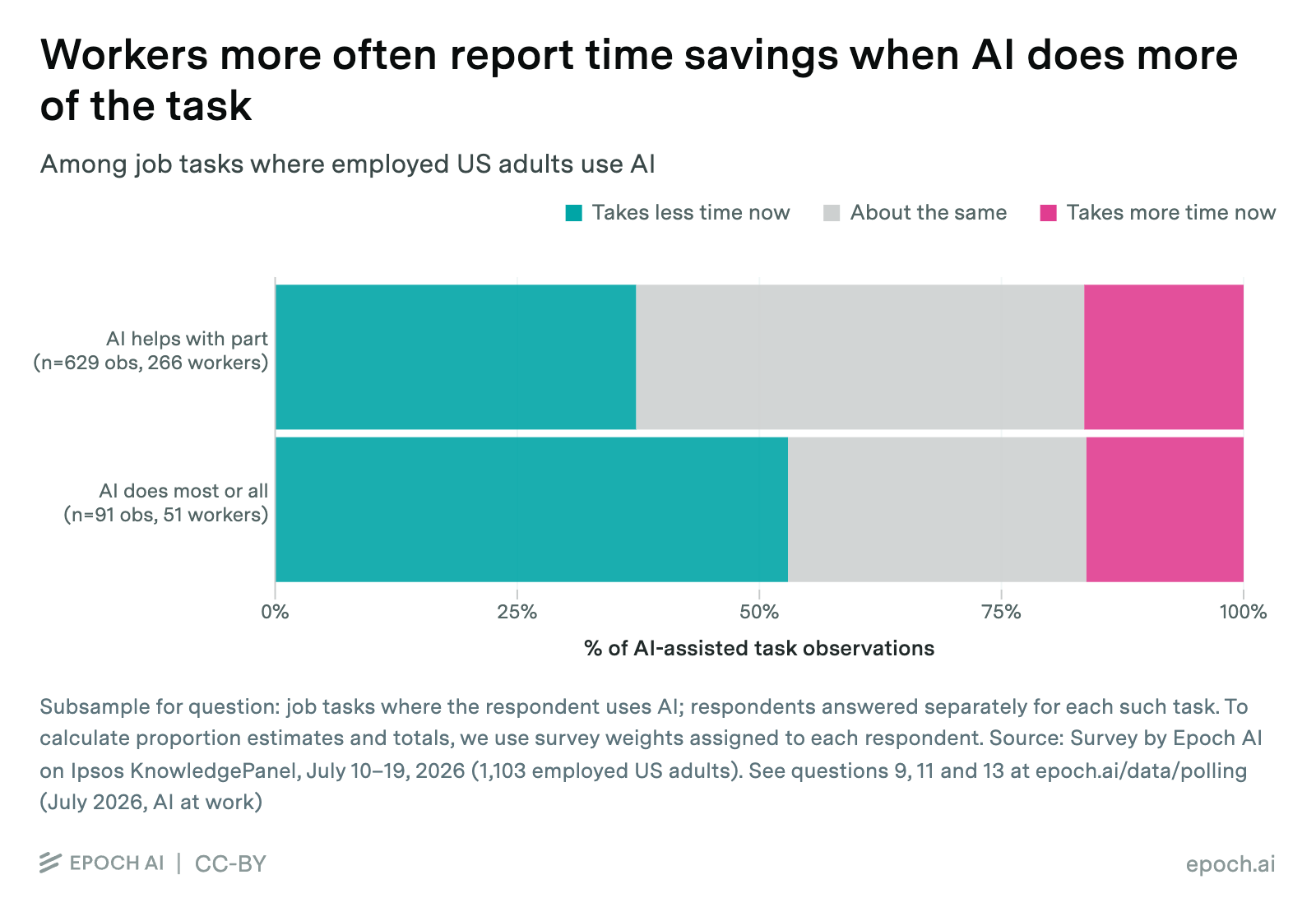
- 53% reported time savings when AI handled most of a task, but one in six AI-assisted tasks actually took longer
Handing work to AI instead of a colleague
One in five working adults in the United States has shifted at least one task once handled by a colleague or an outside worker over to AI. That's the finding from a survey of 1,106 US employees conducted by AI research organization Epoch AI and pollster Ipsos between July 10 and 19, 2026. Drawing on US Department of Labor data, the survey selected ten tasks representative of knowledge work and asked respondents whether they used AI for each.
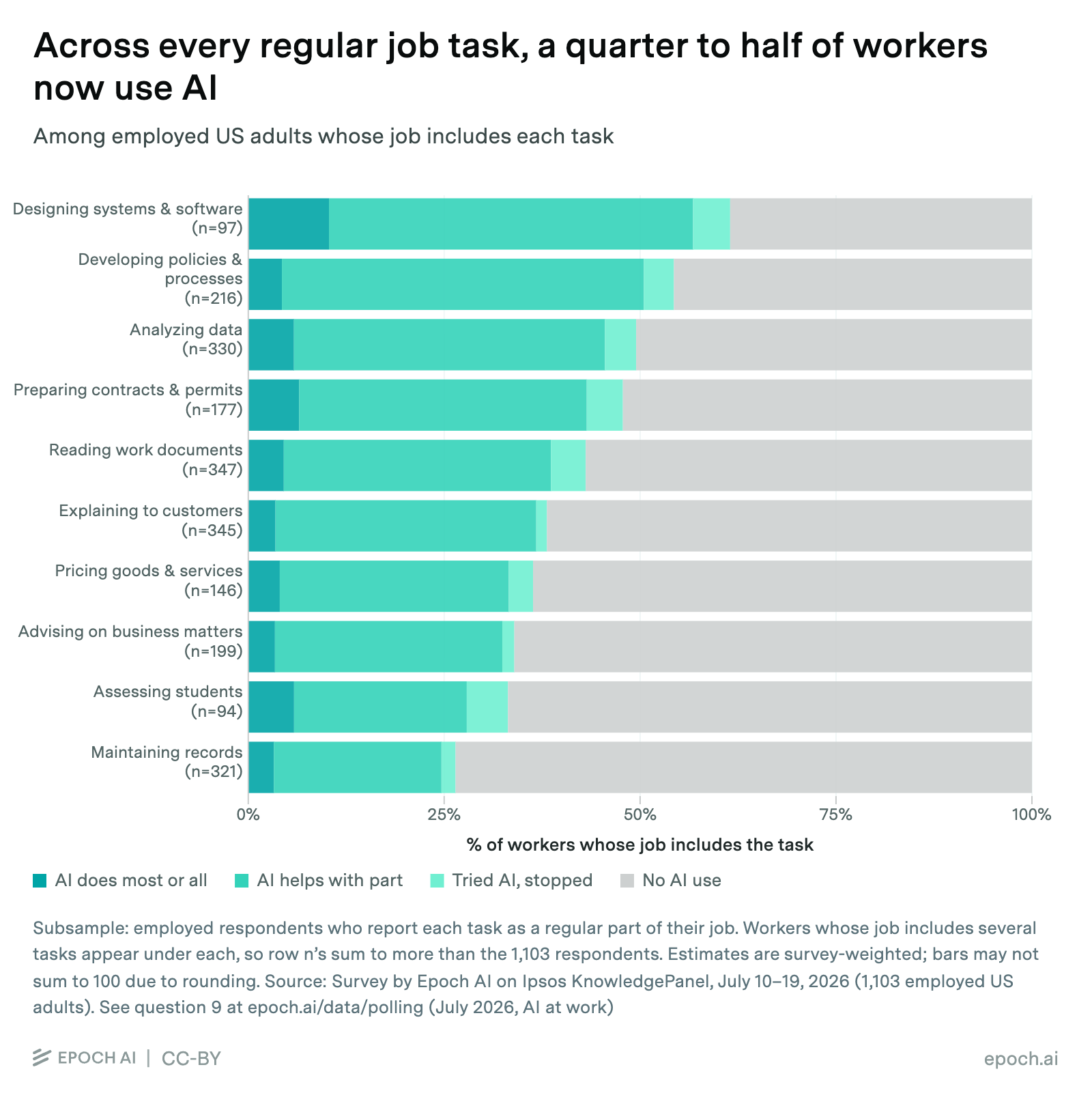
AI use showed up across all ten tasks, but adoption rates varied widely by task. The highest was computer systems and software development, where 57% of respondents doing that work said they used AI. Data analysis followed at 46%, and reading work documents came in at 39%. Records management was lowest at 25%.
| Task | AI usage rate |
|---|---|
| Software development | 57% 72 |
| Data analysis | 46% 58 |
| Reading work documents | 39% 49 |
| Records management | 25% 32 |
How much of the work AI actually takes over
Using AI doesn't mean a machine takes over the entire task. Most respondents described AI as partial support rather than full replacement. Only 10% said AI handled almost all of a task, and that figure was for software development alone — every other task category came in below 7%.
Signs of tasks being fully handed over to AI were most pronounced in data analysis. 7.1% of respondents said data analysis work once done by a person is now handled by AI, followed by reading work documents at 5.7% and records management at 5.3%. Epoch AI cautioned that this kind of task replacement doesn't necessarily translate directly into workforce cuts.
Time saved — but not always
The survey also examined the relationship between how much AI was involved and how much time people felt they saved. When AI supported only part of a task, 37% reported time savings; when AI handled most or all of a task, that figure rose to 53%. However, the data alone can't determine whether heavier AI involvement genuinely speeds things up, or whether people who want to save time simply rely on AI more.
AI doesn't always speed things up, either. Respondents said that one in six tasks involving AI actually took longer than before. The researchers suggested that the process of interacting with AI itself may have eaten up time.
Taking the output as-is
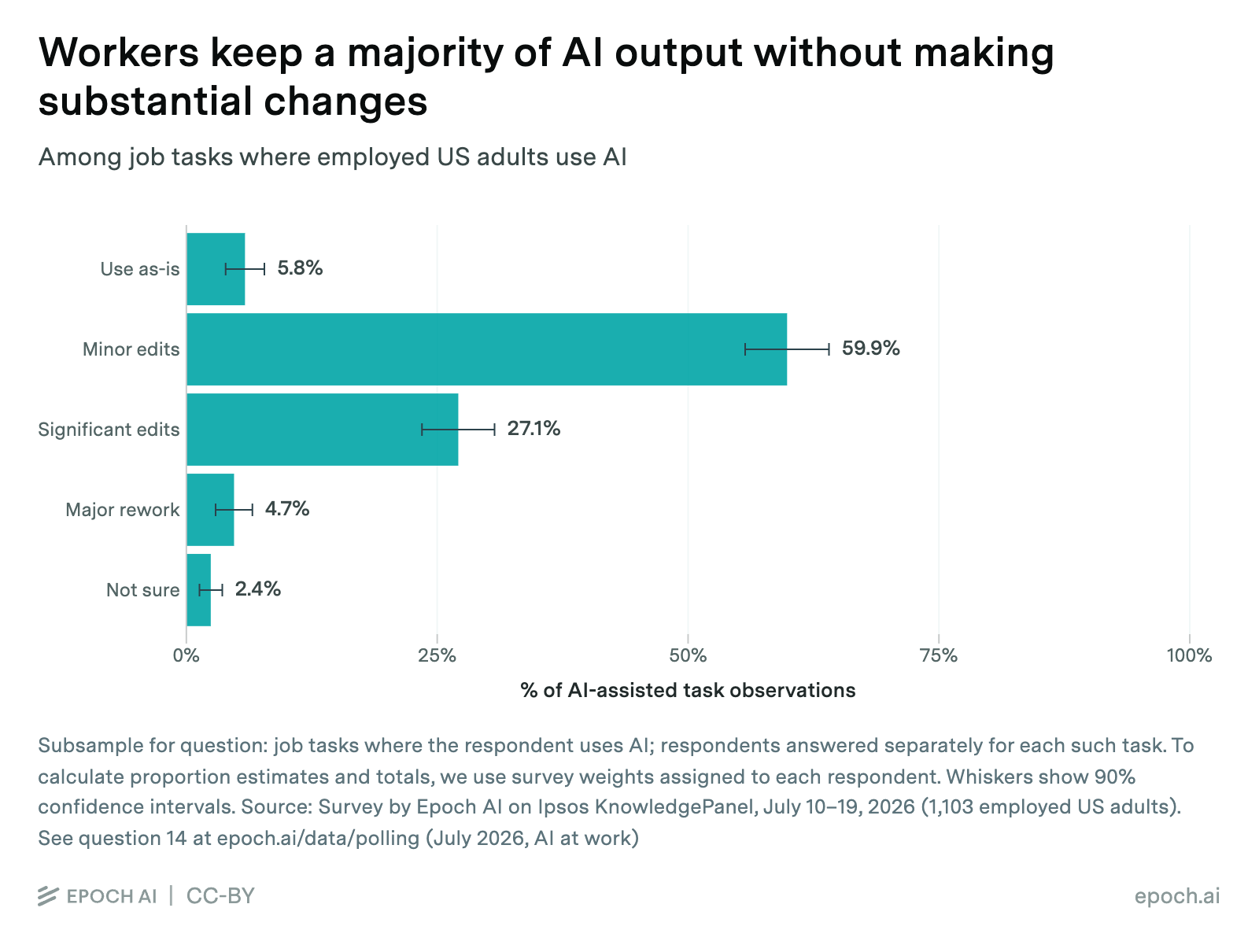
One item Epoch AI highlighted was how people handle AI-generated output. A majority of respondents said they use AI's output largely as-is, with little to no editing. This suggests a shift beyond simply incorporating AI into workflows — toward accepting AI's judgment without human review.
Editor's view
What makes this survey interesting isn't the 20% figure itself, but what's inside it. Even in software development, the share of tasks AI has taken over entirely is just 10%. In other words, what's happening now looks less like "jobs disappearing" and more like "units of work being broken down and redistributed." The fact that data analysis showed the highest replacement rate fits the same pattern: the more standardized and repetitive a task, the easier it is for AI to absorb wholesale, while tasks requiring judgment still need a human hand.
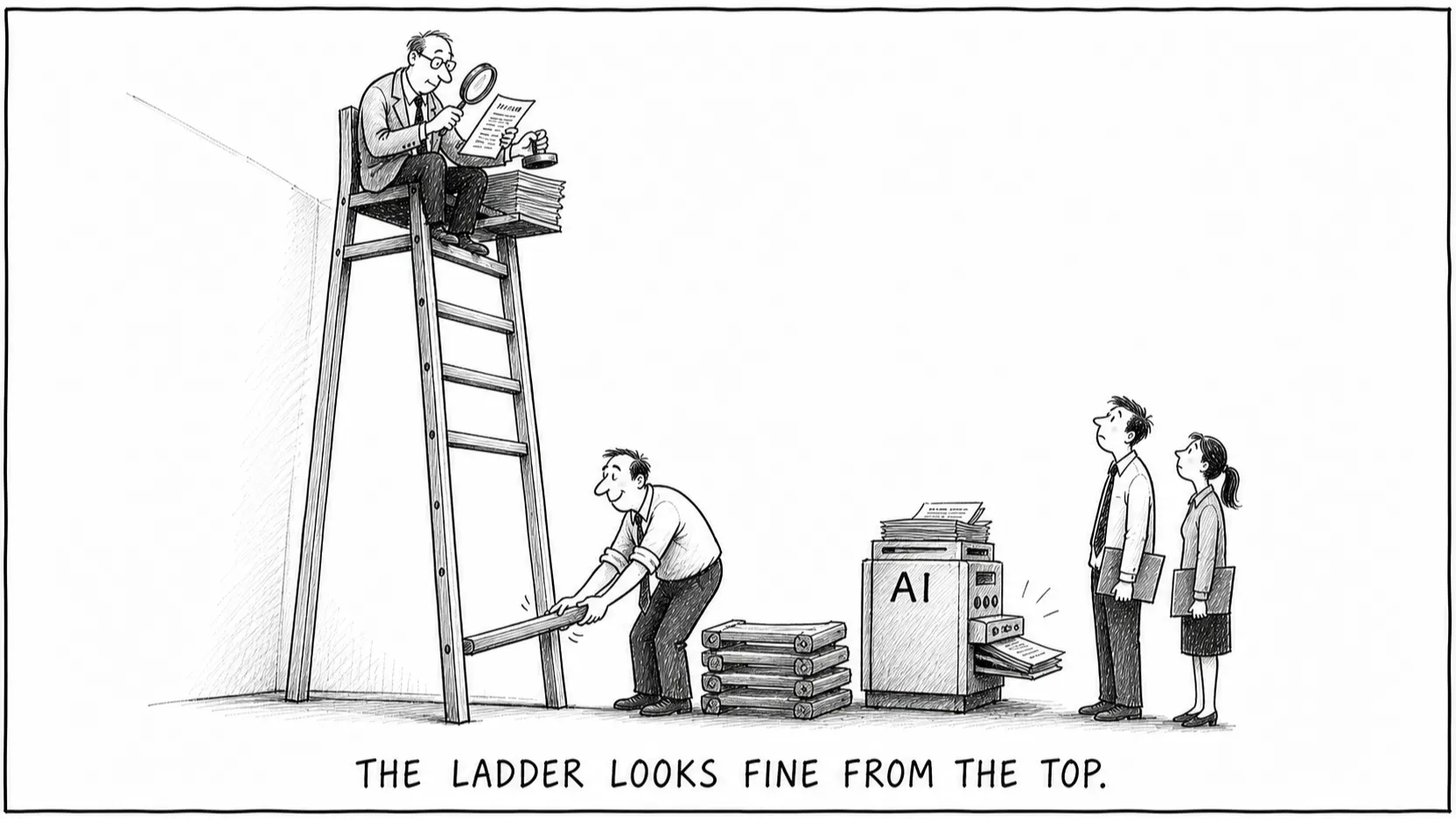
Just a year or two ago, "using AI at work" mostly meant drafting. What this survey shows now goes further. The finding that most respondents use AI output with little to no editing suggests people have started treating AI's output not as "a draft that needs review" but as "a finished product." When unverified output piles up, so do errors somewhere along the line — exactly the point raised in the recent "tragedy of the cognitive commons" research we covered: the verification chain that used to work because junior employees built domain knowledge while catching AI's errors breaks down once AI absorbs the junior-level work itself.
For teams here, the practical lesson from this survey is clear. Measuring AI adoption success purely by "did it save time" only captures half the picture — this same survey found one in six AI-assisted tasks actually got slower. The first step is distinguishing which tasks are standardized enough to hand fully to AI, and which ones can't have their errors caught without human judgment. In particular, if the practice of using output with almost no review is spreading, organizations need to lock in a minimum review checklist.
More surveys like this will likely appear in the coming months, and the 20% figure will probably tick up each quarter. What matters is where that increase comes from. Growth in replacing standardized tasks is a natural trend — but if "acceptance without review" also grows in tasks that require judgment, that should be read not as a productivity gain but as a sign that risk is accumulating.


Comments