


Image: METAL
Summary
- Senators Capito, Lee, Whitehouse and Heinrich introduced the Bipartisan American Affordability and Jobs Act on September 30.
- The bill bars data centers of 20 megawatts or more from shifting their incremental transmission costs onto other customers and sets deadlines such as two years for environmental impact reviews and 150 days for lawsuits.
- According to reports, votes are expected after the November 3 midterm elections, and passage requires 60 Senate votes.
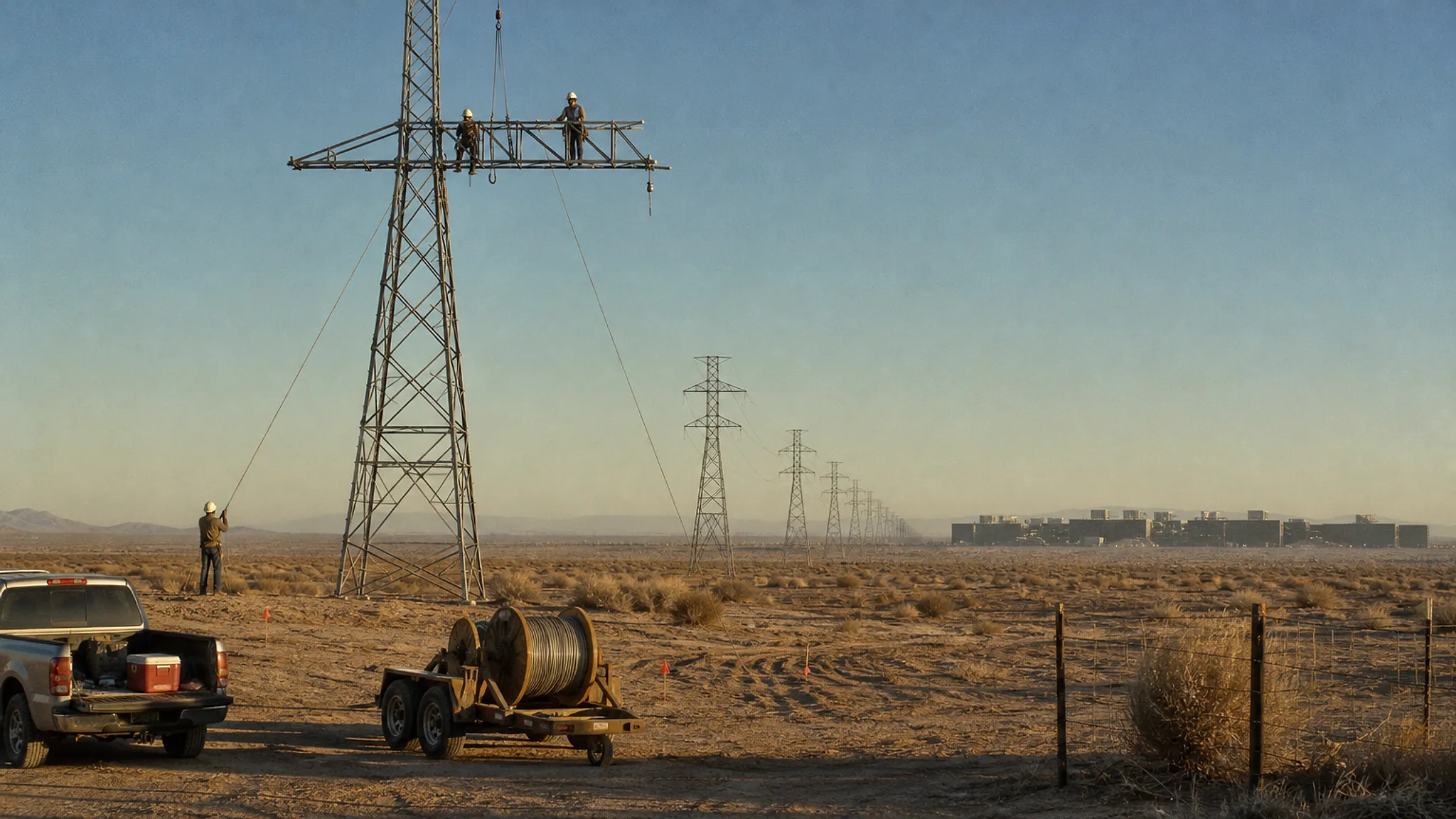
Four senators who chair or serve as ranking member of the Senate Environment and Public Works Committee and the Senate Energy and Natural Resources Committee introduced the Bipartisan American Affordability and Jobs Act of 2026 on September 30, a sweeping overhaul of energy and infrastructure permitting. The bill shortens permitting timelines for everything from solar farms and power lines to oil and gas pipelines, makes it harder for the government to revoke permits once granted, and includes a provision making data centers, which drive the AI boom, pay all of their own transmission costs. According to reports, votes are not expected to begin until after the November 3 midterm elections.
The sponsors are Republicans Shelley Moore Capito, chair of Environment and Public Works, and Mike Lee, chair of Energy and Natural Resources, along with Democrats Sheldon Whitehouse and Martin Heinrich, the ranking members of the two committees. Lawmakers who usually oppose one another joined forces and dubbed themselves the Four Corners. The bill guarantees that permitted energy and infrastructure projects retain their permits absent extraordinary circumstances, violations of law or a court order. According to Heinrich's fact sheet, no administration could block or delay permits for an entire class of energy projects such as solar or wind without facing legal action and fines.
The data center provision touches the AI industry most directly. The bill text PDF of more than 400 pages that METAL checked defines data centers and high-density computing facilities using 20 megawatts or more at a single site as covered load, and bars any portion of the incremental cost they cause from being allocated to other customers' rates. AI training and inference, cloud and cryptocurrency mining facilities all fall under it. Cost recovery continues even if a data center ends its contract or stops buying electricity, and utilities must obtain financial assurances covering the cost before building facilities. States may charge rates above incremental cost and use the surplus to lower rates for other retail customers. The Federal Energy Regulatory Commission (FERC) must revise its 1994 transmission pricing policy within 270 days of enactment, and the Energy Information Administration must collect data center load separately.
"If we can pass this bill, we will flood the grid with clean, affordable energy and make data centers start paying their fair share," Whitehouse said. "As data centers drive demand for more power, it will ensure they pay their fair share of the grid upgrades they require – not leave that bill to American families," Heinrich said, adding, "Our bill puts teeth behind that principle." At the announcement, he cited an estimate by the Federal Reserve Bank of Dallas that electricity costs could rise 20 to 30 percent within a couple of years if the grid is not built in time. The SunZia transmission line in his home state of New Mexico is 550 miles long and carries 3.5 gigawatts of wind power, and it took 17 years to permit and build.
The procedural clock gets shorter too. Environmental Impact Statements must be completed within two years and Environmental Assessments within one year, with consequences for agencies that miss deadlines. Lawsuits under the Clean Water Act, the Endangered Species Act, the National Environmental Policy Act (NEPA) and the National Historic Preservation Act must be filed within 150 days, and standing is generally limited to people or groups that took part in the comment period or Tribal consultation. FERC's backstop siting authority for interstate transmission lines is strengthened, and the Bureau of Land Management must complete geothermal drilling permits within 60 days.
Industry support cuts across fuels. According to reports, Ben Norris, senior vice president of regulatory affairs at the Solar Energy Industries Association (SEIA), said the clean energy and transmission capacity the bill would unlock is worth the tradeoffs made elsewhere. "If you think it's hard to get a pipeline built, try building a transmission line," said Toby Rice, CEO of major natural gas producer EQT. EQT's 303-mile Mountain Valley Pipeline took a decade to complete, after court battles and an act of Congress.
Opposition comes from environmental groups. Abigail Dillen, president of Earthjustice Action, called the bill a genuine policy breakthrough on transmission and grid modernization but said, "A deal that fast-tracks more gas, closes courthouse doors, and dismantles our laws to further embolden a lawless administration is not a compromise we can afford now." The Sierra Club also argued that protections under NEPA, the Endangered Species Act and the Clean Water Act would be weakened too much. According to reports, the bill would also likely have prevented the pause on liquefied natural gas (LNG) export permits that the Biden administration imposed in 2024. METAL previously reported that protesters rallied against data centers outside a G20 event.
Through a tech-law lens, the weight of this bill lies less in permitting speed than in writing cost allocation into statute. Until now, data center transmission cost sharing has relied on contracts with utilities or voluntary commitments; the bill elevates it to a Federal Power Act provision and keeps recovery going even after a customer exits. Heinrich described it as putting costs on large loads by statute, not as a suggestion but as an actual law. According to reports, passage requires 60 Senate votes, and Democrats must choose between taking the current deal and seeking a more favorable version in the next Congress. The question left for AI companies is when the era arrives in which choosing a data center site means putting not just the electricity rate but the region's entire grid upgrade cost on the bill.
Sources
- Office of Sen. Shelley Moore Capito — Capito, Lee, Whitehouse, and Heinrich Introduce Bipartisan American Affordability and Jobs Act of 2026 →
- Fortune — The new energy permitting bill to feed the AI boom unites fossil fuels and clean power while dividing environmentalists →
- Office of Sen. Martin Heinrich — REMARKS: Heinrich Introduces the Bipartisan American Affordability and Jobs Act with Capito, Lee, and Whitehouse →
- U.S. Senate Committee on Energy and Natural Resources — FACT SHEET: Heinrich Outlines How Bipartisan American Affordability & Jobs Act Will Deliver Cheaper Energy, More Jobs, and Responsible Growth →
- U.S. Senate Committee on Environment and Public Works — Bipartisan American Affordability and Jobs Act of 2026 — bill text →




Comments