


Summary
- HD Hyundai Heavy Industries has signed the main contract to design, procure, fabricate, install and commission the offshore substation for Taean's 500MW-class offshore wind farm.
- The government and the project developer plan to use the transmission network of the closed Taean Thermal Power Plant Unit 1 and existing piers for the new offshore wind project.
- The government's completion target is 2030. This announcement concerns a contract signing, not actual electricity generation or achieved carbon reductions.
HD Hyundai Heavy Industries will build the offshore substation that sends electricity from the Taean offshore wind farm to shore. The company said on October 2 that it had signed the main contract with Taean Wind Power to carry out design, procurement, fabrication, installation and commissioning. This is not a contract to erect wind turbines, but one to build the key facility that delivers their electricity to land.
An offshore substation collects electricity generated by wind turbines at sea and steps up its voltage. It serves as the transmission link between the turbines and the mainland. Turbines that turn wind into electricity cannot supply power to land on their own; substations and submarine cables are also needed to collect and transmit it.
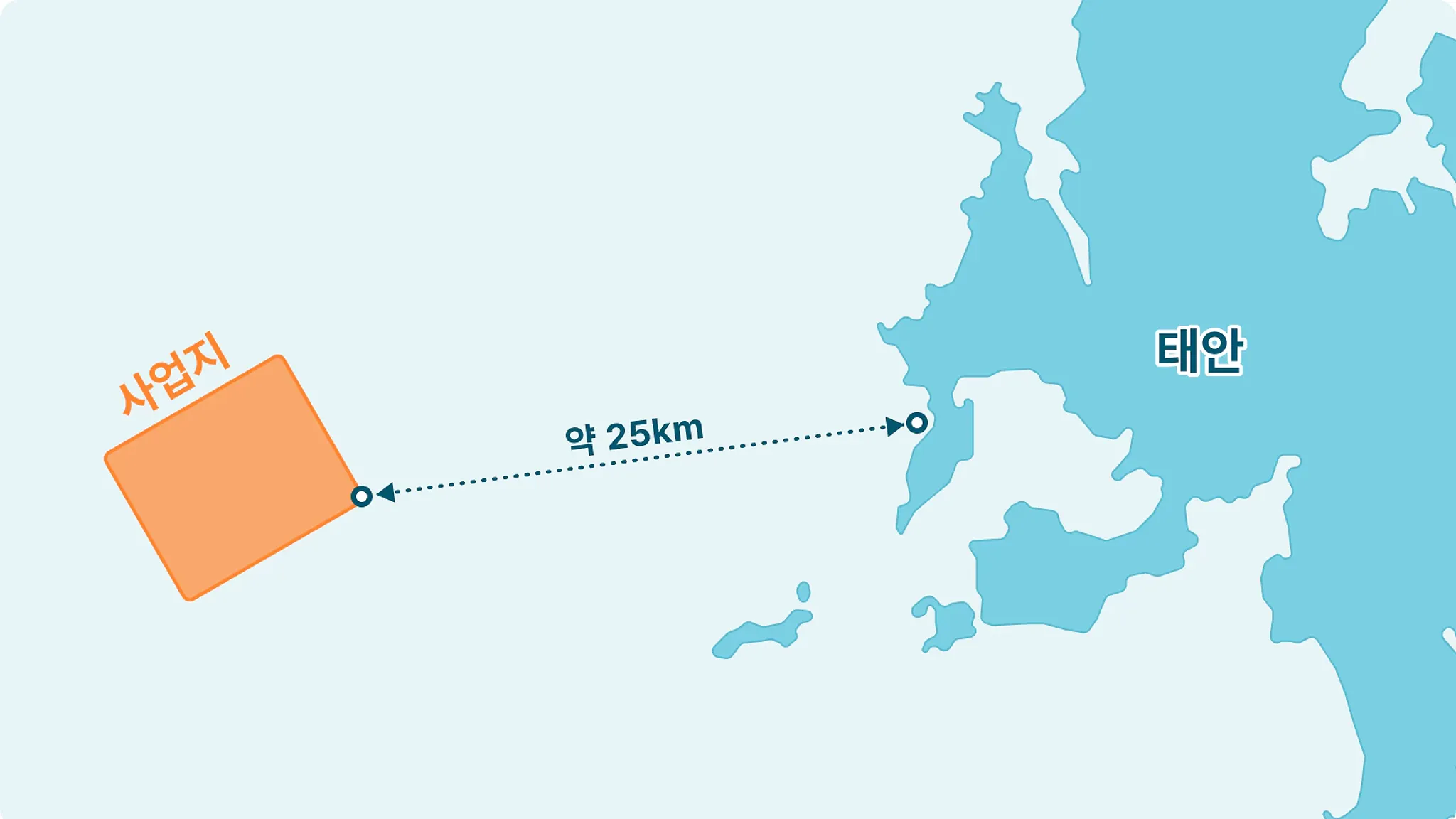
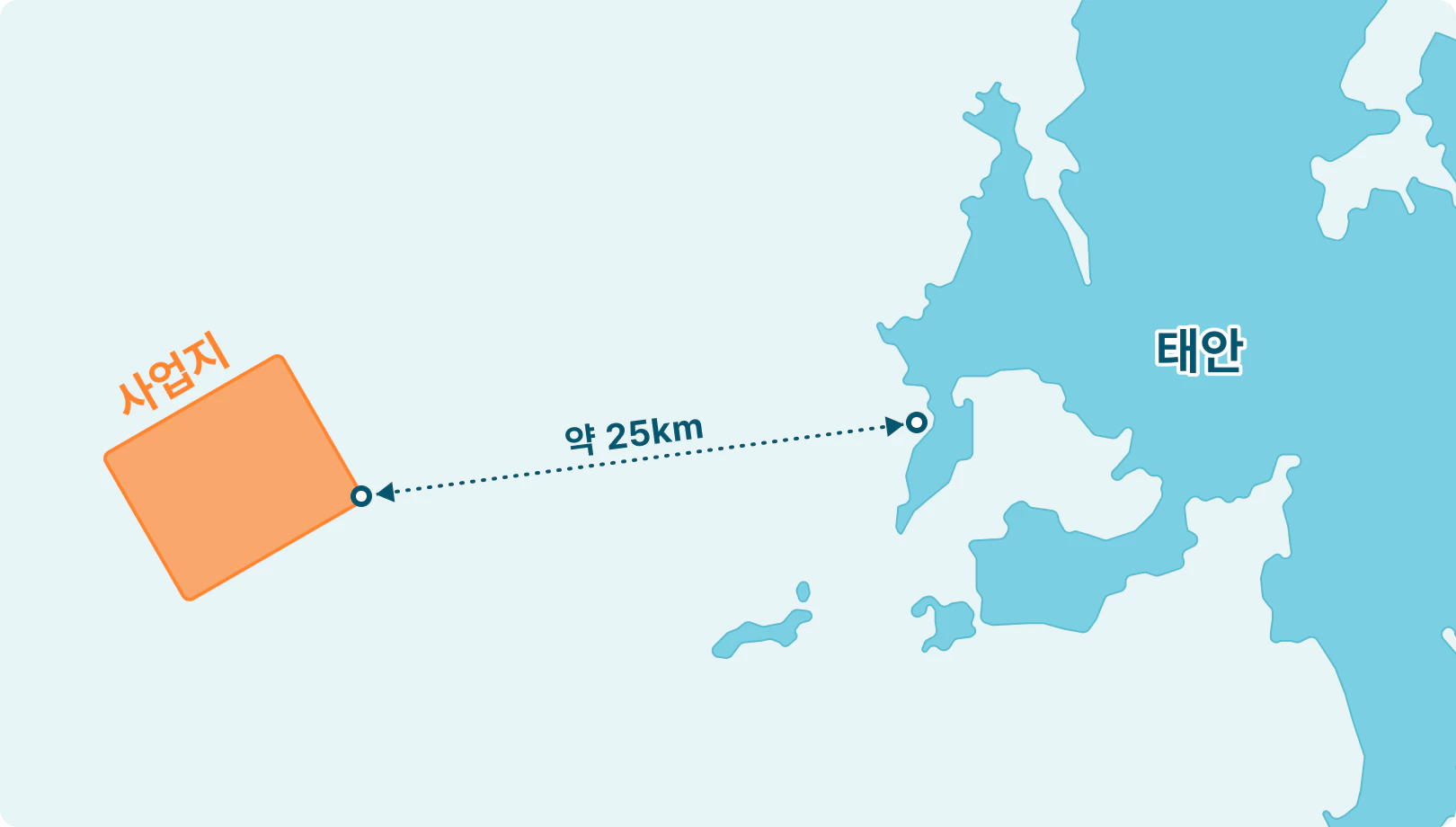
The facility is planned to transmit electricity to shore from a 500MW-class wind farm being developed off Gauido-ri in Taean County, South Chungcheong Province. Taean Wind Power's official project overview lists the installed capacity of the fixed-bottom offshore wind project as 504MW. The description of the project as 500MW-class in HD Hyundai Heavy Industries' announcement conveys its scale and needs to be distinguished from the precise capacity listed on the developer's website.
MW is a unit of power output for generating equipment. It does not represent the amount of electricity actually generated over a given period. That is why this contract cannot be read as meaning that 500MW of electricity has already been supplied. The contract announcement did not establish actual electricity generation or carbon reductions, which will vary with wind conditions and operating hours.
The contracting process proceeded in stages. According to HD Hyundai Heavy Industries, it signed a preliminary design contract in March 2026, followed by a preferred supply agreement in July, before reaching the main contract after detailed discussions. The scope runs from design and equipment procurement through fabrication, installation and commissioning. This announcement marks the stage of placing the order and defining the work to be performed, not the completion of the facility or the start of commercial operation.
Design verification was carried out separately as well. The company said its in-house 500MW-class offshore substation model received basic design verification from the Norwegian classification society DNV in 2025, and that detailed design verification was completed in August 2026. These results confirm whether the design meets international regulations and standards; they do not verify the actual operating performance of a completed Taean facility.
The Taean project's energy transition is not confined to the sea. Korea Western Power, Vena Energy and Copenhagen Infrastructure Partners (CIP) signed a joint development agreement on July 8, 2026. The Ministry of Climate, Energy and Environment explained that the project plans to use spare capacity in the transmission system of the closed Taean Thermal Power Plant Unit 1.
According to government materials, Taean Thermal Power Plant Unit 1 had a capacity of 500MW and closed at the end of 2025. The government says that connecting the remaining transmission network to the new wind project could reduce the cost of building new transmission lines and improve community acceptance. Using the existing network is a plan with expected benefits; it does not mean that the grid connection work was also completed with this substation contract.
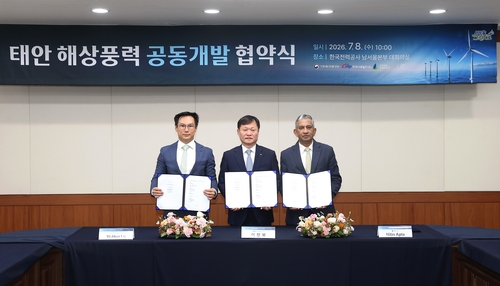
Port facilities will also be reused. Taean Wind Power's explanation of the joint development agreement said it plans to use the existing unloading facility to transport and unload wind power equipment and materials, and to use an operations and maintenance pier as a maintenance base once the project is operating. The government also proposed converting a small pier within Taean Thermal Power Plant for offshore wind maintenance and management.
Similar numbers do not make coal and wind equivalent sources of electricity. The closed coal unit's 500MW and the wind farm's 500MW-class capacity each describe the scale of the generating facilities. The connection outlined by the government is a plan to reuse the existing transmission system and piers, not a comparison suggesting that the two plants generate the same amount of electricity over the same period.
Workers are also part of the transition plan. The Ministry of Climate, Energy and Environment said Korea Western Power plans to close 8 of its 11 coal-fired power plants by 2037, including Taean Unit 1. The government announced that Korea Western Power, its labor union and CIP would sign a memorandum of understanding to support retraining coal-fired power workers for offshore wind.
At the time of the July announcement, the plan was to provide this retraining in various forms over the following 2 years. The idea is not simply to close a power plant and leave behind its grid and piers, but to prepare training alongside that transition so existing workers can move into another field of power generation. The announcement did not provide the number of workers actually reassigned or any completed employment outcomes.
Kim Sung-hwan, Minister of Climate, Energy and Environment, expressed his commitment to policy support at the time, saying, "Taean offshore wind is an exemplary case of a just transition in an area affected by coal-fired power plant closures." This is the government's assessment of the project. It should be distinguished from measured results showing that transmission line cost savings or worker transition outcomes have already been secured.
Submarine cables are another facility connecting the project to land. Vena Energy announced on November 21, 2024 that Taean Wind Power had selected LS Cable & System as the preferred submarine cable supplier for the 500MW offshore wind project. That announcement described a scope covering the design, manufacture, supply and installation of high-voltage submarine cables. Selecting a preferred supplier is a different stage from completing cable installation.
In that announcement, Taean Wind Power CEO Cheong Gwang-jin said, "Selecting LS Cable & System as the preferred submarine cable supplier is an important step toward realizing the Taean offshore wind project." This illustrates the structure of the project: connecting electricity generated by turbines to the onshore grid requires not only a substation contract, but preparations for undersea transmission equipment as well.
The contracts establishing a basis for electricity sales are separate, too. Taean Wind Power explained that on September 2, 2025, it signed long-term supply contracts for renewable energy certificates (RECs) totaling 500MW: 300MW with Korea Western Power and 200MW with Gangneung Eco Power. These are supply contracts for RECs that certify renewable energy production, not the same contract as the current offshore substation construction agreement.
The completion schedule should be read as a target. The government's July 8, 2026 announcement set 2030 as the Taean project's target for completion. That announcement came at a different time from earlier developer materials predicting operation at the end of 2029. The October 2 offshore substation contract announcement did not disclose a confirmed completion date, a start date for commercial operation or the contract value.
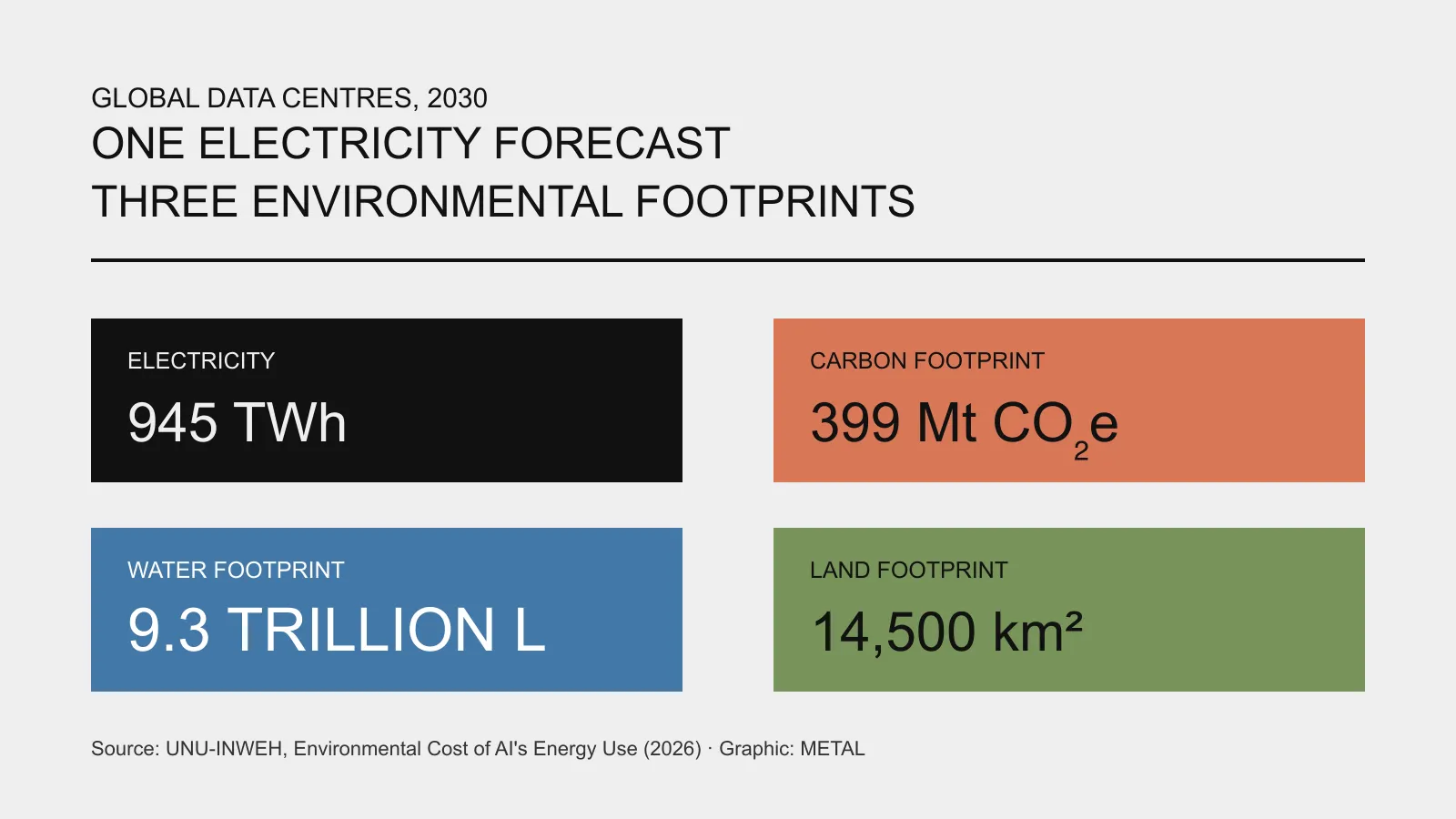
METAL previously covered the environmental costs of data centers, reporting that how electricity is supplied changes the burdens on carbon, water and land together. The government announcements and developer materials for Taean reviewed by METAL connect the energy transition not just to replacing generators, but also to changes in transmission networks, ports and the workforce.
What this main contract confirms is the scope of work HD Hyundai Heavy Industries will undertake for the Taean offshore substation, from design through commissioning. To deliver actual electricity, preparations for the wind farm, substation, submarine cables and onshore grid must come together. Taean's transformation becomes clearer when the routes used to transmit electricity and the uses of existing facilities are considered together, rather than generating capacity alone.
Sources
- HD현대중공업 — HD현대중공업, 500MW급 해상변전소 짓는다 →
- 기후에너지환경부 — 태안해상풍력 민관 공동개발 추진 →
- 태안풍력발전 — 태안 해상풍력 프로젝트 →
- 태안풍력발전 — 태안풍력발전, 500MW REC 장기공급계약 체결 →
- 태안풍력발전 — 태안풍력발전, 한국서부발전과 태안 해상풍력 공동개발 협약 체결 →
- 태안풍력발전 — 태안풍력발전 공식 소식과 이미지 →
- Vena Energy — Taean Wind Power selects LS Cable as preferred submarine cable supplier for 500MW OFW Project in Korea →
Comments