


Image: METAL
Summary
- Alibaba's Qwen published the Qwen-Image-2.1 weights on Hugging Face and ModelScope on September 20.
- Generation, editing and transparency now sit in one 7B-parameter checkpoint that accepts up to 10 reference images.
- ComfyUI, Diffusers, vLLM-Omni, SGLang and LightX2V switched on day-0 support, and the weights ship under the Qwen Research License Agreement.
Alibaba's Qwen team released the image model Qwen-Image-2.1 on September 20 and posted the weights to Hugging Face and ModelScope. A single model whose visual generation component holds 7B parameters both makes pictures from text and edits pictures that already exist, and it produces transparent images with an empty background directly. In its announcement the Qwen team wrote that the model "balances generation quality, inference efficiency, and cost."
The architecture is spelled out in the announcement and the repository. The transformer is a single-stream DiT with 32 layers and 7B parameters. A Qwen3-VL 8B text encoder folds instructions and condition images into one representation, and the VAE is a 64-channel RGBA autoencoder with 16x spatial compression, so transparency is handled inside the model. The scheduler is flow matching with Euler discrete sampling and dynamic shifting.
The speed gains live in the attention layer. Text uses a token-level causal mask while image generation uses a chunk-level mask, mixing the granularity, and input images and editing instructions are computed once at the first step and cached for every step that follows. The Qwen team said the design raises inference efficiency and cuts memory use, especially when editing with several images at once.
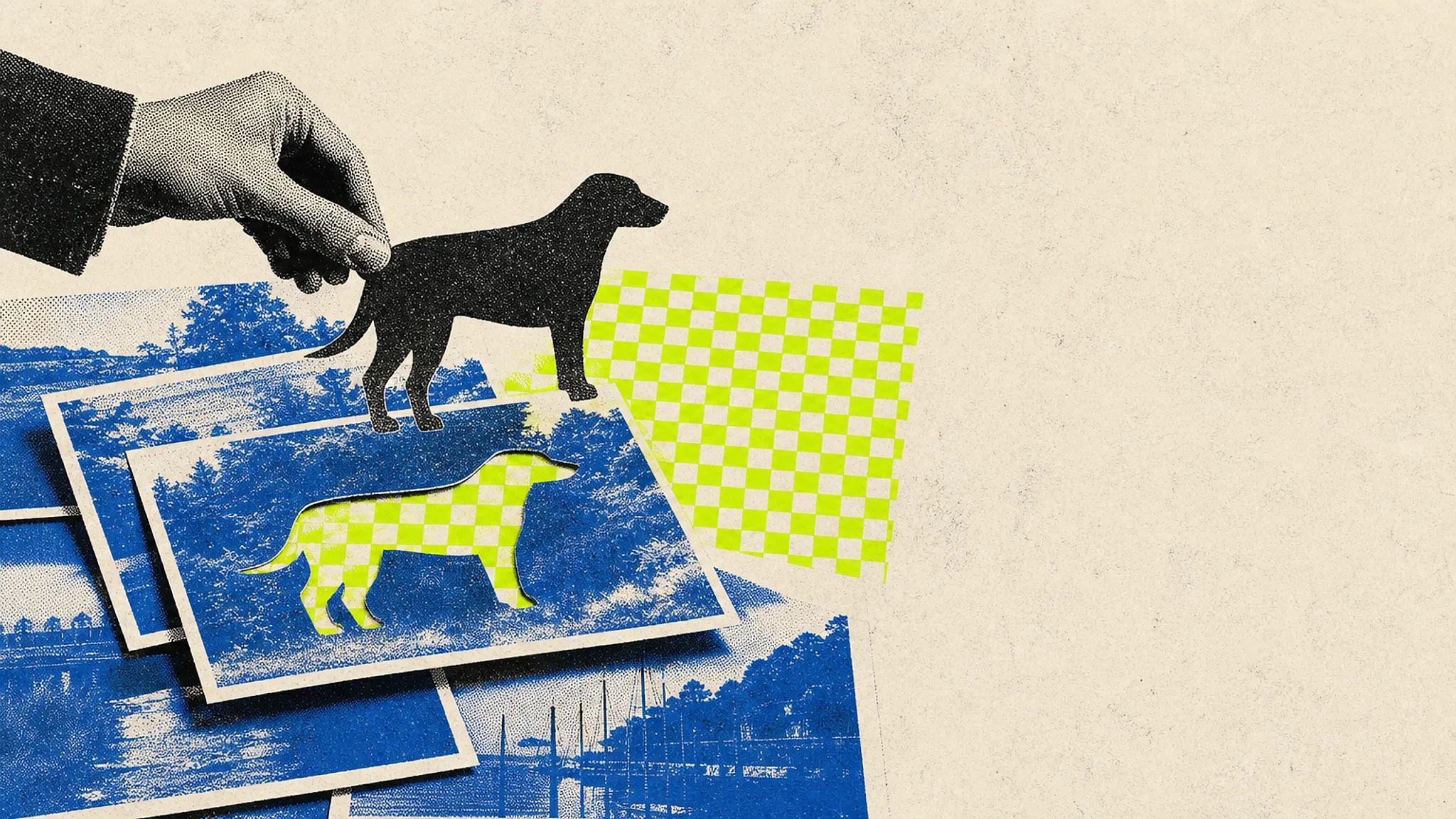
Transparency is the biggest addition in this release. Qwen shipped a dedicated transparent-image model, Qwen-Image-Layered, in December 2025; this time that capability moves inside a single model, and the prompt decides whether the output carries an alpha channel. Give it a photograph and it lifts the chosen subject out as an RGBA layer, and the same checkpoint also changes a face's expression while keeping the transparent background, or swaps the word inside a text layer for another one.
Editing now has four handles. The model takes up to 10 reference images, merging six individual portraits into one group photograph, combining a model, clothing, shoes, a bag and a hat into a complete outfit, or arranging a room from ten pieces of furniture. Regions to edit are marked with differently colored circles or painted annotations, and when the original must stay unobscured the image and a separate mask go in as two inputs. Panoramas, infographics and storyboards are on the task list as well.
Resolution defaults to 2K. Output is 2048x2048 by default with 40 inference steps, and seven aspect ratios from square up to 2752x1536 are fixed as recommended sizes. Dedicated models that expand short prompts shipped alongside it: two fine-tunes of Qwen3.5-VL 9B, one for text-to-image and one for editing.
The day-0 support list shows where this model will run. Diffusers attached through QwenImage21Pipeline, SGLang added prefix caching and multi-GPU parallelism, and vLLM-Omni contributed FP8 quantization and step-wise execution. The door is open outside NVIDIA too. AMD Radeon runs it through ROCm, and FlagOS, a software stack for heterogeneous chips, shipped prebuilt images and weights for eight chip platforms.
ComfyUI led with the alpha channel in the post it published the same day. Sprites, logos, icons and product cutouts come out of the sampler ready to composite, it wrote, so "no background removal node, no matting model, no edge cleanup" is needed. It then nailed down the difference in one sentence: "No other major open model does this." The text encoder node opens another image slot each time one is filled, up to ten.
The model card and repository METAL checked both list the license as the Qwen Research License Agreement. The announcement uses the word open-source, but the agreement attached to the weights is a research license rather than a permissive one. On release day Hugging Face already carried 7 fine-tunes, 9 quantizations and 12 demo spaces built on the model.
Qwen's release pace is not new. METAL reported that Qwen had opened a real-time interpretation model, and on the image side this version arrives seven months after Qwen-Image 2.0 landed in February 2026. In mainland China, wuli.art opened the features, including transparent-background generation, for free in both Chatbox and Canvas.
The number 7B is the point of this release. A model that defaults to 2K output and 40 steps fits in consumer graphics memory, and transparent backgrounds and ten-image reference editing come out of one checkpoint. The criteria for choosing an image model used to be quality and speed; they are shifting toward whether the output can move into the next step of work without cleanup.


Comments