


Summary
- Amazon Bedrock has added an automated improvement feature for Automated Reasoning policies
- Two refinement modes are provided, each addressing rule errors and language ambiguity issues separately
- All proposed fixes are applied only after user approval
Amazon Web Services (AWS) announced that it has introduced an automated improvement feature for Automated Reasoning policies in Bedrock Guardrails. Previously, users had to repeatedly diagnose the cause of policy failures, manually fix them, and retest — but this update automates much of that process.
Distinguishing Between Two Failure Types
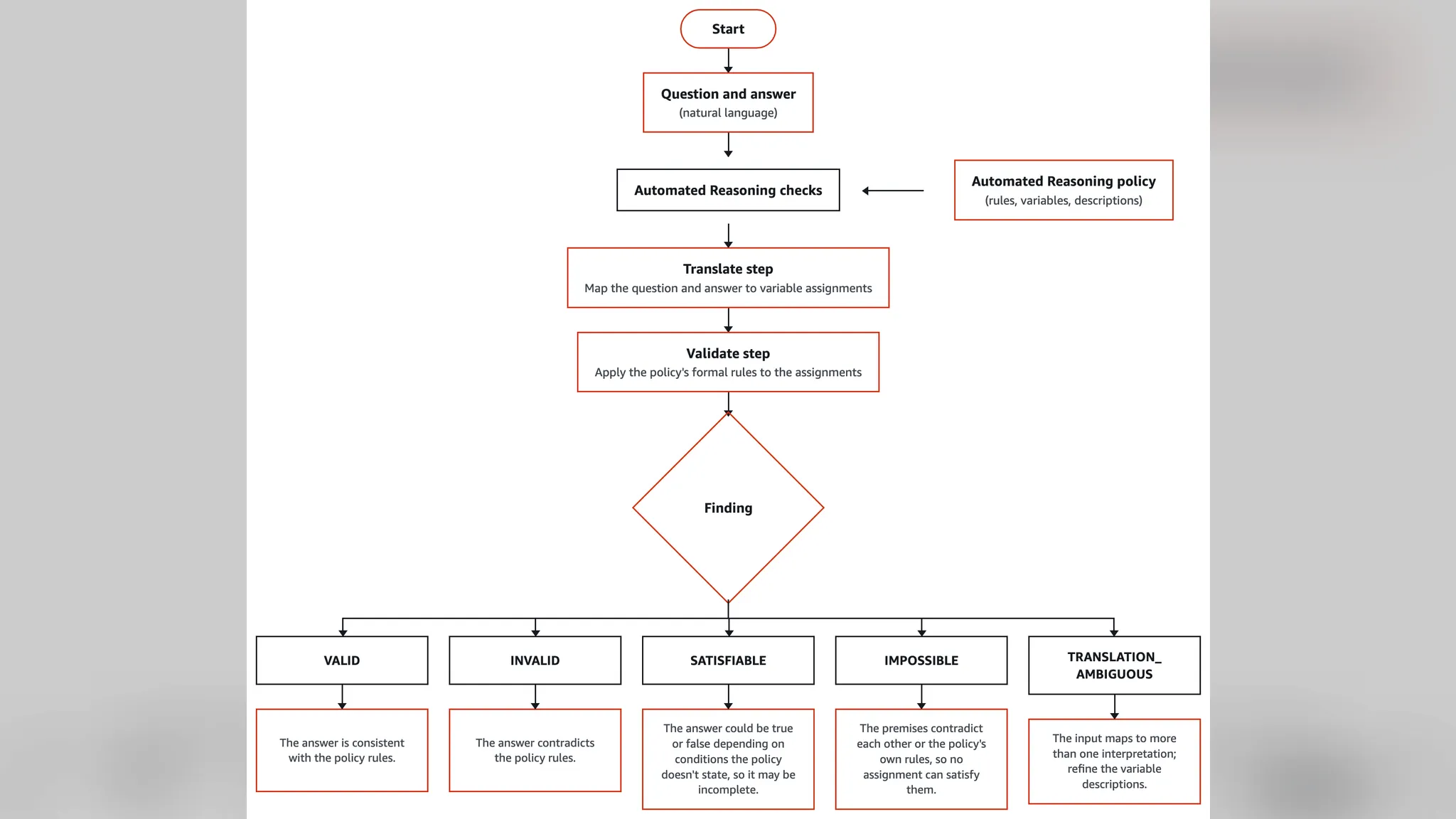
Automated Reasoning checks operate as a two-stage pipeline that converts natural language input into formal logic and then applies policy rules to produce a result. The output falls into one of the following categories: VALID, INVALID, SATISFIABLE, IMPOSSIBLE, or TRANSLATION_AMBIGUOUS.
The newly added refinement engine distinguishes between two causes of failure. The first is a "rule error," where the natural language conversion was performed correctly but the rule itself is too loose or too strict, producing an unexpected result. The second is "translation ambiguity," where the conversion model produces differing interpretations when mapping natural language to policy variables, leading to inconsistent results. To address these, AWS provides two refinement modes: Iterative Refinement and Ambiguous Variable Refinement.
User Approval Process Remains in Place
AWS explained that while the refinement engine diagnoses failed tests and proposes formal-logic fixes, all changes are applied only after user approval. The post also outlined a workflow for starting, monitoring, and checking results via API, as well as a repeatable refinement process available through the console.
Citing its previous general availability (GA) announcement, AWS stated that the feature "delivers up to 99% verification accuracy for unambiguous natural language-to-logic translation." The company noted that customers had previously identified the repeated cycle of tuning policies as the biggest friction point in policy development.

Comments