


Summary
- Google Research published a research experiment on September 17 that uses generative UI to build learning simulations tailored by teachers.
- It opened a library of more than 30 English samples, all generated by AI and reviewed by teachers.
- A study with 12 teachers averaged above 8.1, and the acceptance rate across 40 expert-rated requests was 86%.
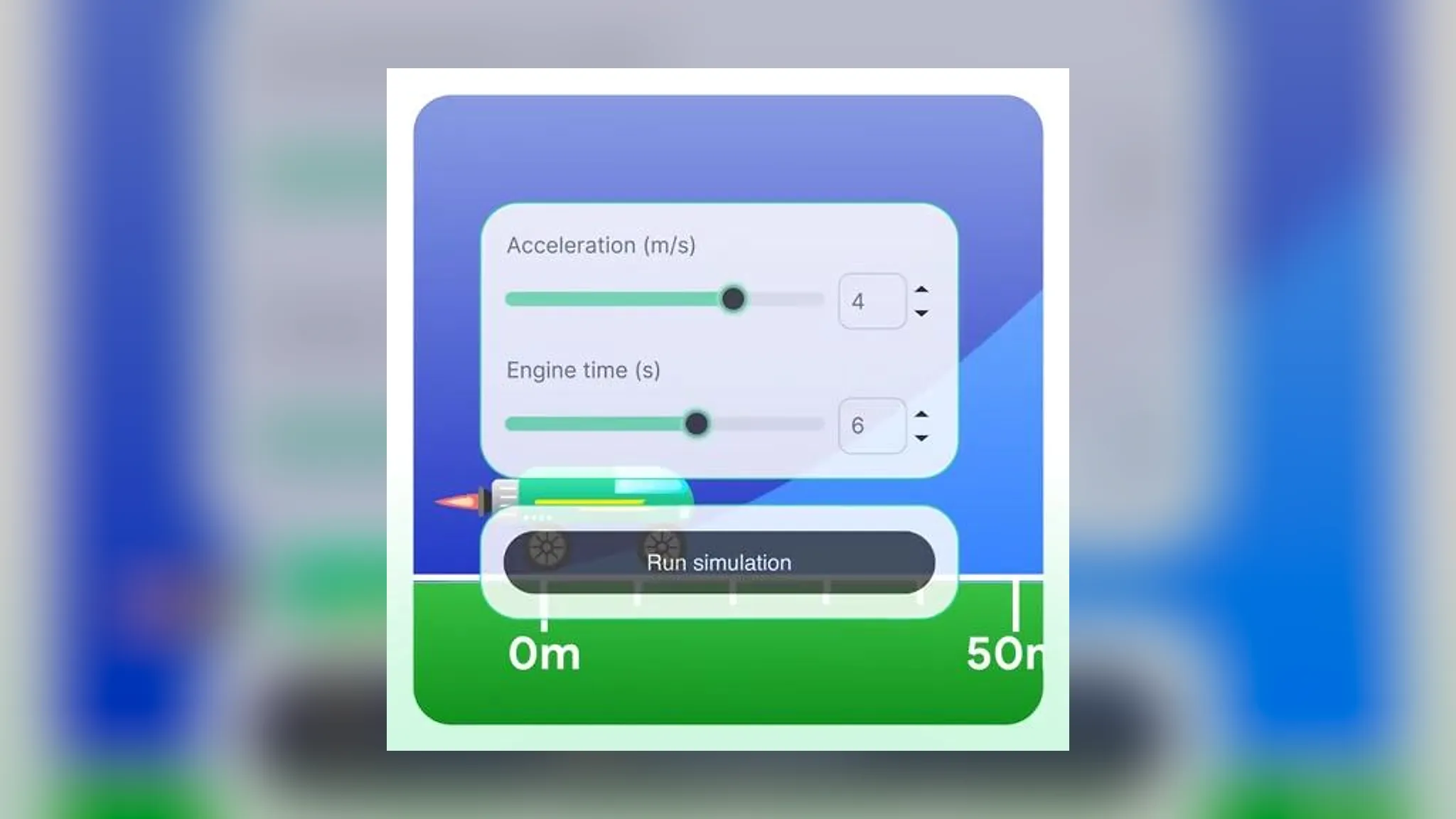
A teacher writes one line about the topic of the lesson, and a simulation for students is built on the spot. That is the research experiment called learning interactives, published by Google Research on September 17. The post, co-written by research scientist Gal Elidan and product manager Yael Haramaty, says the team put learning-design guardrails on generative UI (GenUI) so teachers can build guided simulations matched to their own curriculum and students. Generative UI is the technique where a model constructs the user interface on the fly instead of having it coded in advance.
What the research is aimed at is clear. The post says online textbooks and video libraries changed access to information, yet digital learning still feels largely like a passive experience. Interactive practice that makes students think and work through solutions is expensive to create, limited in number, and takes far more effort from the teacher. The company says it wanted to see whether AI could close that gap.
What shipped alongside the post is a sample set of more than 30 in English. They cover STEM subjects such as physics, chemistry, biology and math, with a focus on middle and high school. All of them were generated by AI and reviewed by teachers, and the library holds topics in biology, chemistry, computer science, earth science, mathematics and physics. School curriculum topics such as Kepler's Laws of Planetary Motion, Data Visualization and Projectile Motion are on that list.
The build runs in four stages. A planning stage turns the teacher's request into learning objectives and a simulation idea, a scaffolding stage breaks those objectives into progressively harder levels, a Gen-UI stage builds the actual interface from the idea and the goals, and a guidance stage attaches the tour, hints, solutions and feedback. Five levels are generated, and the goal for each later level is produced given the goals of the stages before it. Gemini builds the interface.
The 16-page technical report that METAL downloaded and counted through page by page records in numbers why that process was needed. Even holding an idea and levelled goals that had already cleared the earlier stages, a single prompt produced a simulation meeting every pedagogical requirement only 3.5% of the time. Running the self-correcting loop 10 times raised the share passing all critiques to 69.3%. The problem was not ignorance of the requirements but an inability to hit them in one shot.
Critiques fall into four groups. The report's chart shows telemetry moving from 23.3% to 93.5% between the first and last attempt, visual from 47.8% to 84.7%, mechanics from 67.0% to 98.2%, and solvability from 85.5% to 87.9%. The more visible the flaw, the easier it was to fix, and the criteria that already held up well moved least.
How solvability gets measured is the most practical part of this work. According to the post, one of the automatic evaluations opens a Chrome instance and operates the simulation the way a user would. It does not just check whether one solution works; it also tries adversarial moves such as pushing knobs to extreme values. It is the same routine as staff riding a new attraction before it opens and deliberately shaking it hard.
Human verification started with 12 teachers. The report says the US-based cohort covered mathematics with 4, biology with 2, physics with 2, environmental science with 2, astronomy with 1 and chemistry with 1, split six men and six women. Each requested three simulations they thought would help their students, 36 in all. Only 3 of those fell short of being shown to a teacher, and the teachers rated every simulation 7 or above, with an average above 8.1.
What teachers responded to was not performance but authority. One high school science teacher said, "Oh my gosh. Like if I was just teaching and I could just type put this in for anything and then a simulation would come, that would be amazing... I've never been able to differentiate any of the simulations because it's just, you know, you get what you get." Another teacher pointed to the tiered hints, saying, "This is amazing because this is like this is what I would be doing one-on-one with kids going around if they didn't understand it... But this kind of, you know, saves me from kids just sitting and waiting for me to get over there to help them."
The larger evaluation exposed the weak spots too. Pedagogical experts picked 40 requests, two teachers of the relevant subject rated each, and the acceptance rate was 86%. The scale runs from fail at 0 through pass at 1, good at 2 and excellent at 3. Biology scored lower than other subjects, and the report explains that many biology topics, such as the stages of the cell cycle, require memorizing details rather than manipulating equations, which tends to produce screens that follow textbook sequence. Physics and chemistry came closest to excellent on average.
Read from the humanities side, the frame of this research is a century old. The report opens with John Dewey's 1916 line, "Give the pupils something to do, not something to learn." Jean Piaget's constructivism and Chi and Wylie's ICAP framework are cited alongside it as evidence that active engagement builds deeper understanding and longer retention than passive listening or reading. Google worked this principle into LearnLM, its education model from 2024, and the 2025 Learn Your Way experiment, and this research sits on top of that.
So the system deliberately keeps friction rather than removing it. The report notes that generative models are typically engineered to minimize friction and user effort, so interactions lead to cognitive offloading and produce an enhancement-versus-erosion paradox that can hurt learning. The company's answer was to withhold the open sandbox. Once a complex concept is broken into progressively harder levels, a student has to form hypotheses and change values to get through to the next one.
The teacher's place is protected by procedure rather than by code. Learning objectives become the basis for generation only after the teacher approves them, and each idea yields five candidates for the teacher to choose from. In the coming pilot, newly generated interactives will go first to the teacher who requested them, and only enter the public library after that teacher validates and approves them. Schools on Google Workspace for Education can sign up through the Google for Education Pilot Program.
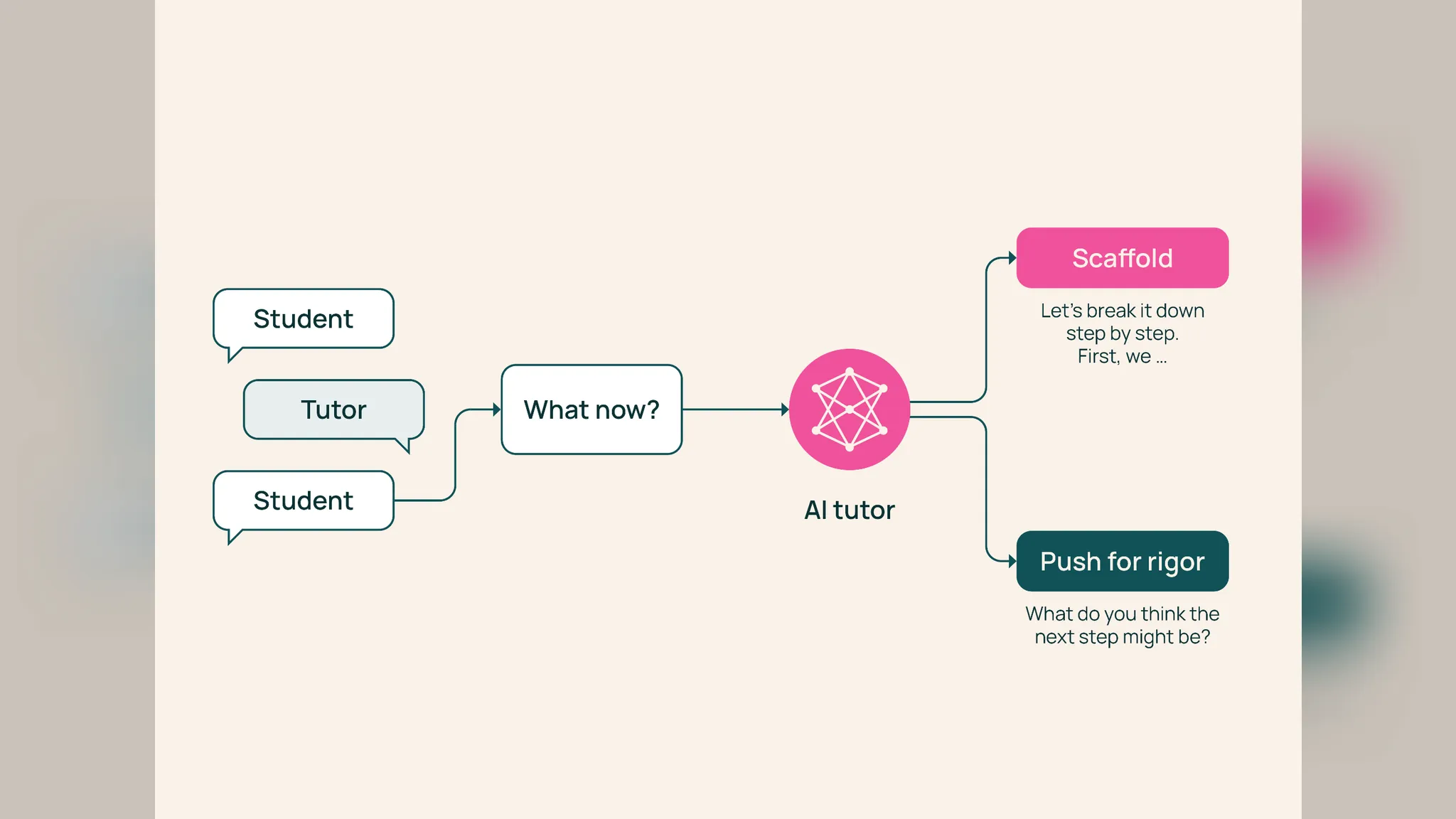
METAL has reported on Ai2 releasing an evaluation framework for when an AI tutor should step in, measuring the problem of helping too soon. That is why this research stacks tiered hints and after-the-fact solutions instead of handing over the answer. Other routes for putting AI in classrooms are already running, and METAL has reported that OpenAI expanded ChatGPT for Teachers to 55 US school districts.
The remaining question is inside the classroom. The company says it will run UX research and field studies to measure learning gains and student engagement, and until those results arrive what this work has proven is that generative UI can take a teacher's request and produce a usable simulation. The structure that lifted a one-shot 3.5% to 69.3% through ten rounds of self-correction is the core of that proof. The cost of teacher-made classroom material is now counted in review time rather than production budget.



Comments